
Introduction
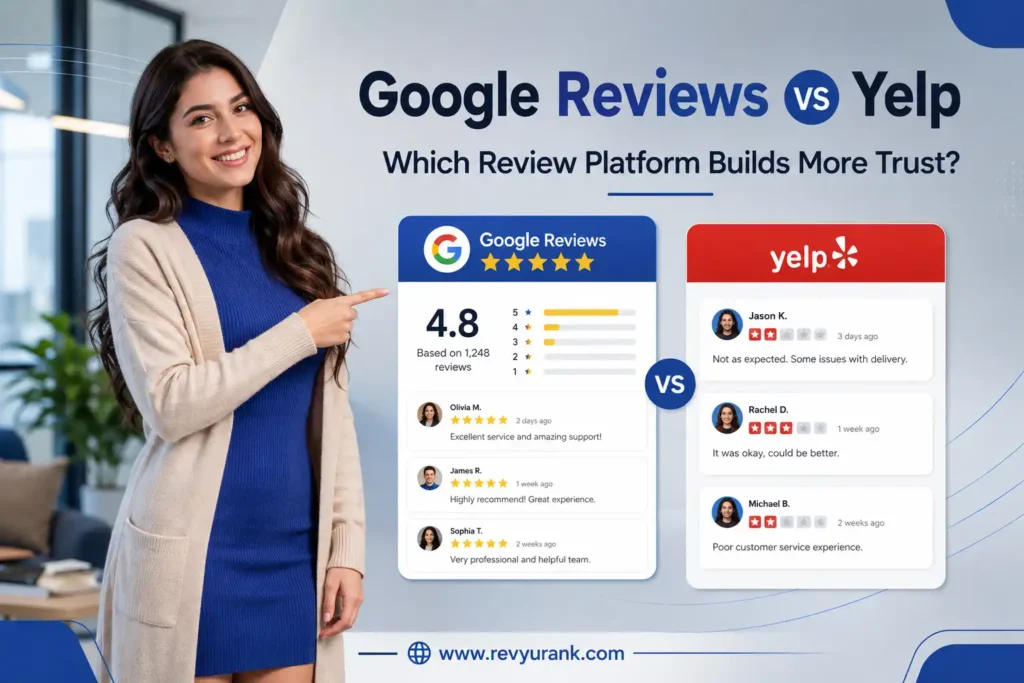
If you run a local company, choosing between Google reviews and Yelp reviews can feel tricky. Both matter, but they help business owners in different ways. Google often wins on reach and visibility, while Yelp can carry extra weight in restaurants, home services, and big-city markets. So which one deserves your time first? The answer depends on how your customers search, what kind of feedback they leave, and where your business needs the most support. Businesses looking to strengthen their online reputation and review strategy can learn more from RevyuRank.
Overview of Google Reviews and Yelp for Business Owners
Google reviews are tied to your Google Business Profile, so they appear where people already search. That makes them a powerful review platform for visibility, especially when customers use Google Maps or search for businesses nearby.
Yelp reviews work differently. Yelp has a more dedicated community, a higher barrier to entry, and stronger filtering. For business owners, the main differences between Google reviews and Yelp reviews come down to reach, review detail, and how each platform handles online reviews.
Understanding Each Platform’s Purpose
Start with purpose. Google reviews are built to support discovery. They sit inside your business profile and appear in Google Search and Maps, which helps people find you fast. This review platform is closely tied to local visibility, so it often brings first-time customers to your door.
Yelp reviews serve a different role. Yelp focuses more on community-driven recommendations and detailed opinions. Users often spend more time reading longer write-ups before choosing a restaurant, salon, or local service. That makes Yelp useful when buyers want depth, not just a quick star rating.
So, is it better for businesses to focus on Google Reviews or Yelp? For most, Google reviews should come first because of reach. Yelp matters more when your audience actively uses it, especially in food, hospitality, and urban service categories.
The Role of Online Reviews in the United States
Across the United States, online reviews act like modern word of mouth. People rarely try a new place without checking opinions first. That habit gives reviews a significant role in how local businesses earn attention and trust.
When reviews appear directly in search results, they shape decisions quickly. A strong rating, recent comments, and active responses can make one listing stand out over another. For many customers, that first impression is enough to decide where to click or call.
Google Reviews and Yelp influence local customer decisions in different ways. Google helps people compare options fast during search. Yelp helps them read deeper feedback before committing. Together, they affect which businesses feel reliable, visible, and worth trying in competitive local markets.
Types of Businesses Commonly Using Google Reviews and Yelp
Not every company uses review platforms in the same way. Many local businesses collect Google reviews because customers can leave them quickly and see them on a business profile right away. That works well for broad visibility.
Yelp reviews tend to matter more in categories where people want detailed experiences before choosing. This is why some small businesses treat Yelp as a secondary priority, while others see it as essential.
- Restaurants often benefit from both, but Yelp can be especially influential in big cities.
- Home services can use Google reviews well because customers often search by urgency and location.
- Salons, local shops, and small businesses may gain credibility from Yelp’s detailed feedback.
- Most businesses should focus on Google first, then build Yelp if their audience is active there.
Key Differences Between Google Reviews and Yelp
The biggest differences between Google reviews and Yelp reviews come down to visibility, access, and moderation. Google places reviews directly in search and maps, while Yelp activity happens mainly inside its own review platform. That gives Google a broader reach.
At the same time, review quality often feels different. Google gets more volume because leaving feedback is easy. Yelp gets fewer reviews, but many are longer and more detailed. These trade-offs matter when you decide where to invest time next.

Review Mechanisms and Moderation
Here is where the gap becomes clearer. Google reviews are easy to post if someone has a Google account. That helps businesses build volume fast, but it can also let fake reviews and spam appear on review sites before action is taken.
Yelp reviews are harder to publish and keep visible. Yelp’s algorithm filters aggressively and may mark some posts as not recommended. Because of that, many business owners feel Yelp has stricter verification in practice, even if the system can hide genuine feedback too.
| Feature | Google Reviews | Yelp Reviews |
|---|---|---|
| Entry requirement | Any user with a Google account can post | Users need a Yelp account |
| Moderation style | Lighter review checks under Google’s policies | Stronger filtering through Yelp’s algorithm |
| Risk of fake reviews | Higher chance fake reviews can slip through | Lower visibility for suspicious content |
| Business frustration point | Removal is not guaranteed | Legitimate reviews may be filtered |
User Experience and Accessibility
For most customers, Google reviews are easier to leave. People already use Google Maps, search results, and Gmail, so there is less friction. A business can also share a review link, which makes the process simple and fast.
Yelp reviews ask more from users. They need a Yelp account, and some people do not want to create one just to leave quick feedback. That extra step changes the user experience and lowers review volume for many businesses.
- Google reviews are easier because most people already have access through Google services.
- A direct review link helps users leave feedback in fewer steps.
- Yelp reviews require a Yelp account, which adds friction.
- Yelp can still feel smoother for active Yelp users who already trust that review platform.
Review Filtering and Verification Processes
Review platforms handle fake or unverified reviews in very different ways. Google’s policies allow businesses to flag inappropriate reviews, spam, or content that breaks rules. Still, removal is not guaranteed, so some questionable posts may remain visible.
Yelp’s algorithm takes a harder line. It tries to identify content that appears biased or unreliable and may move it into a filtered section. That can improve confidence for some readers, but it also frustrates owners when genuine reviews disappear.
So how do these systems handle bad content? Google relies more on reporting and policy enforcement after the fact. Yelp relies more on algorithmic filtering before trust is fully given. Neither method is perfect, but each reflects a different idea of verification on a review platform.
Impact on Local Customer Decisions
When people compare nearby options, reviews often decide who gets the click, call, or visit. That makes both platforms important for local search. For business owners, your online reputation is shaped not only by star ratings, but also by where those ratings appear.
Google usually affects local search results more directly because reviews show up during everyday searches. Yelp can still influence decisions, especially when customers want deeper opinions. To understand that impact better, it helps to look at rankings, trust, and customer perception next.
Influence on Search Engine Rankings
If your goal is local seo, Google reviews carry more weight. They connect directly to your business profile and appear in Google search and Maps. That visibility can improve how often people notice your listing when searching for nearby services.
The seo impact is one reason many businesses prioritize Google first. More positive reviews, active responses, and a complete profile can support better placement in local search results. Yelp pages may still appear in search, but Yelp reviews do not directly raise your Google rankings the same way.
So do Google Reviews or Yelp influence search rankings? Google does, in a much stronger way. Yelp mainly helps inside its own platform, though its pages can still rank in search results and send traffic in some categories.
Trust and Reliability of Reviews
Reliability depends on what you value most. Google reviews offer broad coverage and recent activity, which helps customers spot patterns quickly. Yet the open system can make people question whether every post reflects genuine reviews.
Yelp reviews often feel more trustworthy to heavy users because they are usually longer and face stronger filtering. That said, Yelp’s system can also hide real feedback, so no platform has perfect customer trust. The better question may be which type of evidence helps you decide.
- Google reviews are useful for volume, recency, and quick comparisons.
- Yelp reviews often seem more detailed and trustworthy.
- Genuine reviews can appear on both platforms.
- Customer trust grows most when you compare rating trends, review detail, and owner responses.
Differences in Consumer Ratings and Perceptions
It is common to see one business with different scores across platforms. A company may have a strong star rating on its Google Business Profile but look weaker on its Yelp profile. That does not always mean one rating is wrong.
The gap often comes from who is leaving feedback and how much of it is visible. Google usually has higher review volume because it is easier to post. Yelp has fewer reviews, but they are often more detailed reviews from a more engaged user base.
Why do ratings differ for the same business on Google and Yelp? Different audiences, different filtering, and different review counts all shape perception. A few harsh Yelp reviews can change the average quickly, while larger Google volume may soften that effect.
Pros and Cons for Business Owners
From a business point of view, both platforms offer value, but they support your online presence in different ways. Google reviews often help with visibility, speed, and scale. Yelp reviews can build stronger credibility with certain audiences. So which review platform deserves more attention? For most business owners, Google should be the priority because it reaches more potential customers.
Yelp becomes especially useful when your category and market already depend on it. Let’s weigh the pros and cons of each one clearly. Businesses looking to improve their review strategy and strengthen customer trust can explore RevyuRank for expert insights and reputation management resources.
Pros and Cons of Google Reviews
Google reviews are hard to ignore because they connect directly to your Google Business Profile, local search, and Google Maps. For many businesses, that creates the fastest path to better visibility and a stronger online reputation.
Still, ease of access has a downside. Because so many people can post quickly, review quality may vary, and fake or low-effort feedback can appear. That means owners need to monitor comments and respond carefully.
- Google reviews support local search visibility and discovery.
- They are easy to collect because most users already have Google access.
- Positive reviews can strengthen click-throughs and customer confidence.
- The downside is lighter moderation, which can allow low-quality or fake content to slip through.
Pros and Cons of Yelp Reviews
Yelp reviews can be powerful when your audience already trusts the platform. A complete Yelp profile, strong written feedback, and regular engagement can help restaurants, salons, and service brands stand out with serious buyers.
At the same time, Yelp’s algorithm is a common pain point. It can hide reviews that owners believe are real, which makes reputation management less predictable. Some businesses also dislike pressure around Yelp ads and paid upgrades.
- Yelp reviews often feel more detailed and trusted by active Yelp users.
- The review platform can work well in food, hospitality, and city-based services.
- Yelp’s algorithm may filter even genuine reviews.
- Yelp ads and sales pressure can be frustrating for some owners.

Frequently Asked Questions
Q: Which platform has more reliable reviews, Google or Yelp?
A: Yelp reviews are often seen as more trustworthy because they are usually longer and filtered more aggressively. Google reviews offer broader coverage and faster volume, but fake posts can appear more easily. For customer trust, both help, but comparing genuine reviews across both platforms is the safest move.
Q: Why do ratings often differ for the same business on Google and Yelp?
A: Google reviews and Yelp reviews often show different scores because each review platform has a different audience, filtering system, and review volume. Google usually has more ratings, while Yelp may show fewer but stronger opinions. That can shift the average star rating even for the same business.
Q: Should I check both Google and Yelp before choosing a restaurant?
A: Yes, checking both Google reviews and Yelp reviews is a smart idea before choosing a restaurant. Google helps with quick local search comparisons, while Yelp often gives more detailed experiences. Using each review platform together can give you a clearer view of customer satisfaction and what to expect.
Conclusion
In conclusion, understanding the pros and cons of Google Reviews and Yelp is essential for any business owner looking to enhance their online presence. Both platforms offer unique benefits and challenges, influencing customer decisions and perceptions.
Google Reviews provides greater visibility through search engine integration, while Yelp specializes in restaurant and service reviews, building a dedicated community. By leveraging both platforms effectively, you can improve your business’s reputation and attract more customers.
Make sure to consider your specific industry and target audience when choosing where to focus your efforts. If you’re ready to take your online reputation to the next level, get a free consultation with our experts today!