
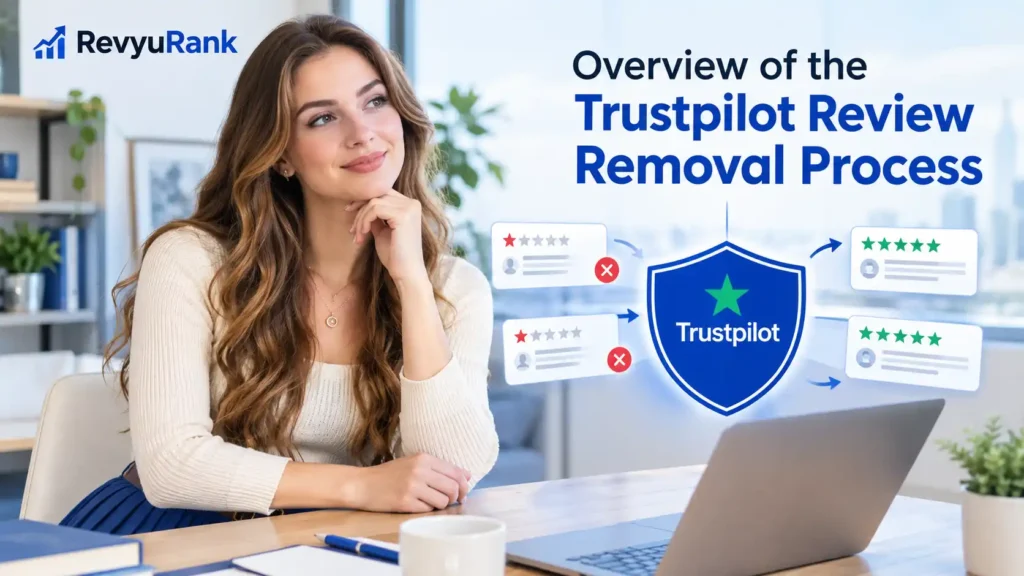
You can remove a review from Trustpilot when it violates Trustpilot’s content guidelines, such as containing offensive language, personal information, promotional content, conflicts of interest, or other prohibited material. However, businesses generally cannot remove a review simply because it is negative or because they disagree with the customer’s opinion.
The Trustpilot review removal process usually starts by identifying the specific guideline violation and reporting the review through the appropriate Trustpilot channel. Trustpilot may then review the report and request additional information or evidence. If the review is found to violate its guidelines, it may be removed or otherwise actioned. If it does not violate the rules, the review can remain published.
For businesses, the safest approach is to report only legitimate guideline violations, keep relevant evidence, respond professionally to genuine negative feedback, and continue collecting authentic customer reviews. This approach helps protect your online reputation without risking further problems from inappropriate review-manipulation practices.
Understanding the Trustpilot Review Removal Process
The Trustpilot review removal process is the system used to assess whether a trustpilot review breaks trustpilot’s guidelines. It is not a tool for removing criticism just because it feels unfair. Instead, Trustpilot looks at whether the content violates platform rules and whether there is objective proof to support the request.
This matters because business reputation can change fast when bad reviews stay visible. A reviewer can edit or remove their own post, and a business can flag content for removal when it clearly breaches guidelines or shows signs of a fake review.
What Types of Trustpilot Reviews Can Be Removed
Not every negative review can be taken down. Trustpilot focuses on whether the content breaks trustpilot guidelines, not whether it hurts your feelings or your sales. So, can Trustpilot reviews be removed if they violate guidelines? Yes, but only when the content falls into a recognized removal category and the case is backed by specific evidence.
Common examples include:
- Fake trustpilot reviews that do not reflect a genuine experience
- Reviews containing personal information like names, emails, or phone numbers
- Content that is actually about another business or another domain
- Spam, advertising, scams, or other irrelevant material
Here is the key difference. Genuine criticism about real service may stay online, even if it is harsh. Harmful content, phony reviews, or posts unrelated to the business are far more likely to qualify for review removal than honest bad reviews.
Reasons for Flagging or Removing a Trustpilot Review
A business or reviewer may flag content when there are clear guideline breaches on the trustpilot platform. The goal is not to silence unhappy customers. It is to address content that should not be there in the first place. If you want to report and remove a fake review from Trustpilot, start by choosing the right reason and gathering proof.
Typical reasons include:
- A fake or phony review with no matching transaction or service history
- Offensive, harmful, or threatening language that can lead to financial loss
- Personal information shared in public
- Promotional links, spam, rumors, or content about another business
Evidence of a guideline violation matters more than opinion. From a business angle, this protects your listing from abuse. From a consumer angle, it helps keep online reviews fair. If Trustpilot refuses to remove a fake review, your next step is usually to appeal with stronger documentation.
When Is It Possible to Remove a Trustpilot Review?
Trustpilot review removal is possible only when a post meets the platform’s removal criteria. That means the review must break a rule, such as being fake, harmful, promotional, or unrelated to the business. A negative opinion alone is not enough.
From a review management standpoint, that distinction is important. If you use the trustpilot business dashboard, you can flag questionable service reviews, but the decision depends on content integrity and relevance. The next sections explain which trustpilot guidelines matter most and what circumstances tend to justify removal.
Violations of Trustpilot’s Guidelines
Trustpilot guidelines are the main standard used in any flagged review case. If a review contains harmful content, spam, personal information, or signs of a fake review, it may qualify for removal. Trustpilot does not remove content just because it is negative. It removes content when the post crosses a policy line.
For example, a review may be challenged if it targets people based on identity, includes extreme profanity, promotes another business, threatens violence, or praises hate groups. A review can also be flagged when it was clearly meant for another company or another domain instead of the business profile where it appears.
This is why knowing the rules helps. Can Trustpilot reviews be removed if they violate guidelines? Yes, that is the core basis for removal. Businesses that understand trustpilot guidelines can flag content more accurately and avoid misusing the platform’s guidelines.
Circumstances That Justify Review Removal
A review is more likely to be removed from your business profile when there is a clear policy issue, not just a negative review. If you are wondering how to permanently remove a review from Trustpilot, the honest answer is simple: only the reviewer or Trustpilot can do that, and Trustpilot acts only when the content qualifies under its rules.
Situations that may justify removal include:
- The review was not based on a genuine experience
- The post contains personal attacks or prohibited harmful language
- The same reviewer posted duplicates
- The review is obviously about another business or domain
For trustpilot business users, documentation is key. Missing transaction records, screenshots, and internal logs can support the request. When the review is truly fraudulent or irrelevant, removal helps protect the business’s reputation without blocking genuine customer feedback.
How to Flag a Trustpilot Review as a Business
If you run a trustpilot business account, the platform gives you a structured way to report a suspicious trustpilot review. You cannot delete the post yourself, but you can send it for assessment through the review management tools in your dashboard.
The process usually starts after you log in, open your service reviews, and use the flag icon on the post in question. From there, you select the reason for concern and provide details. The next section breaks the steps down so you know exactly what to do.
Step-by-Step Guide for Businesses to Flag a Review
Want to know how to report and remove a fake review from Trustpilot? Start in the Trustpilot business dashboard. A business owner must first access the review area, choose the correct reason, and support the flagged review with clear facts. For assistance, you can also fill out the contact form available through our support. The system is simple, but accuracy matters.
Follow these steps:
- Log in to your business account or create a free account after claiming your profile
- Go to Trustpilot Business > Manage Reviews > Service Reviews
- Find the review and click the flag icon
- Choose the best reason, such as fake review, personal information, or harmful content
- Highlight the exact text causing the problem
- Submit any specific evidence or additional information available
After that, confirm your request and wait for the internal team to assess it. If you do not recognize the reviewer, Trustpilot may prompt you to request more details, such as order numbers or contact information, before deciding on review removal.

What Happens After You Flag a Review?
Once you submit flagged content, Trustpilot’s moderation team and content integrity team review the case against platform rules. The review often stays visible during this stage. That can feel frustrating, but it is part of the standard review removal process.
In many cases, Trustpilot contacts the reviewer and asks for proof of a genuine experience. If the reviewer cannot provide enough support within the stated window, the post may be removed. If the evidence is weak on both sides, the review may remain online.
How long does it usually take for Trustpilot to remove a flagged review? Some cases move in a few business days, while others take longer, especially when the content integrity team asks for more evidence. If that happens, your next step is to respond quickly with any requested material.
How to Delete or Edit Your Own Trustpilot Review
If you wrote the trustpilot review yourself, you have more control than the business does. Reviews are owned by reviewers, which means you can usually log in through your trustpilot profile and choose whether to delete the post or update it. That is different from a business asking for review removal under guideline rules.
Editing and deleting serve different purposes. Deleting removes the feedback entirely, while editing lets you reflect a genuine experience more accurately if the issue was resolved or details changed. In review management terms, that matters because your updated star ratings or written comments can affect how the business appears publicly and how readers interpret the trust report around that company.
Deleting Your Review as a Consumer
If you are asking what steps you should follow to delete your own Trustpilot review, the deletion process is usually handled inside your trustpilot profile. Because the review belongs to you, you can often remove it without asking the business for permission.
Start by signing in to the account you used to post the review. Find your online reviews, including any new reviews, open the relevant entry, and choose the delete option if available. Trustpilot may ask you to confirm the action before the post disappears from the business page.
This is also part of the official process for editing or deleting a Trustpilot review. If you cannot access the account, you may need to verify your identity first. Once deleted, the review no longer appears on the listing, and over time, that can influence Google search results and how people view the business.

Editing and Updating a Posted Review
Sometimes deleting a review is not the best move. If a company fixed the issue, refunded you, or improved the experience, editing your post may better reflect the genuine service you received over time. That keeps the feedback honest and useful.
The official process for editing or deleting a Trustpilot review usually begins in your account area. Open the review, choose edit, update your comments, and adjust your star ratings if needed. Then save the changes so the revised version appears on the public profile.
From a review management angle, edits can matter a lot. A change from a harsh complaint to a balanced update may help businesses show responsiveness and may encourage more happy customers to trust them. It can also affect a business’s trustscore because published ratings contribute to how the profile is calculated, as highlighted by the local consumer review survey data.
What Evidence Does Trustpilot Require for Removal?
Trustpilot requires more than a claim that a review feels false or unfair. On the trustpilot platform, review removal depends on evidence of a guideline violation supported by objective proof. That is why many requests fail. They rely on suspicion instead of facts.
If you plan to challenge a review, be ready with additional evidence. Transaction records, screenshots, emails, and quoted language from the post can all help. The following sections explain what material is most useful and how to show that the content truly breaks Trustpilot’s guidelines.
Relevant Documentation and Screenshots
Strong cases usually include relevant documentation, not guesses. If you want evidence that supports review removal, collect the material before you submit the flag. That makes it easier to explain why the review does not match your records or why it contains prohibited content.
Useful examples include:
- Order numbers, appointment logs, or CRM records showing no matching transaction
- Emails or account history that contradict the timeline in the review
- Screenshots with the exact wording that includes harmful content or personal information
Specificity matters. When businesses ask, how do I report and remove a fake review from Trustpilot, the answer often comes down to proof. Vague statements like “we do not know this person” are weak. Clear evidence with dates, screenshots, and additional information gives the internal team far more to work with.
Demonstrating Policy Violations
To show policy violations, match your evidence to the exact rule you believe was broken. Trustpilot’s guidelines focus on clear categories, so your submission should do the same. If the issue is a fake review, show there is no matching order, visit, or service record within the timeframe claimed.
If the concern is harmful language or personal information, quote the exact part of the post and explain why it creates guideline breaches. If you suspect a conflict of interest, provide objective proof that the reviewer is a competitor, employee, or otherwise affiliated person rather than a normal customer.
Can Trustpilot reviews be removed if they violate guidelines? Yes, but your case must make that violation easy to see. Organize the file clearly for Trustpilot’s content integrity team so they can quickly understand the breach and connect each claim to supporting evidence.
How Trustpilot Investigates Flagged Reviews
After a flagged review is submitted, Trustpilot investigates it through a mix of internal review and platform systems. Trustpilot’s content integrity team looks at the reason for the report, the evidence provided, and any reviewer input linked to the case.
The process is meant to be impartial. Trustpilot also uses fraud detection technology across its review cache to catch suspicious patterns before and after publication. Even so, human assessment remains important, especially when the facts are disputed. The next sections explain what that investigation usually looks like and how Trustpilot communicates during it.
The Review Assessment Procedure
The trustpilot moderation team follows a structured review assessment process. While the exact timing can vary, the path is fairly consistent. This helps both businesses and reviewers understand what happens after flagged content is submitted.

Typical steps include:
- The business or user submits a flag with a stated reason
- Trustpilot checks the review against platform rules
- The reviewer may be asked for proof of a genuine experience
- The internal team reviews all submitted materials
- A final decision is made to keep, remove, or request more detail
| Outcome | What It Means | Typical Timeline |
| Review remains live | Evidence does not support removal | Often a few business days or longer |
| More information requested | Trustpilot needs reviewer input or additional evidence | Can extend the case by several days or weeks |
| Review removed | A guideline breach is confirmed | May happen after verification is complete |
For you, the main takeaway is patience. The trust report standards favor evidence, not urgency. So, how long does it usually take for Trustpilot to remove a flagged review? Sometimes quickly, but complex disputes can last much longer.
Communication from Trustpilot During the Process
Trustpilot usually communicates through your account and case-related notifications. You may see status updates in the dashboard before a final message arrives. That communication can feel limited, but it often signals whether the case is moving forward or waiting on reviewer input.
At times, Trustpilot may ask for additional information from the business or the reviewer. That could include transaction details, order records, or proof that the reviewer had a genuine interaction. Fast replies help because delays on either side can slow the entire process.
What should you do if Trustpilot refuses to remove a fake review? First, read the decision carefully. Then decide whether you can provide stronger evidence. If not, focus on other steps that protect your business’s trustscore and public image, such as a calm response and stronger review management going forward.
How Long Does Trustpilot Review Removal Take?
There is no guaranteed deadline for trustpilot review removal. Some cases involving flagged content are resolved within a few business days, while others take several weeks. The difference usually depends on how clear the issue is and whether Trustpilot needs more proof from either side.
That uncertainty can be frustrating, especially when a harmful post is live. Still, knowing the likely range helps you plan your next step. The sections below cover average timelines and the main factors that speed up or slow down the decision process.
Average Timelines for Review Decisions
In many cases, review decisions arrive within a few business days. That is more common when the violation is easy to confirm, such as obvious spam, personal information, or a review posted to the wrong business. Simple cases tend to move faster because the platform’s guidelines are easier to apply.
More complicated cases take longer. If Trustpilot asks the reviewer for proof of a genuine experience or requests extra material from the business, the timeline can stretch into several weeks. This can be considered the hardest part, as average timelines are only rough estimates, not promises.
So, how long does it usually take for Trustpilot to remove a flagged review? The best answer is this: anywhere from a few business days to much longer, depending on the facts. Good review management means watching the dashboard and responding quickly to any requests for more detail.
Factors That Impact Processing Time
Several things affect processing time. Even when you submit a clear complaint, the internal team still has to compare the review, the selected flagging reason, and any evidence from both parties. That takes longer when the facts are disputed.
Common factors include:
- The volume of flagged cases being handled at the time
- The complexity of the claim, especially around fake review disputes
- Whether the business and reviewer submit additional information quickly
If you want a faster outcome, respond promptly and keep your file organized. That will not guarantee removal, but it can reduce delay. Since bad reviews can affect net reputation and customer trust, fast action matters. Even so, Trustpilot will still prioritize evidence over speed.
Responding to Reviews vs. Requesting Removal
When a critical post appears, you usually have two options: request removal or write a public response. Good review management means choosing the one that fits the situation. If the review breaks rules, removal may be worth pursuing. If it reflects a real experience, a reply may be smarter.
Both choices affect business reputation. Online reviews shape how potential customers see your brand, so the right move depends on whether the issue is a policy problem or a customer service problem. The next sections compare both paths in practical terms.
Pros and Cons of Addressing Reviews Publicly
A public response can be powerful when the review appears to come from a real customer. It shows that the business owner is paying attention and willing to fix problems. For many readers, that matters as much as the original complaint.
Pros and cons include:
- Pro: It shows accountability and professionalism
- Pro: It may reassure potential customers and happy customers alike
- Con: A poor reply can make net reputation worse
- Con: It does not remove the review from the page
Public responses work best when the issue seems genuine, even if the customer is upset. If you can explain your side politely, offer help, and avoid arguments, the response may soften the impact. Still, when the post is fake or clearly abusive, removal can be the better option.
When to Choose Review Removal over Response
Choose review removal over a response when the content should not be on the platform at all. That includes a fake review, spam, personal information, harmful threats, or a post meant for another business. In those cases, a reply may not solve the real problem.
For a trustpilot business account, this choice is often about protecting business reputation without engaging with abusive or misleading content. If there is no record of the reviewer, or if the post contains policy violations, it makes sense to flag it first and build your case with evidence.
When should removal take priority over a response? Usually when the review damages trust through falsehood, not when it simply reflects dissatisfaction. If the post is legitimate but harsh, respond. If it is prohibited or fabricated, seek review removal and protect your brand credibility that way.
What to Do If Trustpilot Refuses to Remove a Review
If Trustpilot refuses to remove a trustpilot review, do not assume you have no options. First, review the reason for the decision and compare it with the evidence you submitted. Many declined requests fail because the proof was too general. If you can gather stronger records, screenshots, or quoted text tied to a rule breach, you may have grounds to try again. For a trustpilot business account, careful documentation is often the difference between a rejected request and a stronger second review.
At the same time, keep your wider review cache and trust report in mind. One review can hurt, but it does not define your whole profile. You can still post a measured public response, encourage more genuine customer feedback, and monitor future content closely. Including a website link to solicit more reviews can be helpful. A proactive approach helps reduce the long-term impact on your business’s reputation even when a single removal request does not succeed.
Appealing Trustpilot’s Decision
If Trustpilot refuses to remove a fake review, your next step may be an appeal or a fresh submission with stronger support. The business owner should not simply repeat the same argument. Instead, focus on what was missing the first time and build a clearer file.
That might include transaction logs, appointment records, employment records, or quoted language that directly matches a rule violation. The internal team reviews escalated cases based on evidence, so new material matters far more than restating your frustration.
Good review management means keeping records of every action you take. Save screenshots, case notes, and dates of communication. If the issue appears to be part of a larger pattern of manipulation, document that too. Even if the appeal does not lead to removal, organized records can support future action and help you manage similar cases better.
Alternative Steps for Reputation Protection
If a review stays online, shift your focus to reputation protection. You may not control that one post, but you can improve what people see around it. Stronger monitoring and fresh customer feedback can reduce the impact of new threats on your business’s reputation over time.
Helpful steps include:
- Encourage more happy customers to leave honest reviews
- Keep reviewing your profile for new issues and additional information requests
- Consider professional support for review monitoring and strategy
Are there services that can help remove reviews from Trustpilot? Some reputation management providers help businesses organize evidence, handle submissions, and protect visibility in Google search results. They cannot force Trustpilot to delete content, but they may assist with process, response strategy, and long-term reputation support. Regular review of your trust report also helps you spot patterns early.
Frequently Asked Questions (FAQ)
Navigating the Trustpilot review system can raise various questions. Potential customers often wonder how a business can effectively manage reviews or what steps to take when faced with negative feedback. Understanding the role of Trustpilot’s content integrity team can clarify this process, as they are responsible for investigating flagged reviews and ensuring adherence to platform guidelines.
When seeking removal of bad reviews, it’s essential to provide specific evidence showcasing any guideline breaches. Remember, effective communication through public responses can also positively impact your business’s reputation and trustscore.
Q: Can companies pay Trustpilot to remove negative reviews?
A: No. A trustpilot business cannot pay for the removal of negative trustpilot reviews just because they are damaging. On the trustpilot platform, removal depends on trustpilot guidelines and evidence of a real violation. Payment does not replace the need for proof or change the rules.
Q: Can a removed Trustpilot review be restored?
A: A removed trustpilot review may be restored only in limited situations, such as when the trustpilot platform or moderation team determines that the content actually complies with trustpilot’s guidelines. If a deleted review was properly removed for a confirmed violation, reinstatement is far less likely.
Q: Are there services that help with Trustpilot review removal?
A: Yes, some firms offer support with trustpilot review removal, evidence gathering, and reputation protection. Still, no third party can guarantee deletion. The best legitimate services help a trustpilot business manage submissions, responses, and broader online reputation issues rather than promising impossible results.
Conclusion
Navigating the Trustpilot review removal process can seem daunting, but understanding how it works is crucial for maintaining your business’s reputation. By knowing what types of reviews can be removed, how to flag them properly, and what evidence is needed, you can effectively manage your online presence. Remember, open communication with Trustpilot and addressing concerns transparently can go a long way.
If you find yourself facing challenges with negative reviews, take the time to appeal decisions and explore alternative steps for protecting your reputation. An effective way to seek personalized guidance is to reach out for a free consultation—your brand’s reputation deserves the best care!