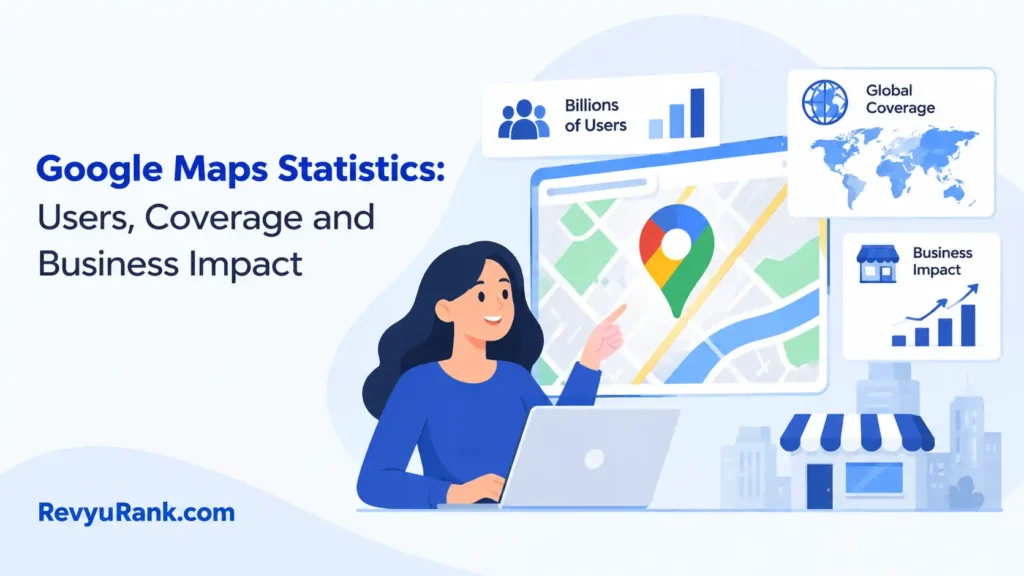
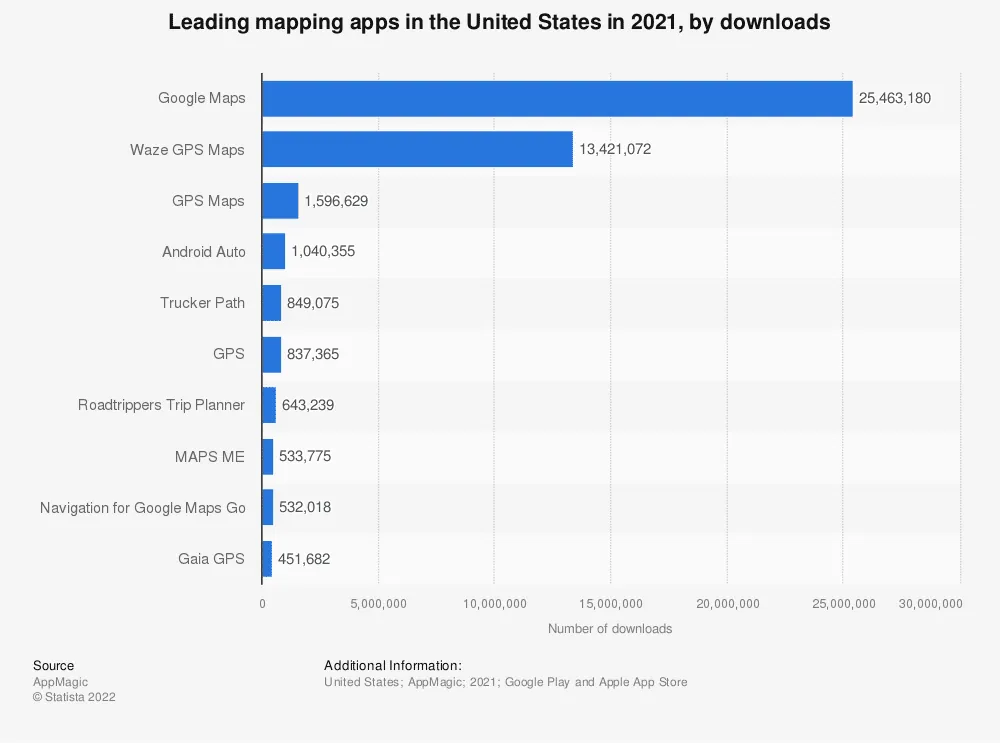
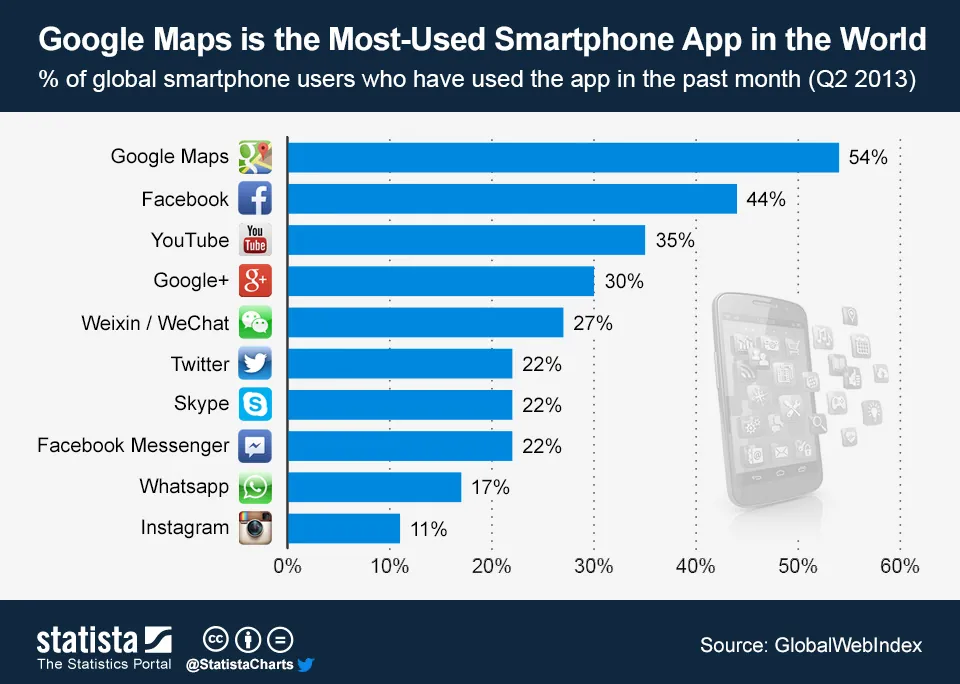
The most reliable Google Maps statistics show the app had over 1 billion monthly active users by early 2024. It covers more than 250 countries and territories, and businesses with a verified profile receive about five times more views than those without one.
Your real numbers depend on three things: whether you’re looking at global usage or local search volume, your industry, and how complete your business listing is. The rest of this page breaks down each one so you can find the figure that actually applies to you.
Who needs these map numbers
Three different people usually look up these figures, and they don’t need the same thing. A small business owner wants to know if being on the map actually brings in customers. They already have a shop or service area and need the exact numbers that decide if a free profile is worth their time.
A marketer or agency worker needs data for a pitch deck or strategy report. They’re after percentages they can put in front of a client to justify spending money on local search optimization. They don’t need setup instructions; they need credible sources.
A developer building an app with location features wants to understand API limits and coverage. They care about how many places are mapped and what happens when they hit a usage threshold.
This page serves the first two readers best. If you’re a business owner or marketer trying to understand what visibility on this platform is worth, the numbers below apply directly to your decisions. The breakdown assumes you run a physical location or serve a specific local area.
If you’re a developer looking for pricing tiers or API call limits, you’ll need to read the official documentation instead. The figures here focus on user behavior and business outcomes, not technical specifications. Every percentage mentioned ties back to either Alphabet’s public financial disclosures or published research from recognized industry bodies, so you can use them without guessing.
What changes the numbers
Not every business sees the same results from the same platform. Five factors shift the figures you’ll actually experience, and getting them wrong means planning around numbers that don’t belong to you.
Your business category moves the baseline the most. Restaurants and hotels see far higher interaction rates than plumbers or accountants because people search for food impulsively but plan professional services ahead of time. Check your specific category benchmarks rather than using a general average.
Profile completeness dictates your actual visibility. A listing missing hours, photos, or a description won’t reach the averages cited for fully optimized profiles.
Geographic density creates a trade-off between traffic and competition. A shop in a city center gets more raw searches than one in a rural town, but it also competes against dozens of similar businesses within a single mile. Rural businesses often convert a higher percentage of fewer views.
Review count and rating alter click-through behavior significantly. A 4.5-star rating with fifty reviews outperforms a 5.0-star rating with only two reviews because volume signals reliability to the algorithm and to humans.
Seasonal demand shifts everything month to month. A pool cleaning service will see summer search volumes triple winter numbers, while tax preparers peak in March and April. Your annual average hides these spikes, so look at monthly breakdowns in your performance data instead of relying on a single yearly figure.
The factor people get wrong most often is assuming global averages apply to their specific zip code. They read that local searches lead to a visit within a day and expect the same foot traffic, ignoring that their rural area has fewer daily searchers than a downtown block. Always filter available data by your actual service radius.
How to read your Google Maps statistics
You don’t just absorb these figures; you pull your own from the dashboard to see where you stand. Here’s how to extract the numbers that matter for your specific location.
- Open your Business Profile management tool and navigate to the “Performance” section. This is where your actual impressions live, not the global averages.
- Select the date range you want to analyze. Choose the last six months to smooth out seasonal spikes, unless you specifically need to compare year-over-year holiday traffic.
- Look at the “Searches” breakdown first. Note the exact split between direct searches (people typing your name) and discovery searches (people typing your service). Discovery should be over 70% if you’re growing.
- Check the “Actions” tab next. Count the total direction requests versus website clicks. If direction requests dominate, your audience is ready to visit physically.
- Scroll down to the photo metrics. Compare your view count against the median for your category, which the dashboard sometimes provides, or you can estimate from competitor listings.
- Export the data as a CSV file if you need to build charts. Raw spreadsheets let you calculate your own conversion rate from impression to action.
- This tells you if your ads or SEO are reaching the right neighborhoods.
- Set a calendar reminder to repeat this process every thirty days. A single snapshot means nothing without a trend line showing growth or decline.
The judgment call that separates useful analysis from vanity metrics is deciding which action matters for your revenue. If you sell high-ticket consulting, one website click leading to a phone call outweighs five hundred direction requests from people who can’t afford you. Pick the metric tied to your actual income and track only that one relentlessly.
Situations and their outcomes
Different scenarios require different responses, and the effort you spend should match the potential return. Here’s how the numbers shift depending on your starting point.
| Your situation | Action to take | Effort required | Watch out for |
|---|---|---|---|
| New business, no profile | Claim and verify immediately | Two weeks for postcard | Wrong address typos |
| Existing profile, zero photos | Upload ten clear images today | One hour | Blurry or dark pictures |
| High views, low visits | Check directions and parking info | Thirty minutes | Outdated opening hours |
| Competitor outranking you | Request reviews from recent buyers | Ongoing weekly task | Fake review penalties |
| Multiple locations | Build separate profile per address | Several hours | Duplicate listing flags |
| Service area only, no shop | Hide address, set radius | Fifteen minutes | Too wide a radius |
Each row represents a distinct problem with its own solution. Don’t apply the fix for low photos to a problem caused by incorrect hours. Match your symptom to the right column before spending time on changes that won’t move your specific needle.
Details that change the outcome
Preparing the profile correctly
A complete profile pulls significantly more weight than a bare one. Listings with photos receive more direction requests and website clicks than those without any images. The difference isn’t marginal; it compounds over months.
Upload at least ten high-quality photos covering your exterior, interior, products, and team. Don’t use stock images, as the platform’s guidelines explicitly prefer authentic photography. Authentic shots build trust faster than polished but generic alternatives.
Fill out every single attribute field available for your category. If you offer wheelchair access, free Wi-Fi, or outdoor seating, toggle those switches on. Searchers filter by these attributes, and missing them removes you from filtered results entirely.
Reading the signals properly
Check your performance dashboard weekly, not monthly. Weekly checks catch sudden drops caused by accidental edits or suspended categories before they cost you a full month of revenue.
Look at the ratio of discovery searches to direct searches. If discovery is below 50%, your profile isn’t reaching new customers; it’s only serving people who already know you. That requires a different strategy focused on keywords and categories.
Ignore total impression counts if your conversion actions aren’t rising alongside them. Impressions without clicks mean you’re appearing in searches where you aren’t relevant, which wastes attention and skews your perceived success rate.
Track phone calls separately from direction requests. A spike in calls might indicate confusion about your hours or services, while direction requests signal purchase intent. Treating both as equal “engagement” leads to wrong conclusions about customer behavior.
Leave the star rating alone once it stabilizes above 4.0. Obsessing over moving from 4.6 to 4.7 yields diminishing returns compared to adding fresh photos or responding to existing reviews promptly. Focus your energy where the gap is widest.
When map numbers drop
Numbers rarely fall without a reason, and spotting the pattern early saves revenue. Here’s what the symptoms usually point toward.
| What you notice | What it usually means | What to do first | How to stop it happening again |
|---|---|---|---|
| Sudden impression drop | Category suspension or edit | Check email for alerts | Avoid bulk editing fields |
| Fewer direction requests | Incorrect hours listed | Update opening times | Verify holiday schedules early |
| Zero phone calls | Number formatting error | Re-enter digits manually | Test dial from another phone |
| Ranking fell locally | New competitor verified nearby | Add fresh photos weekly | Request customer reviews consistently |
| Website clicks stopped | Broken URL in profile | Paste link again | Check site uptime daily |
| Reviews disappeared | Policy violation flagged | Read removal email carefully | Never buy fake reviews |
Don’t panic when one metric dips slightly week over week. Normal fluctuation happens due to weather, holidays, or local events. Only act when a number drops by more than 20% and stays down for three consecutive days.
Rules governing map data
Alphabet’s terms of service dictate what you can and can’t do with your listing. Violating them doesn’t just lower your rank; it can remove your business entirely. You must represent your physical location accurately, meaning virtual offices or PO boxes aren’t allowed for local profiles.
Data privacy regulations like the GDPR in Europe and the CCPA in California affect how user location data is collected and stored. If you’re embedding maps on your own website, you must disclose this tracking in your privacy policy according to the rules published by the European Data Protection Board.
For developers using the API, billing thresholds apply automatically. You get a recurring monthly credit, but exceeding it triggers charges based on current rate cards. Check the official pricing sheet before launching any app that relies heavily on geocoding or routing requests.
Misrepresenting your business category to appear in unrelated searches violates platform policies. Enforcement teams suspend listings caught doing this, and reinstatement takes weeks of appeals. Stick to the primary category that genuinely describes your core service.
If your business operates in a regulated industry like healthcare or legal services, additional verification steps may apply depending on your country’s laws. Always cross-reference platform requirements with your local licensing board’s digital advertising rules.
What visibility costs
Creating and maintaining a standard Business Profile costs nothing. There’s no monthly fee to appear in search results or on the map interface. The platform monetizes through paid advertisements, not organic listings.
However, the hidden cost is time. Verifying a new location via postcard takes up to fourteen days. Optimizing photos, responding to reviews, and updating seasonal hours requires roughly two to four hours monthly for a single-location business.
If you hire an agency to manage your local presence, fees are typically inexpensive relative to the alternative depending on location count and competition level. This assumes they handle review generation, posting updates, and citation building across other directories.
Paid promotions operate on an auction model. You set a daily budget, and costs per click vary wildly by industry and geography. A lawyer in New York pays vastly more per click than a bakery in Ohio. You can check current bid estimates inside the ad manager before committing funds.
The trade-off is clear: organic optimization costs labor but builds permanent equity, while paid ads deliver instant traffic that vanishes the moment you stop funding them. Neither approach guarantees revenue without a functional website or physical storefront ready to convert visitors.
Keeping your listing accurate
An outdated profile actively harms your business because customers rely on it for real-time decisions. Set a recurring calendar event every quarter to audit your information against reality.
Check your operating hours first, especially around public holidays. The platform allows you to set special hours for specific dates, preventing angry customers from arriving when your doors are locked.
Monitor your Q&A section weekly. Anyone can ask and answer questions on your profile, meaning incorrect answers from strangers might sit there misleading potential buyers. Provide official answers yourself to control the narrative.
Watch for duplicate listings created accidentally by third-party data aggregators. If you spot two profiles for the same address, request a merge immediately through the support tools. Duplicates split your reviews and confuse the ranking algorithm.
The sign that your profile needs immediate attention is a sudden increase in customer complaints about wrong directions or closed doors. Don’t wait for the quarterly audit if real people are already getting lost. Fix the core facts the same day you notice the friction.
When maps aren’t the answer
Relying solely on this platform fails certain business models entirely. If you sell exclusively online with no local pickup option, optimizing a geographic profile wastes resources you should spend on broader search engine optimization or social media advertising.
Businesses targeting national or international audiences rather than local ones won’t benefit from map pack rankings. A software company serving global enterprise clients needs content marketing and LinkedIn outreach, not a pinned location in one specific city.
If your industry prohibits public reviews due to confidentiality—like certain medical specialties or legal practices—the review-driven nature of map rankings works against you. Competitors who can solicit feedback will always outrank you organically.
In these cases, shift your budget toward traditional SEO, pay-per-click search ads, or industry-specific directories where your actual buyers look. Don’t force a local strategy onto a non-local business model just because the platform is popular.
If your operations involve hazardous materials or secure facilities where public mapping poses safety risks, consult your legal team before publishing exact coordinates. Some government contractors and specialized manufacturers deliberately keep their locations off public mapping services for security reasons.
Frequently asked questions
How many people use the app monthly?
Over 1 billion active users access the platform every month globally as of 2024.
Can I see my exact ranking position?
No, the platform doesn’t provide a static rank number because results change based on the searcher’s location, device, and query. You can only track relative performance through impression trends in your dashboard.
Why did my reviews disappear overnight?
Reviews vanish when the automated spam filter flags them as fake, purchased, or originating from the same IP address as your business. Check your notification center for policy violation alerts explaining the removal.
How long does verification take?
Postcard verification typically arrives within 14 days of requesting it, assuming your mailing address matches postal records. Video or phone verification methods, when offered, complete within minutes or hours instead.
Is it safe to ignore negative reviews?
Ignoring them hurts your conversion rate because potential customers read unaddressed complaints as indifference. Respond professionally within 48 hours to show future visitors that you handle problems responsibly.
Does paying for ads improve organic rank?
No, paid placements and organic map rankings operate on completely separate systems managed by different algorithms. Spending money on ads won’t boost your natural visibility in the local pack.
What happens if I list a fake address?
Your profile will eventually face suspension once manual reviewers or automated checks detect the mismatch between your stated location and actual GPS data from visitors. Reinstatement requires proving legitimate physical presence.
Do photos really change the numbers?
Yes, profiles with uploaded images receive significantly more direction requests and website clicks than those relying on default Street View imagery alone. The difference is measurable inside your performance dashboard.
Start checking your data
Open your Business Profile dashboard today and pull your discovery search percentage for the last thirty days. You’ll see exactly how many strangers found you versus returning customers, giving you a baseline to measure against.
If that discovery number climbs after you add photos or update hours, your changes are working. If your profile gets suspended or you receive a policy warning email, stop editing immediately and contact official support before making further changes.

Robert Miller works as a Reputation Management Consultant. He has been helping U.S. businesses for over ten years. His work involves helping people protect and enhance their online image.Robert has worked with a wide range of companies. He has helped new businesses, local places that give a service, and big companies. He helps turn customer reviews into something that helps people trust their company and drives business growth.