
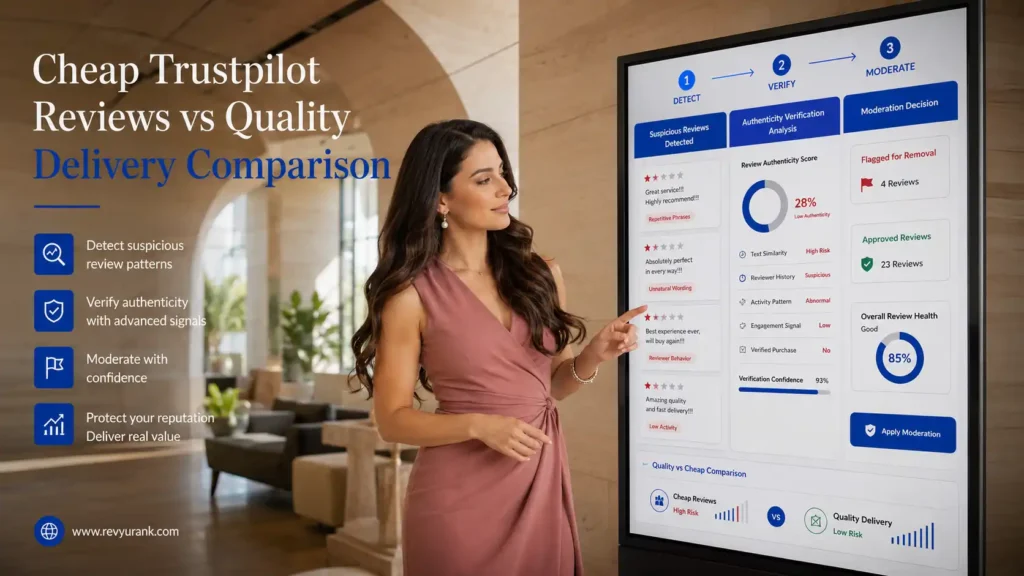
Cheap Trustpilot reviews may appear attractive because of their low price, but quality and credibility matter far more for long-term online reputation. Low-cost review services can involve generic, suspicious, or low-quality activity that may be removed and can weaken customer trust. Quality-focused review strategies, by contrast, prioritize authentic customer experiences, natural review activity, policy compliance, and sustainable reputation growth.
When comparing cheap Trustpilot reviews vs quality delivery, businesses should look beyond the initial price. The better approach is to build genuine customer feedback through real experiences and consistent service quality. This creates reviews that are more useful to potential buyers and less likely to damage the brand’s reputation. In 2026, businesses should focus on credibility, customer trust, review quality, and long-term reputation rather than simply trying to increase review numbers.
The Rise of Trustpilot Reviews for U.S. Businesses
Across the U.S., online reviews now shape buying decisions before a shopper even visits your website. Trustpilot has become one of the most visible platforms, and that matters for local businesses as much as national brands. A strong trustscore can influence clicks, conversions, and first impressions.
At the same time, review invitations and public ratings have made positive reviews more powerful than ever. Can Trustpilot reviews be trusted when making online shopping decisions? Yes, but only when you read them carefully and understand how collection, moderation, and manipulation can affect what appears on screen.
Why Online Reputation Matters More Than Ever in 2026
Buyers are quicker to judge, compare, and leave. That makes your online reputation a live business asset, not a side issue. A weak rating or a sudden negative review streak can hurt sales fast, especially when people check reviews before making a purchase.
There is another layer to this. Businesses using review invitations can gather more genuine feedback after real transactions, while others rely on whatever appears organically. That creates an uneven picture. One company may look polished and active, while another may seem ignored even if the service quality is similar.
Why do some people say Trustpilot can’t be fully trusted? Because openness brings both value and risk. Anyone can post, and not every comment comes with proof of purchase. Add premium tools, selective collection, and the limits of moderation, and brand trust starts depending on how well you read the patterns behind the stars.
Understanding the Influence of Trustpilot in Customer Decision-Making
When someone lands on your online store, they often search your name on Google before they buy. What they see next can shape the outcome. A high trustscore and a strong star rating create confidence, while a messy page can trigger doubt in seconds.
Still, smart shoppers do not stop at the headline number. They read recent online reviews, compare complaints, and look for authenticity. If Trustpilot says one thing and Google says another, that gap tells them to slow down and inspect the details.
How can you tell if a Trustpilot review is genuine or fake? Start with timing, detail, and profile behavior. Real reviews usually mention specifics about delivery, service, or product use. Suspicious ones often sound generic, arrive in clusters, or come from accounts with little history. The influence is huge, but so is the need for careful reading.
Cheap Trustpilot Reviews: What You Really Need to Know
Cheap Trustpilot reviews often promise speed, volume, and quick image repair. On the surface, that sounds useful. In practice, such reviews often bring the same problems: weak account quality, repetitive wording, and patterns that do not match real customer reviews.
Is it ethical or safe to buy Trustpilot reviews for your business? The main risk is not price alone. It is whether the activity looks manipulated. Fake positive reviews can damage trust, trigger removals, and leave your page in worse shape than before. That is why provider quality matters more than a low headline cost.
Common Traits of Low-Cost Review Providers
Low cost providers usually compete on quantity, not durability. They push fast delivery, but that often creates visible manipulation signals. If a seller cares more about numbers than content integrity, your profile may end up looking staged rather than trusted.
You can often spot the warning signs early. Many fake positive reviews use similar phrases, appear too close together, or come from thin accounts with no believable activity. Those patterns raise questions before they create value.
Watch for these red flags:
- Reviews posted in sudden clusters within hours or a few days
- Repeated wording that sounds copied across multiple comments
- Reviewer profiles with little history or only perfect ratings
- Generic praise with no product, service, or date-specific detail
- Offers focused only on low cost, with no process for authenticity or pacing

The Hidden Risks of Fake and Spammy Reviews
Spammy review activity rarely stays hidden for long. Detection systems look for unusual timing, text similarity, location mismatches, and suspicious account behavior. If your page receives a wave of weak reviews, those gains may disappear fast.
The damage goes beyond removal. Harmful reviews, fake praise, and misleading content can make your profile look unreliable. When buyers notice something feels off, they may trust the negative feedback more than the positive comments. That weakens credibility instead of building it.
Is it ethical or safe to buy Trustpilot reviews for your business? If the process depends on false claims, account farming, or illegal content, the answer is clearly no. Even when legal action is not involved, the practical risk is still high. Cheap shortcuts often create a trail of losses in trust, visibility, and long-term brand health.
How Trustpilot Detects and Handles Fake Reviews
Trustpilot uses layered detection technology to scan reviews for suspicious behavior. That includes timing spikes, IP patterns, account farms, and text similarities that suggest fake positive reviews or coordinated attacks. Not every issue is caught instantly, but the platform does screen for unusual activity at scale.
When a review is questioned, moderation can move from automated checks to human review. A flagged post may lead to requests for documentation, order details, or a reference number that connects the reviewer to a real experience. That process shapes how fake or misleading reviews are handled next

Algorithms and Manual Moderation Explained
Trustpilot relies on both algorithms and people. The automated side scans reviews at scale, looking for bursts of activity, repeated text, unusual IP addresses, or mismatched location data. This helps detection systems catch broad patterns quickly.
Still, automation has limits. Sophisticated misuse can be spaced out, rewritten, or masked through technical workarounds. That is where manual moderation matters. Human teams review reports, examine documentation, and judge cases that software alone cannot settle.
Here is a simple breakdown:
| Review Check Area | Automated Detection | Manual Moderation |
| Timing patterns | Flags unusual review bursts | Confirms whether the pattern suggests manipulation |
| Text analysis | Detects repeated phrasing and script-like language | Reviews context and meaning |
| Technical signals | Checks IP addresses, account behavior, and device clues | Assesses whether the activity fits a real customer journey |
| Evidence review | Triggers requests for proof in suspicious cases | Examines invoices, emails, or proof of purchase |
What Happens After a Fake Review Is Reported?
Once a review is reported, the platform may pause visibility, examine the complaint, and ask the reviewer for documentation. That can include proof of purchase, invoices, screenshots, or service emails that show a real interaction took place. The goal is transparency, not instant deletion.
If the reviewer provides enough support, the review can stay up or return after review. If the evidence is weak or missing, removal becomes more likely. Businesses and consumers both need to understand that a report is not the same as a final decision.
What should you do if your honest Trustpilot review gets removed? Keep your records. Save emails, receipts, booking confirmations, or any reference number tied to the transaction. If needed, submit that information clearly and calmly. Legal action is not the normal outcome, but clear documentation gives your case the best chance of being restored.
Quality Trustpilot Review Delivery: What Sets It Apart
Quality review delivery is not about flooding a page. It is about creating conditions that match a genuine experience and reduce the risk of removals. That means pacing, realistic account behavior, and review activity that does not fight the platform’s safeguards.
Are there safe ways to enhance Trustpilot ratings for your business? The safest path is built around authentic reviews, secure handling, and review invitations linked to real customer journeys. When review growth looks natural, your profile becomes more credible and more likely to hold its value over time.
Real Profiles and Verified User Engagement
The strongest review activity usually comes from real profiles with believable behavior. These accounts leave balanced comments, use normal language, and show signs of actual engagement. That creates real insights buyers can trust instead of thin praise that feels manufactured.
Verification matters here. Reviews tied to an email invitation, a confirmed transaction, or proof of purchase carry more weight because they connect the comment to a real event. Location data and account consistency also help support credibility when the platform checks for unusual signals.
How can you tell if a Trustpilot review is genuine or fake? Look for detail, not just enthusiasm. A useful comment often includes product specifics, service timing, or a clear issue resolution. Fake entries tend to stay broad and repetitive. If the language is thin and the pattern looks forced, the review probably lacks the depth of authentic engagement.
The Role of Organic Review Posting and Natural Growth
Organic review posting matters because it makes your profile look lived-in rather than staged. Instead of sudden jumps, natural growth shows a steadier pattern over time. That helps your page appear more believable to both buyers and platform systems.
This also explains why some paid subscriptions create stronger pages. Businesses with better tools can send review invitations after real purchases, respond faster, and track trends more closely. Used well, those tools support transparency. Used badly, they can create a selective picture that hides the full customer experience.
How transparent is Trustpilot’s review moderation process? It is partly open and partly limited. The platform explains broad rules, reports fake review removals, and outlines how reviews may be flagged. Even so, not every moderation choice is fully visible to the public. That is why natural growth and consistent behavior remain so important.
The Economics: Investing in Premium vs. Cheap Trustpilot Reviews
The economics are simple on the surface and costly underneath. Cheap Trustpilot reviews reduce upfront cost, but they often increase the chance of manipulation signals, removals, and wasted spending. What looks affordable today can become expensive once results disappear.
Premium service is really about investment quality. If reviews are better paced, more credible, and less likely to trigger platform concerns, you protect the value of each dollar spent. That is the real answer to short-term savings vs. long-term cost, and it shapes whether review growth helps or harms your brand.
Short-Term Savings vs. Long-Term Cost
Short-term thinking focuses on getting as many reviews as possible for the lowest price. That can create a quick visual lift, but it often ignores durability. If reviews vanish or trigger trust issues, the economics turn against you fast.
Long-term thinking treats review activity as an investment. The goal is not just volume. It is stability, authenticity, and reduced risk. When review patterns look real, the profile keeps working for you instead of needing constant repair.
Compare the tradeoff below:
| Factor | Cheap Approach | Premium Approach |
| Upfront cost | Lower | Higher |
| Delivery speed | Often very fast | Usually paced more naturally |
| Risk profile | Higher chance of flags and removals | Lower risk when handled carefully |
| Review lifespan | Often unstable | More likely to last |
| Business impact | Short-term lift, uncertain outcome | Stronger long-term value and trust |
Consequences for Brand Trust and Visibility
Brand trust is hard to earn and easy to weaken. If customers suspect your review page has been padded with weak praise, they start questioning everything else on your site. One critical review can carry more weight when the rest of the page feels artificial.
Visibility is affected too. Buyers compare platforms, read analytics signals like recency and consistency, and notice when your reputation looks too polished. A page full of perfect claims with no nuance can actually reduce confidence rather than increase it.
Are there warning signs that a review might not be genuine? Yes. Look for heavy use of generic praise, repetitive language, unusual posting clusters, and reviewer accounts with thin history. These signals do not just hurt trust. They also damage how visible and believable your business appears during real buying decisions.
Choosing the Right Trustpilot Review Provider in 2026
Choosing a provider in 2026 means looking past price pages and sales claims. You need to know how the service handles pacing, profile quality, and review realism. A secure provider should care about long-term trustscore stability, not just fast delivery.
Openness and fairness matter just as much. If a provider cannot explain how review activity stays natural, what support exists for documentation issues, or how risk is reduced, that is a warning sign. The right choice is the one that protects your reputation while aiming for believable, lasting growth.

Key Questions to Ask Before Buying Reviews
Before you buy anything, ask how the process actually works. A serious provider should be able to explain timing, profile standards, and what happens if a review is challenged. If the answers are vague, your risk goes up.
You should also ask whether the service aligns with review invitations, believable user behavior, and support for documentation if needed. Real insights come from review activity that resembles actual customer engagement, not from rushed campaigns.
Start with these questions:
- How do you maintain transparency in delivery timing and profile quality?
- Are reviews spread out to reflect natural customer behavior?
- What happens if a review is flagged and a reference number or proof of purchase is requested?
- Do you support custom content that sounds specific rather than scripted?
- How do you reduce patterns that look unnatural to moderation systems?
Features of Reliable, Secure, and Organic Review Services
Reliable services focus on patterns that look organic. That means gradual posting, stronger account quality, realistic wording, and no obvious bursts. A secure process protects your page better than a fast but careless campaign ever will.
The best providers also understand how platform subscriptions and review tools can shape trustscore performance. They know that credibility comes from consistency, not from forcing a sudden score jump. Their work should support a stable profile, not create a short-lived spike.
Are there safe ways to enhance Trustpilot ratings for your business? Safer options center on authentic-looking behavior, custom review wording, natural pacing, and lower-risk profile use. If you want budget-friendly help without sacrificing quality, services built around real profiles, geo-targeting, custom content support, and non-drop delivery standards offer a smarter path than disposable cheap packages.
Frequently Asked Questions
Q: How do I spot a genuine Trustpilot review?
A: Look beyond the star rating. Genuine reviews usually include specific details, balanced language, and signs of authenticity. Check whether verification is present, whether the reviewer history looks normal, and whether location data, timing, and wording fit a real customer experience instead of a scripted post.
Q: Are there safe ways to enhance Trustpilot ratings for my business?
A: Yes, safer methods focus on review invitations after real transactions, strong content integrity, and steady collection supported by analytics. The goal is genuine feedback with believable verification signals, not forced spikes. A natural, well-paced approach gives your rating a better chance of lasting and looking credible.
Q: What alternatives exist for authentic customer feedback besides Trustpilot?
A: Use Google as a second check and add a third source for stronger judgment. Reddit can also help because commenters often speak more freely. Comparing multiple online reviews gives you a better read on content integrity and helps you spot gaps that one platform alone may hide.
Conclusion
In conclusion, the landscape of Trustpilot reviews is more critical than ever for businesses navigating the digital marketplace in 2026. While the temptation to opt for cheap review services can be strong, understanding the long-term implications of such choices is essential.
Authenticity and quality should always trump short-term savings. By investing in verified, organic reviews, you not only enhance your brand’s visibility but also build genuine customer trust, which is invaluable.
If you’re ready to elevate your online reputation and ensure lasting success, consider exploring our premium review services. Get a free consultation today and let us help you navigate the complexities of online reviews for your business.