The best way for how to get more Google reviews for an accountancy firm is to ask every suitable client at the right moment, using a direct Google review link. Make the request personal, explain that honest feedback helps, and send one polite reminder if needed.
Your results will change with client satisfaction, the timing of the request, and how easy the review process feels. Your team’s wording, follow-up record, and Google’s review rules also matter.
Google reviews for accountancy firms
Ask clients whose work is finished for an honest review, using a direct Google review link. Business owners, freelancers, and company directors may search this topic for different reasons. A new firm may need its first genuine reviews. An established practice may have good clients but very few public comments. A firm with mixed reviews may need better service and a careful response plan, not simply more requests.
Clients who already use Google and have finished a clear piece of work need a simple request link. Staff who want a repeatable process need message templates, a timing rule, and a record of who was asked. Partners dealing with poor feedback need service fixes before asking for more reviews.
This page serves an accountancy firm that already has real clients and a verified Google Business Profile. It assumes the firm can contact clients lawfully and can identify when a service has been completed. If your profile is unverified, suspended, or showing the wrong business details, fix that first through Google Business Profile support.
A firm facing serious complaints should read guidance on complaint handling and reputation recovery instead. More requests won’t repair late tax filings, unclear fees, or repeated communication failures.
What changes your review results
Client experience matters more than the message itself. If a tax return was delayed or the final invoice surprised the client, asking for a review may expose the problem. Check completion dates, complaints, refund requests, and unresolved questions before sending anything.
Timing changes the response rate. Ask after a useful milestone, such as a completed tax return, a successful accounts handover, or a clear answer to a difficult finance question. If the client is still waiting for documents or corrections, wait until the work is genuinely finished.
The person making the request also affects the result. A client is more likely to understand a request from the accountant who handled the work than from an unrelated marketing inbox. Use the client’s name, mention the completed service, and avoid a message that looks copied to everyone.
The link and phone experience matter too. Open the review link on a phone before sending it. The client should reach the correct firm profile, see the review box, and know what to do without searching again.
The most common error is asking only clients who have praised the firm. That creates a selective process and can breach Google’s rules. Ask suitable clients consistently, invite honest feedback, and use complaints to improve the service.
Steps to request more reviews
Use this process for clients whose work is complete and whose account has no unresolved issues. Keep the request separate from invoices, payment pressure, or a promise of better treatment.
-
Check the Google profile link. Open your firm’s Google Business Profile, go to Read reviews, and use the “Get more reviews” option to copy the review link. Test it on a phone; it should open your firm’s review form, not a search page or another business.
-
Choose a completed client matter. Select a client whose agreed work is finished, such as filed accounts or a completed tax return. Don’t choose a client waiting for corrections, a refund, or an answer from your team.
-
Check the client record. Confirm the client’s name, contact permission, completed service, and latest contact details. Remove anyone with an open complaint or an unresolved service issue from this campaign.
-
Ask in person or by phone first. Say, “We’ve completed your accounts work. Would you be willing to leave an honest Google review?” Wait for a clear answer before sending the link.
-
Send the direct link. Use email or your approved client communication system. Include the firm name, the completed service, the review link, and a sentence saying that honest feedback is welcome.
-
Send one reminder. If there’s no response, send one reminder after checking your firm’s communication policy. Don’t send repeated messages, and don’t ask the client to change a rating.
-
Record the request. Note the date, channel, service, and response in your client or marketing record. Don’t record private review content unless the client has freely shared it with you.
-
Thank the client. Reply politely after a review appears, whether it’s positive or negative. Never offer money, discounts, gifts, faster service, or another benefit for a review.
-
Review the pattern monthly. Compare completed matters with requests, responses, review themes, and complaints. If clients mention the same delay or confusion, fix that process before increasing requests.
If you get stuck finding or testing your Google review link, we can check it with you or do it for you, so ask our team.
The key judgement is whether the client’s matter is truly finished. A request sent before the client has received final documents may look like pressure, and it can turn a small delay into a public complaint.
Ways to share your review link
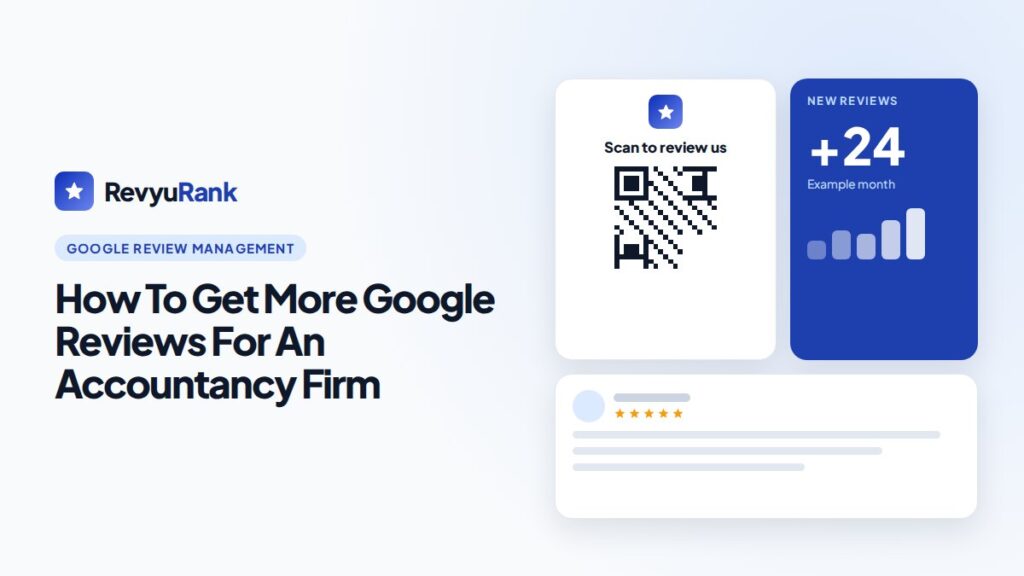
Google’s help centre says you can share a review request link or a QR code. You will find the “Get more reviews” option under Read reviews in your Business Profile.
Google suggests putting the link or QR code on receipts and in thank-you emails. Send it only after the work is complete. The review must still reflect the client’s genuine experience.
Review request situations compared

The right approach depends on the client’s stage and relationship with your firm.
| Client situation | What to do | What it takes | What to watch for |
|---|---|---|---|
| Work completed cleanly | Ask soon afterward | One personal request | Confirm final documents |
| Client praised your help | Ask for honest feedback | Short conversation | Don’t request five stars |
| Client has open questions | Resolve issue first | Staff follow-up time | Avoid added pressure |
| Client made a complaint | Close complaint properly | Manager review | Don’t bury negative feedback |
| Long-term client | Ask after a milestone | Personal context | Don’t ask repeatedly |
| New client onboarding | Wait for completed work | Better timing | Early opinions may shift |
| No Google profile access | Fix profile ownership | Admin time | Don’t create duplicates |
Details that improve review quality
Prepare before asking
Good requests start with a clean client list. Mark the service completion date, the staff member responsible, the client’s preferred contact channel, and any open complaint. If any of those fields are unclear, don’t automate the request yet.
Use plain language rather than marketing claims. “Could you share an honest review of our accounts service?” Is clearer than “Please give us five stars.” The first wording allows genuine feedback and doesn’t tell the client what rating to choose.
Keep one approved message for email and another for phone or face-to-face requests. Staff should know that the client can decline without affecting service, pricing, deadlines, or access to the team.
Check the response
A review request worked when the link opens the correct profile, and the client can reach the review box. A message being delivered isn’t proof that the process worked.
Read reviews for service signals, not only star ratings. Comments about slow replies, confusing advice, or unclear fees point to specific work for the practice manager. A high rating doesn’t remove the need to check those comments.
Leave the review itself alone. Don’t write a review for the client, ask them to use certain words, or request a revised rating after you’ve responded. The trade-off is simple: less control over wording gives you more credible feedback.
Common Google review problems
The visible result usually points to the first safe check. Don’t pressure a client or alter a Google account to force a review through.
| What you notice | What it usually means | What to do first | How to stop it happening again |
|---|---|---|---|
| Link opens wrong business | Incorrect profile link | Copy link again | Test every campaign link |
| Client can’t find form | Login or browser issue | Try a signed-in browser | Add simple access instructions |
| Reviews don’t appear | Google moderation delay | Check profile publicly | Avoid copied review wording |
| Staff request five stars | Poor request wording | Replace the script | Train staff on honest feedback |
| Only happy clients asked | Selective process | Use a client list | Ask suitable clients consistently |
| Negative review arrives | Service issue or mismatch | Reply calmly and investigate | Fix the stated process |
| Review is removed | Policy or content concern | Check Google’s policy | Avoid incentives and review filtering |
A costly mistake is tying a review request to a discount or faster service. The firm may gain a short-term comment, but it risks policy action and makes the feedback less trustworthy. Stop the incentive and use a neutral request instead.
Google review rules for firms

Google’s Maps User Contributed Content Policy prohibits fake engagement, paid or incentivized reviews, review manipulation, and selectively requesting positive reviews. It also says businesses shouldn’t discourage negative reviews or pressure people to change their feedback; read Google’s prohibited and restricted content before creating a campaign.
The practical limit is clear: ask for an honest review, not a favorable one. Don’t offer money, gifts, discounts, refunds, or special treatment in exchange for a review. Don’t ask a client to remove a negative review as a condition of solving the complaint.
Rules outside Google can also apply. Your country’s privacy, marketing, professional conduct, and client-confidentiality rules may affect the message, contact channel, and records you keep. Check the regulator for your jurisdiction and your professional body’s current guidance.
If a review includes confidential tax or financial information, don’t confirm private details in your reply. A staff member who isn’t trained to handle a legal complaint, privacy issue, or professional conduct concern should stop and refer it to the firm’s compliance lead.
Rules for staff and review content
- Don’t ask staff to collect a set number of reviews.
- Don’t require or pressure clients to leave a rating or write a review while they are on your premises.
- Don’t ask for specific content to be included in a review.
- Don’t discourage or forbid negative reviews. Google allows content that describes a negative experience in a respectful manner.
- Reviews can’t include email addresses, phone numbers, social media links or links to other websites, so don’t ask clients to add them.
- Content based on a conflict of interest is prohibited. Asking for reviews is allowed, but each review must reflect a genuine experience.
The real cost of more reviews
The main cost is staff attention, not the review link. Someone must check whether work is complete, remove clients with open issues, send the request, record it, and watch for replies. The time rises when the firm has several offices, service lines, or client systems.
Automation can reduce repeated admin work, but it can also send a message at the wrong time. A manual request gives better judgment and personal context, while an automated request gives better consistency. Use automation only after the completion trigger and exclusion rules have been tested.
Reputation risk is another cost. A higher review count won’t help if new comments repeat the same complaint. Compare the review themes with internal complaints, missed deadlines, fee questions, and response records.
Today’s software cost depends on your CRM, email platform, and review tool. Check each provider’s current plan page and compare contact limits, integrations, permissions, export options, and cancellation terms. Don’t buy software before proving that the request wording and timing work manually.
Keep the review process healthy
Keep one approved review message, one current Google link, and one record of who has been contacted. Review the link whenever the firm changes its profile, location, trading name, or office structure.
The process needs attention when staff report bounced emails, clients say the link fails, or requests are sent before matters close. Check a recent request from the client’s point of view: correct name, correct service, clear wording, and no pressure.
If a review mentions an active dispute, move the discussion to a private channel without revealing client details publicly. Keep the public reply short and professional, then give the issue to the person responsible for complaints or compliance.
Don’t restart the campaign after every small problem. Correct the link, script, or completion trigger, then continue with clients who meet the same conditions. If the Google profile is suspended or ownership is disputed, use Google’s official support process rather than creating a duplicate profile.
When review requests aren’t right
Review requests aren’t the right first move when the client has an unresolved complaint, missing documents, or a material billing dispute. Resolve the issue through your complaint process, then decide later whether a neutral request is appropriate.
Don’t use this approach for a purchased or rented client list. You may lack permission to contact those people, and they may not have a genuine experience with the firm. Use consent-based client communication and confirm the relationship first.
This method also isn’t suitable when staff can’t protect confidential tax information. A qualified compliance or legal adviser should handle questions about privacy, professional conduct, harassment, threats, or a formal complaint. Stop public discussion rather than arguing in the review thread.
When you want it set up without the guesswork, Google Review Generation is the place to start.
Frequently asked questions
Can an accountancy firm ask every client for a Google review?
Yes, if the request is neutral and the client has a genuine experience with the firm. Ask suitable clients consistently rather than selecting only people expected to leave positive feedback. Don’t offer an incentive, require a review, or connect the request to a refund, discount, or faster service.
Why are my Google reviews not increasing?
The usual problems are poor timing, a broken link, unresolved client issues, or unclear wording. Check whether the link opens the correct profile, whether work was complete when you asked, and whether your staff requested honest feedback instead of a specific star rating.
How long should I wait before asking for a review?
Ask after the agreed service is complete and the client has received the final information they need. There’s no reliable universal waiting period for every accountancy service. Use the completion date, open questions, complaints, and client response as your checks.
Is it safe to offer a discount for a Google review?
No. A discount makes the review incentivized and can breach Google’s review rules. It may also create professional, advertising, or consumer-law concerns in your location. Ask for honest feedback without offering money, gifts, discounts, refunds, or special treatment.
What happens if a client leaves a negative review?
A negative review remains public unless Google removes it under its policies or the reviewer removes it. Reply calmly without confirming confidential details, investigate the complaint privately, and fix the service problem instead of asking the client to change the rating.
Does it matter who asks for the review?
Yes. A request from the accountant or adviser who handled the work usually has clearer context than a generic marketing message. The client should still feel free to decline, and the wording must ask for honest feedback rather than a favorable score.
How many Google reviews should an accountancy firm get?
There’s no fixed target that proves a firm is trustworthy. Compare your review volume with your completed client work, service mix, location, and review quality. A steady, genuine pattern is more useful than a sudden batch of similar comments.
First steps for more reviews
Start by checking your Google review link and listing clients with completed work and no open issue. You should see easier access and more relevant feedback, shown by clients reaching the correct review form and mentioning real services. Stop and get compliance or legal help if a request involves confidential information, incentives, or a formal dispute.

Robert Miller works as a Reputation Management Consultant. He has been helping U.S. businesses for over ten years. His work involves helping people protect and enhance their online image.Robert has worked with a wide range of companies. He has helped new businesses, local places that give a service, and big companies. He helps turn customer reviews into something that helps people trust their company and drives business growth.