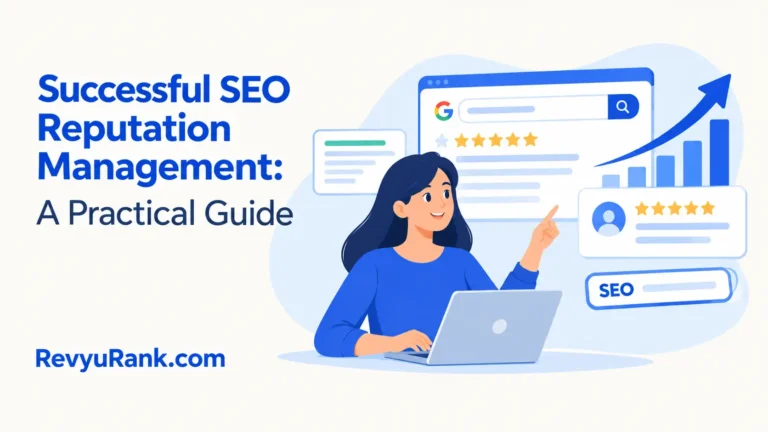

Great SEO reputation management examples include branded content hubs, review-response pages, expert profiles, press coverage, social profiles, and crisis correction pages. The main difference is the search result each one can influence: your own website, a review page, a news story, a social profile, or a harmful result that needs correction.
SEO reputation examples at a glance
These six examples use different pages and sources to shape branded search results.
| Reputation example | Best for | Recognizable example |
|---|---|---|
| Branded content hub | Owning positive results | Company newsroom |
| Review-response page | Handling customer concerns | Google Business Profile |
| Expert profile | Building personal trust | Author bio page |
| Press coverage | Adding outside credibility | Local newspaper story |
| Social profile | Controlling branded listings | LinkedIn company page |
| Crisis correction page | Addressing false claims | Official incident update |
Branded content hubs
A branded content hub is a section of your website that publishes useful company news, guides, announcements, and customer information. It suits brands that have regular updates and want their own site to occupy more branded search results.
It can help you:
- Explain products without promotional language
- Publish official updates in one place
- Give journalists a reliable source
- Create pages that rank for brand-related questions
The trade-off is that a content hub needs regular editing and review. A neglected page with old announcements can make the brand look inactive, so only publish information you can keep accurate.
A good example is a software company publishing release notes, security updates, and setup guides under one /resources/ or /news/ area. Each page should use a clear title, date, author or department, and links to the relevant product documentation.
Review-response pages
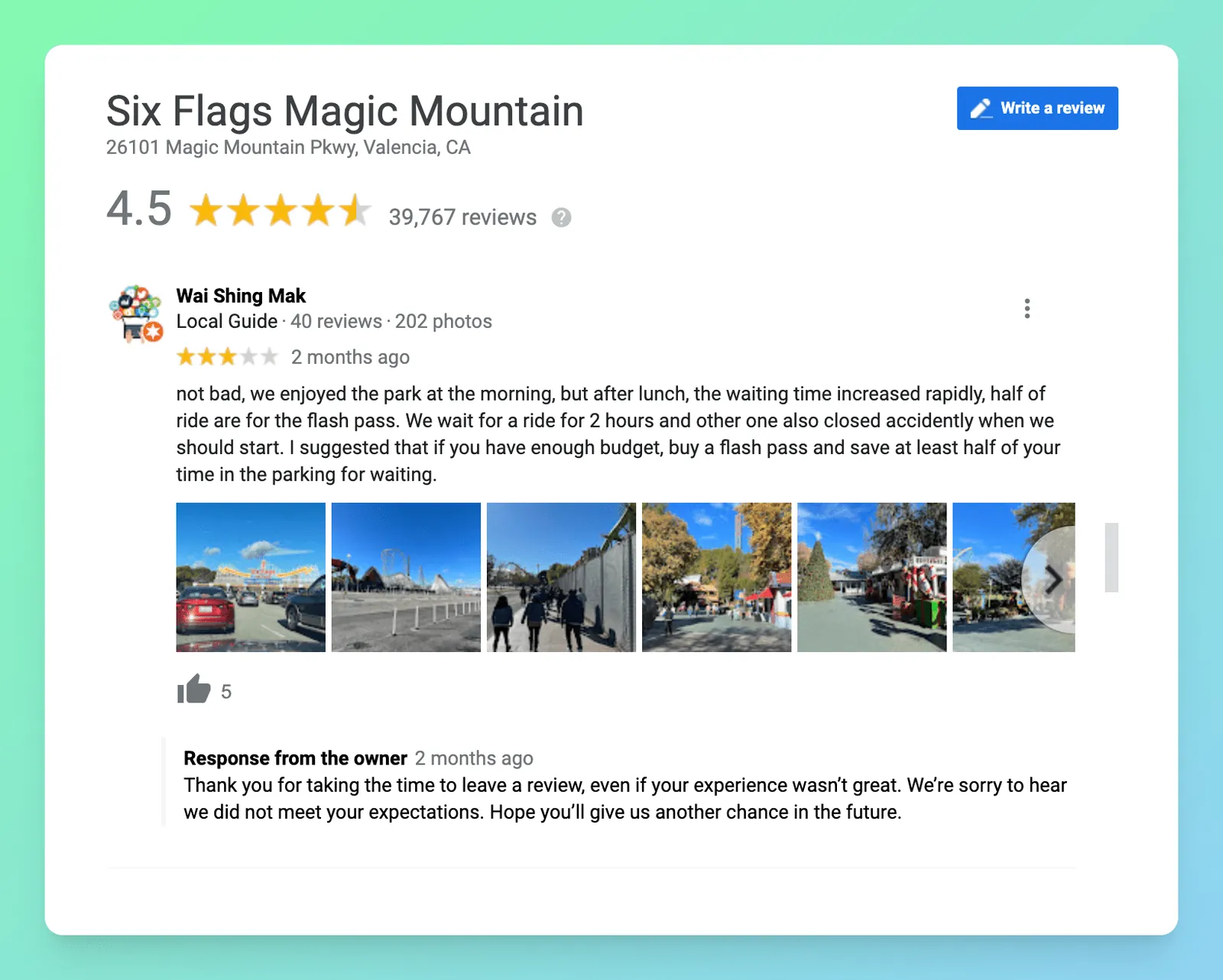
A review-response page shows how a business handles praise, complaints, and repeated customer questions. It suits local businesses and service companies where review websites often appear beside the official website in branded searches.
It can help you:
- Explain a service problem without attacking a reviewer
- Show future customers how complaints are handled
- Correct simple factual errors
- Direct customers to a private support channel
Keep the response short and specific. If a customer says an order was late, explain the next contact step rather than arguing about the person’s character. Don’t copy the same reply onto every review, because repeated wording can look careless.
A common mistake is trying to hide a poor rating with a burst of vague positive reviews. That can create policy problems and may cost the business trust if readers notice repeated language or unusual timing. Respond to real feedback instead, and ask satisfied customers for honest reviews only where the platform allows it.
Expert profiles
An expert profile gives a real person a clear page connected to the brand, topic, or organization. It suits consultants, doctors, attorneys, researchers, founders, and other professionals whose names appear in search results.
It can help you:
- Show the person’s role and qualifications
- Connect published work to a real author
- Give journalists a contact point
- Separate a professional identity from unrelated pages
Use verifiable details, such as a job title, professional license where relevant, published work, speaking event, or employer. The profile should explain what the person does, not make broad claims like “the leading expert” without evidence.
If the profile involves a regulated profession, ask the relevant employer or licensing body to confirm the wording. Don’t publish private contact details, personal addresses, or credentials you can’t verify.
Press coverage and correction pages
Press coverage adds an independent source to a reputation search, while a correction page gives people the company’s version of a disputed event. This is different from publishing another company-owned article: the publication’s editorial process provides the outside context.
It suits organizations with newsworthy work, public incidents, community activity, or a genuine correction to make.
It can help you:
- Add a credible third-party result
- Explain a public event with dated facts
- Give reporters a reliable statement
- Correct a claim without repeating it everywhere
A correction page isn’t a tool for deleting criticism. It should identify the specific claim, provide evidence, and state what is still unknown. If the issue involves legal exposure, safety, or personal data, stop before publishing and ask an attorney or qualified communications professional to review it.
Google’s content removal guidance explains that hiding a result temporarily is different from permanently removing the source page.
Social profiles and branded listings
Social profiles and branded listings are official pages on platforms such as LinkedIn, YouTube, X, or an industry directory. They suit brands that already communicate with customers on those platforms.
They can help you:
- Secure consistent brand names and descriptions
- Give customers another official contact route
- Occupy additional branded search results
- Share announcements where followers already look
Use the platforms that your customers actually use. A profile with no recent activity can hurt more than it helps, especially if it contains an old address, former employee, or outdated service description.
For example, a B2B company might maintain a LinkedIn company page with its current website, business description, leadership updates, and links to official announcements. Its marketing team should also record who owns the login and how access will be transferred.
Other SEO reputation examples
The remaining examples work best when they match a specific search problem rather than being created only to fill page one.
- Customer case studies: Use these when real customers can approve accurate stories; they suit brands that need proof of service quality without making unsupported claims.
- Employer profiles: Use company and employee pages on legitimate industry or hiring sites; they fit organizations where job-related searches affect reputation.
- Community partnerships: Use local association, nonprofit, or event pages when the relationship is real; they suit businesses with documented community work.
- Knowledge-panel information: Use official business details and consistent public records; reach for this when search engines show an incorrect name, address, or organization link.
How to choose reputation examples

Start with the search result you need to influence, not the content format you prefer. If the problem is an outdated company detail, update the official website and branded listings; if it’s a customer complaint, use a calm review response and a support route.
Time and ownership settle the practical choice. If a result is unlawful, threatens safety, or exposes private information, seek legal or platform help rather than trying to push it down yourself.
Ranking movement varies with the query, competing pages, site authority, and how long the result has existed; you can read your own position by checking the same branded search in a signed-out browser and recording the result types and dates.
Frequently asked questions
Can SEO remove a bad review?
No, SEO usually can’t remove a genuine review. You can report content that breaks the platform’s rules, answer the review professionally, and improve the pages that appear around it. If the review contains private information, threats, or provably false claims, use the platform’s reporting process and get legal advice where needed.
Why do branded search results change?
Branded search results change because search engines recrawl pages, platforms update their content, and new news or social pages appear. Rankings can also differ by location, device, language, and search history. Compare the same query over time, and record the pages that move rather than relying on one search.
How long does reputation SEO take?
Reputation SEO often takes several weeks to several months, depending on the site, query, competition, and publishing frequency. There’s no reliable fixed deadline for a page-one change. Track indexed pages, result types, and branded queries, and check whether the unwanted result is still visible for the same audience.
Is it safe to create several profiles?
Yes, creating several profiles can be safe when each is real, complete, and allowed by the platform. It becomes risky when a business makes duplicate accounts, uses false identities, or posts copied text. Use one official profile per platform unless that platform’s rules clearly allow additional locations or departments.
What happens if a company publishes a correction?
A correction gives readers an official explanation, but it doesn’t automatically change the original article or search result. The publisher may update its story, add a note, or leave it unchanged. Keep the correction factual, dated, and supported by records, especially when the issue involves safety, law, or personal data.
Does it matter who writes an expert profile?
Yes, author identity matters because a profile should match the person’s real role and evidence. A vague bio won’t fix a trust problem. Use a current job title, verifiable work, and clear links to published material, while avoiding credentials that the person or employer can’t confirm.
First steps for SEO reputation
First, search the brand or person’s name and record the first page’s result types, dates, and obvious errors. Expect improvement when official pages become clearer and outdated information is corrected, not simply when more pages are published. Stop and get legal, platform, or specialist help if the issue involves threats, private data, safety, or a disputed legal claim.

Robert Miller works as a Reputation Management Consultant. He has been helping U.S. businesses for over ten years. His work involves helping people protect and enhance their online image.Robert has worked with a wide range of companies. He has helped new businesses, local places that give a service, and big companies. He helps turn customer reviews into something that helps people trust their company and drives business growth.