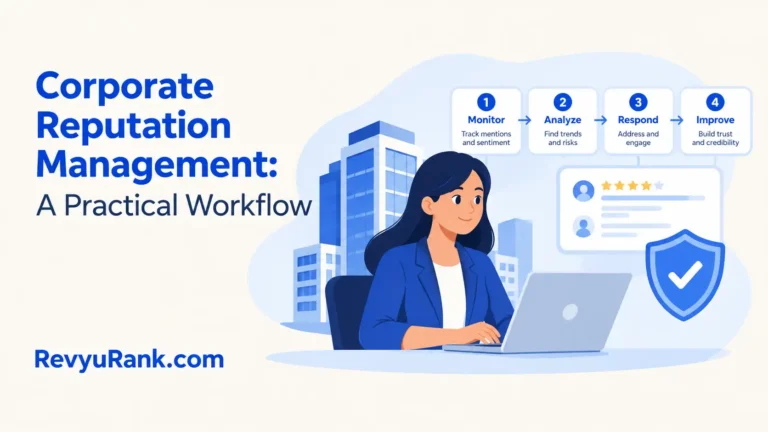

Successful seo reputation management starts with accurate business information, steady review monitoring, and useful pages that answer real customer concerns. It won’t erase fair criticism, but it can improve what people find.
Who needs reputation management

A local business owner may already have a Google Business Profile but needs better review replies and stronger local pages.
A company facing a serious allegation needs more than SEO. It may need legal advice, a public statement, or direct customer support. This page serves a business with accurate facts, a real website, and permission to manage its own profiles.
What changes the result most
The complaint’s source matters first. A review on a major platform can appear quickly in branded searches, while an old forum post may have less visibility.
The response quality is often the part people get wrong. A defensive reply can make the complaint more visible. If true, fix the service problem first; otherwise, publish calm evidence and offer private contact.
How to manage SEO reputation
Start with a written record. Don’t change pages or post replies until you know which result you want to improve and which facts you can prove.
- Search the exact brand name and city in Google. Save the first two result pages, dates, titles, and URLs.
- Group each result as a review, news item, profile, social post, or your own page. The group tells you who can change it.
- Verify the complaint with order records, support notes, or the named employee. Remove private customer data from your working file.
- Claim or update your official profiles. Use the same business name, address, phone number, hours, and website everywhere.
- Reply to factual complaints within the platform’s rules. Acknowledge the issue, state the next action, and move sensitive details offline.
- Publish one useful page for each major customer question. Include evidence, author details, contact information, and a date only when it reflects a real update.
- Ask satisfied customers for honest feedback without offering gifts or scripted wording. Keep the request tied to a real transaction.
- Review the search results again after the pages have been crawled. Compare the saved titles, snippets, review themes, and positions.
The key judgment is relevance, not volume.
Reputation situations compared
The right response changes with the source and the truth of the claim.
| Situation | What to do | What it takes | What to watch for |
|---|---|---|---|
| One unfair review | Reply calmly | Short staff review | Public argument |
| Repeated service complaints | Fix the process | Staff and records | Same issue returning |
| Incorrect business listing | Correct profile data | Verification effort | Conflicting details |
| Negative news report | Prepare factual response | Leadership review | Unsupported claims |
| Private information exposed | Request removal | Platform contact | Sharing more details |
| False legal allegation | Seek counsel | Legal review | Defamation risks |
Details that improve the result

Prepare before publishing
Use one fact sheet with the official name, address, services, contact route, and approved evidence. Check every reply against it.
Check signals during the work
Look for better snippets, clearer page titles, and fewer unanswered complaints. Don’t delete a page simply because it ranks for a negative phrase; first check whether it contains a real correction, a useful explanation, or important context.
Reputation problems and first fixes
The visible problem usually points to a different first action than people expect.
| What you notice | What it usually means | What to do first | How to stop it happening again |
|---|---|---|---|
| Same complaint repeats | Process still fails | Investigate records | Track the root issue |
| Profile shows wrong hours | Listing data conflicts | Update official profile | Keep one source record |
| Reply sounds defensive | Staff lacks guidance | Rewrite with facts | Approve reply templates |
| New page gets no visits | Weak search relevance | Improve customer intent | Build useful internal links |
| Review disappears suddenly | Platform moderation changed | Check platform notice | Follow review policies |
| Negative result dominates | Stronger external authority | Publish direct evidence | Earn relevant mentions |
Rules for reviews and search
Google’s Search Essentials and spam policies apply to pages built to manipulate rankings. Read the Google spam policies before creating pages, links, or reviews for reputation work.
If a complaint involves threats, personal data, regulated claims, or possible defamation, stop public experimentation. Ask an attorney, privacy officer, or platform support team to handle the next step.
The real cost of the work
The main cost is staff time, not a fixed SEO fee. A simple case may need one search audit, profile updates, several careful replies, and a page review.
Compare agencies by deliverables, approval rights, reporting, and who writes replies. Ask what happens if a claim can’t be verified.
Your cost rises with the number of platforms, locations, languages, and complaints.
Keeping the result accurate
Keep a change log for profile edits, public replies, page updates, and removal requests. Record sources so another employee can check important claims.
Review the branded search results when a major complaint, service change, or ownership change occurs. If hours, prices, contact details, or services become wrong, correct the official profile and page before adding new reputation content.
If the same complaint returns after the service team says it was fixed, reopen the investigation. Don’t start over with new articles while the customer-facing problem remains.
When SEO reputation work is wrong

This approach isn’t enough for an active safety issue, criminal allegation, data breach, or lawsuit. Use legal counsel, incident response staff, or the responsible regulator instead of trying to outrank the problem.
It also isn’t right for a business that wants fake reviews or pages designed to mislead searchers. Stop and use honest customer feedback, accurate profiles, and transparent corrections.
If you need removal of private information or unlawful content, contact the hosting platform or a qualified attorney. SEO can’t guarantee removal.
Frequently asked questions
Can SEO remove a bad review?
Usually, no. A platform may remove content that breaks its rules, but an accurate negative review normally needs a calm response and a real service improvement.
Why does a negative result keep ranking?
It may remain visible because the page is relevant, established, or widely referenced. Publish stronger, factual information, but don’t promise a replacement date.
How long does reputation SEO take?
One review cycle is the minimum useful period for comparison, but timing depends on crawling, platform changes, content quality, and the authority of competing pages.
Is it safe to ask customers for reviews?
Yes, when you request honest feedback without scripts, pressure, or rewards tied to positive sentiment. Check the platform’s current review policy before sending requests.
What happens if I delete negative comments?
Deleting comments can remove useful context and may increase distrust. Keep criticism unless it breaks a published rule, then document the report and response.
Does review response wording matter?
Yes. A short, factual reply can show accountability and provide a next step. It shouldn’t reveal private order details or argue about the customer in public.
Can new pages hide bad search results?
No guarantee exists. New pages can add useful context, but search visibility depends on relevance, quality, links, and the strength of the existing result.
Start reputation SEO correctly
First, save the current branded search results and verify every important claim. A better result is clearer information and fewer unanswered issues. Stop and get professional help if the matter involves safety, privacy, legal rights, or evidence you can’t verify.

Robert Miller works as a Reputation Management Consultant. He has been helping U.S. businesses for over ten years. His work involves helping people protect and enhance their online image.Robert has worked with a wide range of companies. He has helped new businesses, local places that give a service, and big companies. He helps turn customer reviews into something that helps people trust their company and drives business growth.