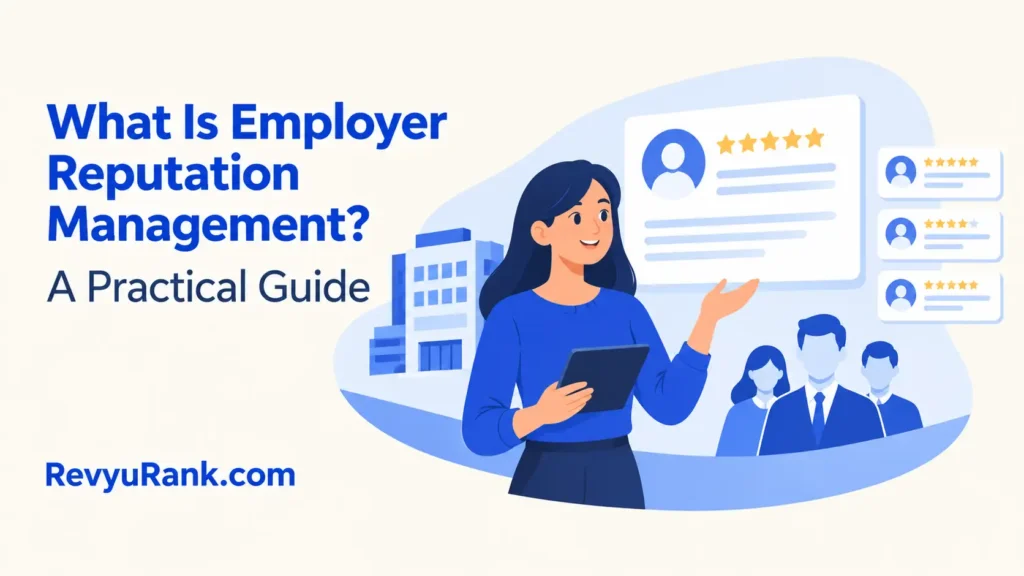
Employer reputation management is the planned work of monitoring, improving, and communicating how employees and job candidates view a company. It includes review-site feedback, workplace experience, public responses, hiring messages, and employee advocacy. Start by checking what people already say, correct false claims with evidence, fix real workplace problems, and track changes over time. It isn’t just replying to negative reviews.
The result depends most on whether the company fixes the experience behind the reputation. A polished careers page won’t offset repeated complaints about pay, scheduling, management, or broken promises.
The common mistake is treating every negative comment as a public-relations problem. Deleting criticism, arguing with former employees, or asking only happy workers for reviews can make trust worse. Review each claim privately, separate a factual error from a fair complaint, and send sensitive issues to HR or legal staff.
How to manage employer reputation

Employer reputation work needs a repeatable process. Use the same review method for public comments, employee surveys, recruiting feedback, and media mentions, while protecting private employee information.
- Audit review sites, social channels, job-board comments, survey results, and candidate feedback from the last 6–12 months. Record the date, source, topic, tone, and whether the claim can be verified.
- Group the feedback into themes such as pay, workload, leadership, flexibility, hiring speed, career growth, and workplace safety. Mark each theme as a verified issue, a disputed claim, or an opinion.
- Verify serious claims with HR, managers, payroll records, or employee-relations staff. Don’t publish private details about a worker, and don’t promise a public correction before the facts are clear.
- Fix the causes that the company controls. Set an owner and deadline for each issue, such as correcting a job description, training a manager, or explaining a policy that candidates misunderstood.
- Respond to public reviews with a short, calm message. Thank the person, acknowledge the concern when appropriate, avoid confidential details, and offer a private contact route handled by the right team.
Tip: Don’t use the same reply for every review. A repeated script can look dismissive, especially when several comments describe the same problem.
- Publish accurate proof of change through job descriptions, careers pages, employee stories, and interview explanations. Get permission before using an employee’s name, photograph, or personal experience.
- Measure the same themes each month. Track review volume, response coverage, repeated complaints, candidate questions, offer acceptance feedback, and time taken to resolve verified issues.
The trade-off is speed versus care. A fast response can stop silence from looking careless, but a rushed response can reveal private information or deny a problem that later proves real. If a comment alleges discrimination, harassment, retaliation, wage violations, or unsafe work, stop public problem-solving and send it to qualified HR, compliance, or legal staff.
The Federal Trade Commission says its consumer reviews rule addresses fake reviews and testimonials, including certain review practices that mislead consumers. Companies should check the rule and consult their own counsel before offering review incentives or asking workers to post publicly.
How long does reputation management take?
The time depends on the size of the employer, the number of channels, and whether the work is routine or driven by a live complaint. These are practical planning ranges for a basic review, not guaranteed results.
| Situation | How long | What changes it | What to watch for |
|---|---|---|---|
| Small employer with 1–2 review sites | 1–3 business days | Review volume and access to HR records | Missing complaints in private channels |
| Employer with several locations | 1–2 weeks | Separate managers, sites, and policies | Local issues being hidden by company averages |
| Active public complaint | Same day for triage; several days for facts | Seriousness, evidence, and legal review | A rushed denial or private details |
| Hiring campaign or careers-page refresh | 2–6 weeks | Approval time and whether policies must change | Promises recruiters can’t support |
| Ongoing monitoring | 30–60 minutes weekly | Number of alerts and new comments | Tracking replies instead of repeated causes |
If the work takes far longer than these ranges, narrow the first review to one channel or one complaint theme, then ask HR, communications, or legal staff to handle the wider investigation.
How to tell reputation work is done

A reputation review is ready for action when each major complaint has a source, a status, an owner, and a next step. You should also know which claims are unsupported, which facts need correction, and which problems require a workplace change rather than a public reply.
Look for practical signs: review responses use accurate details, job listings match the real role, recruiters give the same answers, and repeated complaints have a documented owner. A falling number of comments isn’t proof of improvement; fewer people may simply be posting.
When public comments and internal records disagree, verify the underlying fact with the responsible source, such as payroll for pay claims, HR records for policy questions, or the site manager for local conditions. If the dispute involves discrimination, harassment, retaliation, or safety, the appropriate HR, compliance, or legal process—not online sentiment—settles what happens next.
Employer reputation mistakes to avoid

- Arguing with reviewers: A defensive reply can expose private information and make a valid concern look ignored. Acknowledge the issue without confirming employment details, then move the case to a private channel.
- Deleting criticism that feels unfair: Removing a comment can increase suspicion and hide a pattern from decision-makers. Remove content only under a clearly published policy, such as threats, personal data, or spam.
- Promising changes before checking facts: A public promise can create a new credibility problem when managers can’t deliver it. Verify the issue, assign an owner, and publish only a change the company can support.
- Buying positive reviews: Paid or pressured praise can violate platform rules and may create legal risk. Ask for honest feedback without requiring a positive rating, and review the FTC’s current guidance before using incentives.
- Treating reputation as only a marketing task: A polished response won’t repair unsafe work, unclear pay, or poor management. Give operational owners deadlines, then show candidates what changed.
Frequently asked questions
Employer reputation affects hiring trust, employee retention signals, and the questions candidates bring to interviews. These answers cover related questions that often come up before a company starts a formal program.
What does employer reputation include?
Employer reputation includes public reviews, employee and candidate comments, news coverage, social posts, recruiting messages, and direct workplace experience. It also includes what people believe about pay, leadership, fairness, flexibility, growth, and treatment at work. The company doesn’t fully control these views, but it can control the accuracy of its claims, its response process, and many parts of the employee experience.
Why is employer reputation important?
Employer reputation is important because candidates often use outside information to judge whether a workplace’s promises seem credible. A weak reputation can create harder interviews, more objections, and extra work for recruiters. A strong reputation isn’t a substitute for fair pay or good management, though. It can help communicate those strengths when the company can support them with real policies and behavior.
Can a company remove a negative employer review?
Usually, a company should request removal only when a review breaks the platform’s rules, such as by revealing personal information, making threats, or posting spam. A review that’s harsh but allowed should normally stay. The company can reply with verified facts and invite private discussion, but it shouldn’t reveal the reviewer’s identity or employment history.
Is employer reputation management the same as employer branding?
No. Employer branding is the planned story and presentation a company uses to attract workers. Reputation management is broader and includes monitoring what people actually say, correcting false information, and fixing workplace problems that create negative feedback. Branding can support reputation, but attractive messaging can’t reliably cover up a repeated experience that employees and candidates describe differently.
How often should a company monitor employer reviews?
Weekly monitoring is a sensible starting point for a small employer with a few active review channels. A company facing a public complaint, rapid hiring, or a major workplace change may need daily alerts during that period. Check the channels where candidates and employees actually post, and review themes monthly so repeated issues don’t get lost in individual replies.
What happens if a company ignores its employer reputation?
Ignoring genuine workplace claims can leave them unanswered and delay recognition of serious problems. Candidates may ask tougher questions, recruiters may spend more time explaining gaps, and managers may learn about issues late. Silence can be appropriate for clear spam, but genuine complaints need documented review by a suitable internal owner.
Conclusion
Make reputation part of your regular people strategy, not a task saved for hiring season or a crisis. Set a simple review date, share what you’re learning with leaders and employees, and commit to one visible improvement. Over time, honest communication and better daily experiences will help the right people trust your company.

Robert Miller works as a Reputation Management Consultant. He has been helping U.S. businesses for over ten years. His work involves helping people protect and enhance their online image.Robert has worked with a wide range of companies. He has helped new businesses, local places that give a service, and big companies. He helps turn customer reviews into something that helps people trust their company and drives business growth.