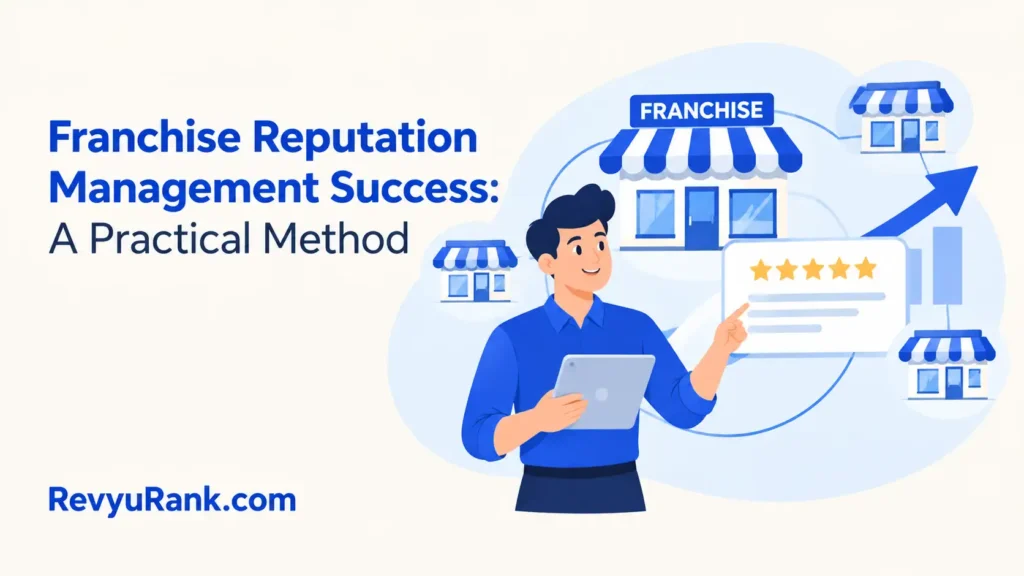
Franchise reputation management success means reviewing every location weekly, replying to feedback within 2 business days, and comparing a 30-day baseline with each monthly report. Track rating, review volume, response time, and recurring complaints in one sheet. This method suits franchise owners who need local control while keeping brand standards consistent across locations.
Franchise Reputation Management Tools
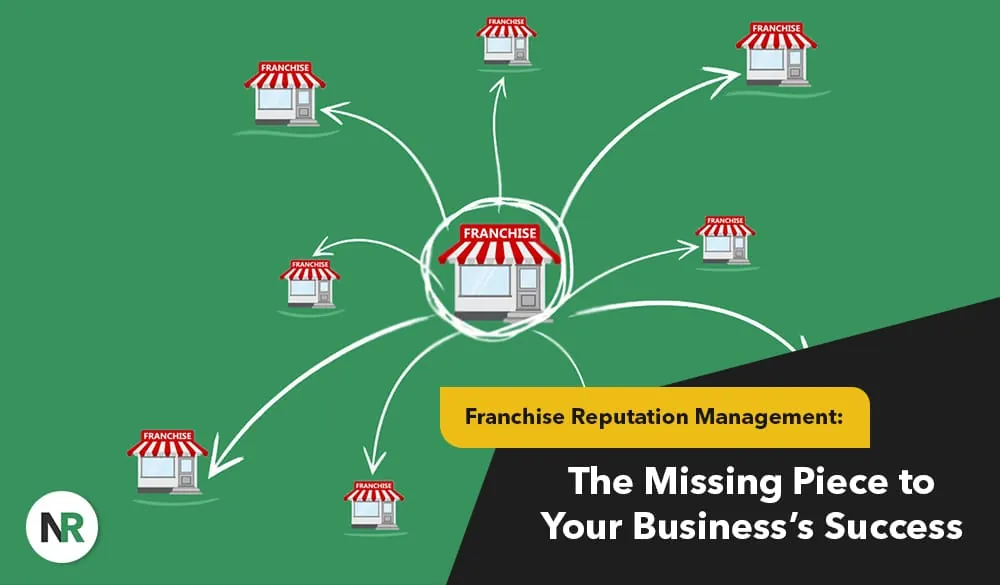
Gather the same information for every location before you change your process. A shared system makes local problems easier to compare, and it stops one busy manager from hiding a slow response pattern.
- Location list: Include each store name, address, phone number, manager, and operating hours.
- Listing access: Keep owner or manager access for Google Business Profile and other major listings. An employee’s personal login won’t work well when that person leaves.
- Review record: Use a spreadsheet with the review date, rating, location, topic, response date, and outcome.
- Response guide: Prepare approved language for praise, service complaints, refunds, safety issues, and privacy concerns.
- Brand rules: Write down the words, offers, promises, and claims staff can use. Local replies shouldn’t contradict company policy.
- Customer details: Keep the order number, visit date, and contact route available for private follow-up. Don’t place personal information in a public reply.
- Escalation contacts: List the person handling legal, safety, employment, payment, and media issues.
A shared spreadsheet can replace paid reputation software for a small network, but email folders alone won’t give you reliable location-by-location comparisons.
Build a Reputation Management Plan
-
Set a 30-day baseline. Record each location’s current rating, number of new reviews, unanswered reviews, average response time, and three repeated complaint topics. Use the same dates for every location so the comparison is fair.
-
Claim and check listings. Confirm the name, address, phone number, hours, website, and category for each location. Fix wrong details before asking for more reviews; a perfect response to a listing with the wrong hours still frustrates customers.
Tip: Keep a change log with the date, person, and update made. It’ll help you find the source when information changes again.
-
Route every review. Label feedback as praise, ordinary service feedback, refund request, safety concern, privacy issue, or possible fraud. Send payment, injury, discrimination, and legal complaints to the correct internal owner instead of debating them in public.
-
Reply within 2 business days. Thank the customer, mention the specific issue, state the next action, and invite private contact when account details are needed. Don’t copy the same sentence across every location; use the approved guide while answering the actual complaint.
Careful: Don’t promise a refund, replacement, employee action, or investigation unless the assigned person has approved it.
-
Ask for honest feedback. Invite customers through a normal receipt, email, or post-visit message after a real interaction. Ask for an honest review from all eligible customers, not only people who seem pleased. Never offer a reward only for a positive rating.
-
Review patterns weekly. Count complaints by topic and location, then assign an owner and due date to each repeated problem. If one location has a staffing or service issue, fix the operation before asking for more reviews.
Tip: A sudden group of similar reviews deserves a record and a calm check, not a public accusation. Ask the platform about suspected manipulation if the pattern continues.
-
Report results monthly. Compare the new 30-day period with the baseline. Show rating direction, review volume, unanswered items, response speed, and the top two issues. If the data is thin, mark the result as early rather than treating one review as a trend.
-
Escalate high-risk cases. Stop public back-and-forth when a complaint involves injury, threats, private data, discrimination, or a legal demand. A lawyer, insurer, human-resources lead, or safety professional should handle the next step, depending on the issue.
Effort by Location

The right workload changes with review volume, location count, and how much control each manager has over service.
| Situation | Time or money cost | What changes | Watch while it runs |
|---|---|---|---|
| One quiet location | About 30 minutes weekly | A spreadsheet and saved reply guide may be enough | Unanswered reviews and wrong hours |
| One busy location | 15–20 minutes on working days | Reviews need daily routing and faster escalation | Copy-and-paste replies and missed refund requests |
| Several similar locations | 2–4 hours weekly for the network | Use shared labels, owners, and monthly comparisons | Local managers changing approved facts |
| New or troubled location | Extra operating time for the first month | Pair review work with service and listing checks | A rating change without enough new reviews |
| Agency-supported network | Ongoing management fee plus internal review time | An outside team can monitor, but staff still own service fixes | Delayed approvals and unclear account access |
These are planning estimates, not promises; your actual effort depends on review volume and the tools already in place. Start with a small group of locations and add coverage after the process works, because overshooting can create rushed replies and poor records.
Signs Your Process Works
A strong result isn’t just a higher star rating. You should also see fewer unanswered reviews, faster routing, clearer replies, and fewer repeated complaints at the locations that own the work.
A poor result often looks polished but stays disconnected from operations. Replies appear quickly, yet customers repeat the same problem because no one assigned the issue to a person who can fix it.
Inconsistent information is a common quality problem. It happens when locations use different hours, promises, refund language, or escalation paths.
Prevent it with one approved response guide, one review log, and a weekly check of repeated topics. If a complaint needs private details, move the conversation away from the public reply without asking the customer to post personal information.
Compliance and Follow-Up
The Federal Trade Commission says businesses must not create, buy, or publish fake reviews, and it restricts incentives tied to a particular review sentiment. Read the FTC’s consumer reviews guidance before launching a review campaign, and ask legal counsel about unusual promotions or franchise agreements.
After each review session, save the response record, close completed tasks, and remove temporary notes containing customer details. Keep the approved guide and escalation list available to every location.
Review the process weekly and refresh the report monthly. There’s no permanent finish line: a new manager, changed hours, service failure, or platform rule can change the result.
Other Reputation Routes

Centralized brand team
A central team answers or reviews every location’s feedback. This gives you tighter language control and easier reporting, but local replies may take longer unless managers can provide facts quickly.
Local manager ownership
Each manager handles reviews for their location using the same guide and escalation rules. This can produce more personal replies and faster context, but it needs regular audits so standards don’t drift.
Outside reputation partner
An agency can monitor listings, sort reviews, and prepare reports. Your staff still must approve sensitive replies and fix service problems, so this route saves monitoring time more than it removes responsibility.
Frequently asked questions
Can franchise locations share the same review response?
Yes, they can share a response framework, but each reply should mention the actual location and issue. A common template helps protect brand language, while a fully repeated message can look careless. Keep promises, refund wording, and legal statements under central approval so one local reply doesn’t create a larger brand problem.
Why do franchise reviews keep mentioning the same problem?
Repeated reviews usually point to a repeated customer experience, unclear information, or a process that staff hasn’t fixed. Group comments by topic and location instead of treating them as separate writing tasks. If the same issue appears after an assigned fix, check whether the change reached every shift.
How long does it take to improve franchise reviews?
Allow 60–90 days to see a useful pattern when review activity is steady, and the underlying service problem is being corrected. A faster rating change may reflect only a small number of new reviews. Read the comments and operational records together before calling the result a lasting improvement.
Is it safe to ask customers for reviews?
Yes, asking is generally safer when you invite honest feedback from eligible customers without promising a reward for a positive result. Don’t pressure staff to post reviews, write reviews for customers, or hide negative feedback. The Federal Trade Commission’s current rule and your franchise agreement may add requirements.
What happens if a franchise gets fake reviews?
The platform may remove content, restrict an account, or investigate unusual activity. Public accusations can make the situation worse, so preserve dates, screenshots, usernames, and message records. Report suspected manipulation through the platform’s official process, and ask counsel for help if someone threatens payment or legal action.
Can a bad review be removed?
Sometimes, but a low rating alone usually isn’t enough. Removal requests normally depend on a platform’s content rules, such as spam, impersonation, or private information. Reply calmly to a genuine complaint, document a rule violation, and use the platform’s reporting route rather than offering something in exchange for deletion.
Conclusion
Set a quarterly meeting where location managers share what customers are saying and agree on one improvement for the next cycle. Keep the conversation practical and use patterns from local feedback to guide training and service changes. You’ll build trust more quickly when each team can see how its actions shape the customer experience across the brand.

Robert Miller works as a Reputation Management Consultant. He has been helping U.S. businesses for over ten years. His work involves helping people protect and enhance their online image.Robert has worked with a wide range of companies. He has helped new businesses, local places that give a service, and big companies. He helps turn customer reviews into something that helps people trust their company and drives business growth.