
Negative reviews are an unavoidable part of doing business, but they do not have to damage your reputation. In fact, knowing how to respond to negative reviews can turn a difficult customer experience into an opportunity to demonstrate professionalism, build trust, and show future customers that your business genuinely cares about feedback. A thoughtful response can also help prevent a single complaint from defining how people perceive your brand.
The key is to respond promptly, calmly, and professionally. Start by acknowledging the customer’s concern, avoid becoming defensive, and address the specific issue whenever possible. If the complaint is valid, take responsibility and explain what you can do to resolve it. When a review contains misleading or inappropriate information, respond with clear facts without arguing publicly. For privacy or complicated situations, moving the conversation to a private channel may be the better approach.
In this step-by-step guide on how to respond to negative reviews, you’ll learn what to say, what to avoid, how to handle unfair or fake reviews, and how to turn negative feedback into a chance to strengthen customer relationships. Whether you manage a local business, online store, restaurant, hotel, or service company, these practical strategies can help you protect your online reputation while creating a more trustworthy brand experience.
The Reality of Negative Reviews for U.S. Businesses
For a U.S. business owner, bad reviews are part of operating in a public digital marketplace. Customers share opinions quickly across Google, Yelp, social media, and other review sites. That means one negative review can shape first impressions before a buyer ever contacts you.
At the same time, negative feedback is not always harmful. A mix of opinions can make your online reputation look more real and believable. What matters most is how you handle that feedback in public.
Why Negative Feedback Happens and Common Causes
Negative feedback usually starts with a gap between what a customer expected and what actually happened. A long wait, product issue, shipping delay, or poor customer service can all trigger a customer review. Sometimes the review reflects a real mistake. Other times, it comes from confusion or frustration in the moment.
In many cases, review sites simply make it easy for people to post honest feedback right away. That speed matters. When emotions are high, customers often write before your team has a chance to fix the issue.
Common causes include:
- Delays, stock problems, or a bad experience during service
- Miscommunication about pricing, policies, or timing
- A customer’s experience not matching the promise they expected
The most professional response starts with understanding the cause before you answer.
How Negative Reviews Impact Brand Image and Trust
Negative reviews can influence how people view your business long before they buy. Potential customers often read reviews to decide whether your company feels trustworthy, responsive, and easy to work with. If they see silence or a hostile reply, your brand reputation can suffer.
Still, not every critical comment hurts you in the same way. A business with only perfect ratings can seem less believable than one with a realistic mix of praise and complaints. That is why a few negative reviews do not automatically damage your online reputation.
What changes the outcome is your response. When you address concerns clearly, show respect, and focus on customer satisfaction, you can turn a negative moment into proof that your business takes service seriously.
The Relationship Between Customer Opinions and Local SEO Rankings
Customer opinions affect more than trust. They also shape visibility in local search. For a business owner, active review management on Google reviews sends a useful signal that the business is engaged and paying attention to customers.
Responding to an online review does not act like a magic switch, but it can support a stronger local SEO presence. Google Business Profile activity, review freshness, and public engagement all help create a more complete local signal.
| Review Factor | Why It Matters for Local SEO |
| New reviews | Fresh feedback shows ongoing customer activity |
| Review responses | Public engagement signals that the business is active |
| Mix of opinions | A realistic profile can appear more authentic |
| Review management | Consistent monitoring helps maintain profile quality |
So yes, replying can help support local SEO rankings as part of broader review management.
Why Timely & Professional Responses to Negative Reviews Matter
Speed matters when a negative review appears. Customers often expect some kind of response within 24 to 48 hours. That quick action shows your customer service team is paying attention and takes concerns seriously.
Professional replies also support reputation management for local businesses. A public answer tells readers that you do not ignore problems. Instead, you work to resolve them. That makes timing and tone the foundation for the practical strategies below.
Effects on Reputation Management in the United States
In the United States, online reviews play a major role in how buyers judge companies. Local businesses are often compared side by side, and bad reviews can quickly influence choices. That is why response quality is now part of online reputation management, not just customer support.
When you reply, you show that your business notices problems and values customer satisfaction. Even if the original reviewer never returns, others can see that your team stays respectful and solution-focused. That can protect brand reputation far better than silence.
Ignoring complaints leaves a gap that customers fill in on their own. They may assume the issue was common, unresolved, or not important to you. A clear public reply helps shape the story instead of letting bad reviews define it.
Signaling Reliability to Future Customers on Google and Yelp
When future customers browse Google reviews or Yelp, they are not only judging the complaint. They are judging your response. A calm, human reply can show reliability, fairness, and a real interest in fixing problems.
That public impression matters because most readers are not the unhappy customer who wrote the post. They are deciding whether they would trust your business if something went wrong. Smart response templates can help, but the message still needs to feel personal.
A strong reply signals reliability by:
- Showing that you read the online review carefully
- Explaining that you want to resolve the issue
- Reinforcing a customer advocacy mindset rather than a defensive tone
This is why replying on major platforms matters so much for trust.
Positive Influence on Local Search Visibility
Review activity can support visibility across review sites and local search results. While a reply alone does not guarantee higher rankings, it contributes to a healthier profile. Search platforms want businesses that look active, current, and responsive to customer feedback.
That is one reason consistent responses matter. A steady flow of attention to each online review shows your business is engaged. Combined with positive feedback and new reviews, this helps create a stronger local presence over time.
There is also a practical benefit. Better engagement can encourage more people to leave feedback, which gives your profile more depth. In that sense, handling criticism well can indirectly support local SEO by improving the overall quality and freshness of your review profile.
Core Principles for Responding to Negative Feedback
The most professional way to handle negative feedback is to stay calm, be specific, and write a thoughtful reply that reflects strong customer service. Your public response should make it clear that you listened, understood the concern, and want to help.
Use the customer’s name when possible, avoid generic wording, and keep the message focused on resolution. These principles shape every good reply, from timing to tone to the decision to move the discussion into a private setting.
The Importance of Responding Within 24-48 Hours
A timely manner makes a strong first impression. When a customer posts a negative review, waiting too long can make the issue feel ignored. Many customers expect an acknowledgment within 24 to 48 hours, even if the full answer takes more time.
That early review response does two things. First, it shows the unhappy customer that you are listening. Second, it tells everyone else reading the post that your business pays attention. Both outcomes support customer satisfaction and protect your online reputation.
You do not need a perfect reply right away. A short answer that thanks the person, recognizes the issue, and says you are looking into it is often enough to start. Quick action shows care. Silence usually suggests the opposite.
How to Stay Objective and Avoid Emotional Reactions
Harsh comments can feel personal, especially when you know your team worked hard. Still, the safest approach is to separate emotion from action. Negative feedback is about the customer experience as they saw it, not a judgment of your worth.
Before replying, investigate what happened. Check records, speak with staff, and look at the customer review from both sides. That pause helps you avoid turning one complaint into a bigger public problem caused by an emotional response.
To stay calm:
- Wait briefly before replying if you feel angry
- Focus on facts instead of defending poor customer service claims
- Treat the post as honest feedback to review, even when it feels unfair
Objectivity protects your reputation and leads to clearer responses.
Personalizing Your Reply: What Customers Appreciate
Customers notice when a reply sounds copied. A personalized review response shows that you actually read the complaint and care about the details. Using the customer’s name, referencing the specific issue, and keeping the tone human can make a big difference.
A great response does not need to be long. It just needs to show attention. For example: “Hi Maria, thank you for your customer feedback. We’re sorry your order arrived late and understand your frustration. Please contact us so we can help make this right.” That feels direct and sincere.
Be careful, though. Personalization should never include sensitive personal information in public. Mention the issue, not private account details. That balance helps your reply feel thoughtful without creating privacy problems.
When and How to Move the Conversation Offline
Yes, you should usually apologize publicly for the poor experience, then move detailed problem-solving offline when needed. A short public acknowledgment shows accountability. A private channel gives you room to resolve the issue without sharing too much in public.
This is especially useful when the problem is complex, emotional, or involves account details. At that point, offer direct contact information so the customer knows exactly what to do next. That keeps the process simple and supports customer satisfaction.
Move offline when:
- You need to discuss order details or sensitive information
- The customer is very upset and needs a direct conversation
- A refund, replacement, phone number, or email address is required
Public respect plus private resolution is often the best mix.
Step-by-Step Guide to Crafting the Perfect Response
A strong review response follows a simple structure. You do not need long speeches or overly polished language. The goal is to address bad reviews in a way that feels clear, respectful, and useful to both the reviewer and everyone else reading.
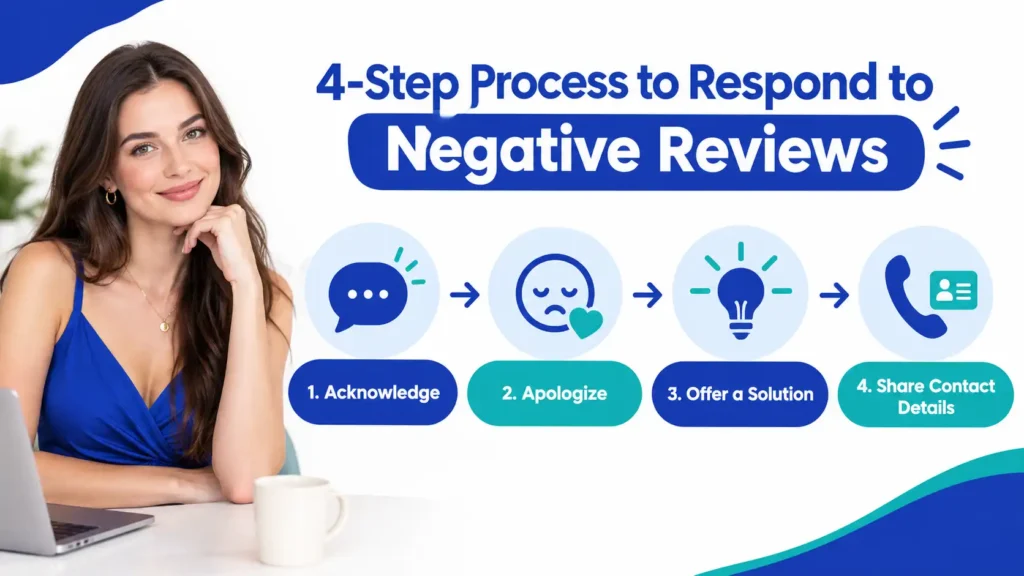
Think of response templates as starting points, not final answers. The best replies use customer feedback to show empathy, offer help, and gather valuable insights. These four steps make that process easier and more consistent.

Step 1 – Acknowledging and Validating Customer Concerns
The first step is simple: acknowledge what the customer said. A negative review should never be met with silence or a generic line that ignores the details. Start by thanking the reviewer for sharing customer feedback and showing that you have read their comments.
Validation does not mean admitting every claim is correct. It means recognizing that the customer experience did not meet expectations. That alone can reduce tension. A thoughtful reply such as “We understand your frustration with the delay” is often enough to show that you are listening.
This kind of public response has clear benefits. It shows respect, helps prevent escalation, and tells other readers that your business takes concerns seriously. Ignoring complaints removes that opportunity and leaves the criticism unanswered in public.
Step 2 – Offering a Genuine Apology and Demonstrating Empathy
A sincere apology is one of the most important parts of your reply. Even if there was a misunderstanding, the customer still had a negative experience. You can apologize for that without making legal statements or sounding weak.
Keep the apology direct and human. Say what you are sorry for and connect it to their concern. For example, “We’re sorry your visit fell short of the great experience you expected.” That shows empathy and keeps the tone grounded in customer service.
This also answers a common question: yes, a public apology is usually the right move. It shows that you respect honest feedback and care about how the customer felt. Avoid overexplaining here. The purpose is to recognize the problem before moving toward a fix.
Step 3 – Presenting Solutions and Next Steps
After the apology, explain what you can do next. A response without action often feels empty. The best approach is to address the specific issues mentioned in the customer review and offer a practical path forward.
That solution might be a replacement, refund, follow-up call, or store credit when appropriate. The point is not to promise everything. It is to show a real effort to restore customer satisfaction. A clear next step tells the reviewer that your business wants to fix the problem, not just defend itself.
This is also where review management becomes useful for long-term improvement. When you notice similar complaints, treat them as signs of a process issue. Solving the individual case is good. Using it to improve the business is even better.
Step 4 – Sharing Direct Contact Details for Further Resolution
End your public reply by making it easy to continue the discussion. After you apologize publicly, offer direct contact so the customer can reach the right person without delay. This keeps the conversation productive and limits back-and-forth in the review thread.
Give clear contact information instead of vague instructions. If possible, direct the reviewer to a specific department or team member. That makes your message feel more serious and organized, and it supports customer advocacy because people see that your business is prepared to help.
Include details such as:
- A direct contact email address
- A phone number for faster support
- The name of the team handling the issue
Clear contact information turns a public complaint into a manageable private issue
Templates and Real Examples for Responding to Different Review Types
Not every negative review sounds the same, so your reply should not sound the same either. Response templates help you stay consistent across review sites, but they work best when adjusted to the exact situation.
The examples below cover common cases, from service complaints to fake reviews. Use them as flexible models. They can protect trust, support positive reviews later, and help you respond to honest feedback with more confidence and less guesswork.
Effective Response Template for a Legitimate Service Complaint
A legitimate service complaint deserves a direct and respectful answer. This is often the clearest chance to show excellent customer service in public. If you run a restaurant, store, or local service business, your review response should stay simple and specific.
Start by naming the issue, apologizing, and offering help. A thoughtful reply shows you are focused on resolution, not image. That makes the negative review less damaging and easier to manage.
Use this structure:
- Thank the customer for the feedback
- Apologize for the service complaint
- Mention the specific issue, such as a long wait or wrong order
- Invite the customer to contact you directly for a solution
Sample: “Hi James, thank you for your feedback. We’re sorry about the long wait and understand your frustration. This is not the standard we aim for. Please contact our team so we can make this right.”

Responding to Highly Emotional or Angry Reviews
An angry customer may use strong language because the negative experience felt personal to them. Your job is not to match that tone. It is to slow the situation down with empathy, calm wording, and a focus on next steps.
When facing harsh review posts or bad reviews, keep your reply shorter than usual. A long defense often makes things worse. A calm acknowledgment shows self-control and protects your business in front of other readers.
Helpful tips:
- Do not argue point by point in public
- Recognize the frustration without accepting abuse
- Offer a private path to continue the conversation
Sample: “We’re sorry to hear how upsetting this was for you. We understand your frustration and want to look into what happened. Please contact us directly so we can review the issue and work toward a resolution.”
Identifying and Dealing with Potential Fake or Spam Reviews
Sometimes a review does not look genuine. It may contain no real details, describe an event that never happened, or come from an unknown name with abusive language. In those cases, the issue may be fake reviews or spam rather than real customer feedback.
Most review sites provide a way to report suspicious content. That should be your first step. Good review management means knowing when to respond and when to use platform tools instead of engaging publicly.
If a reply is needed, keep it neutral:
- State that you cannot verify the interaction
- Invite the reviewer to contact you directly
- Report the post through the platform if it appears to be spam
You may be able to remove a negative Google review if it violates platform rules, but reporting is required.

Handling Reviews Rooted in Miscommunication or Misunderstanding
Some complaints come from miscommunication rather than a true failure. A customer may misunderstand timing, pricing, or policy details and then leave a frustrated post. In these cases, your review response should gently clarify the issue without sounding dismissive.
Start by thanking the person for the honest feedback and recognizing their frustration. Then explain the misunderstanding briefly and clearly. Keep that explanation short. If it becomes too detailed, it can sound like an excuse instead of help.
These situations can offer valuable insights into how your business communicates. If the same confusion appears in multiple reviews, your policies or messaging may need work. The most professional response is one that corrects the misunderstanding, stays respectful, and opens the door to a better conversation offline.
What to Avoid When Handling Bad Reviews
Knowing what not to say is just as important as knowing what to write. Bad reviews can push you toward quick reactions that hurt customer satisfaction and create a worse public impression than the original complaint.
Avoid rigid response templates, defensive language, and anything that weakens customer advocacy. Your goal is to reduce tension, not win an argument. The following mistakes are the ones businesses should watch most carefully.
Common Mistakes: Becoming Defensive or Argumentative
The biggest mistake is trying to prove the customer wrong in public. A defensive response may feel satisfying for a moment, but it usually makes the business look harder to trust. Readers often remember the tone more than the facts.
An argumentative reply also shifts attention away from the customer feedback and toward your frustration. Even if the review includes unfair claims, your answer should not sound angry, sarcastic, or dismissive. That only extends the bad experience.
Avoid lines like:
- “That’s not what happened”
- “You clearly misunderstood”
- “This was your fault, not ours”
These phrases rarely help. A better path is to acknowledge the concern, avoid debate, and invite a private discussion where facts can be reviewed without a public fight.

Risks of Ignoring Reviews or Responding with Insincerity
Ignoring a negative review can send the message that customer concerns do not matter. For a business owner, that silence creates risk because potential future customers often read unanswered complaints as signs of poor follow-through.
Insincere replies create a different problem. If your answer sounds scripted, vague, or rushed, readers may doubt your intentions. They can usually tell when a brand is posting filler rather than responding to honest feedback. That weakens trust in your online reputation.
The better choice is a short but real answer. Thank the customer, acknowledge the issue, and explain how they can contact you. The benefits of responding are simple: you show accountability, protect credibility, and give yourself a chance to recover the relationship.
Protecting Customer Privacy and Complying with U.S. Guidelines
When replying in public, never share personal information. Even if you want to prove your side, posting order details, payment records, health details, or private messages can create bigger problems than the review itself. Customer privacy has to come first.
A safe public reply should stay general. Acknowledge the issue, apologize if needed, and ask the reviewer to continue through a private contact method. That approach supports strong review management while reducing legal and reputational risk.
This also aligns with basic U.S. guidelines for handling customer data responsibly. In simple terms, do not expose private details to defend your business. Protecting privacy shows professionalism, reduces risk, and tells customers that your company can be trusted with sensitive information.
Frequently Asked Questions
Q: Can I remove a negative Google review if it’s not genuine or is spam?
A: Yes, sometimes. If a negative review appears to be fake, spam, or abusive content, you can report it through Google reviews. Most review sites have reporting tools for this. Good review management means documenting the issue, avoiding a public argument, and using the platform’s removal process.
Q: Does responding to negative reviews really boost my local SEO rankings?
A: Responding to a negative review can support local SEO, though it is not a direct ranking shortcut. A public reply on an online review helps show business activity, engagement, and consistency on Google reviews. As part of regular review management, this can strengthen your overall local search presence.
Q: Should I reply to negative star ratings even if there’s no text feedback?
A: Yes, a short review response is still helpful. Even without text, low star ratings affect your online reputation. Thank the customer for the customer feedback, apologize that their experience fell short, and invite them to contact you directly. That shows professionalism and gives them a path to share details.
Conclusion
In summary, effectively responding to negative reviews is vital for maintaining your brand’s reputation and enhancing local SEO. By adhering to the core principles of timely, empathetic, and personalized responses, you can transform a negative experience into an opportunity for customer loyalty. Remember to acknowledge concerns, apologize sincerely, and provide clear solutions to demonstrate your commitment to customer satisfaction.
Avoid common pitfalls such as becoming defensive or ignoring feedback, as these can damage your credibility. With the right approach, you can turn critics into advocates, ultimately strengthening your business’s reputation. For personalized advice on managing your online presence, don’t hesitate to get in touch for a free consultation!