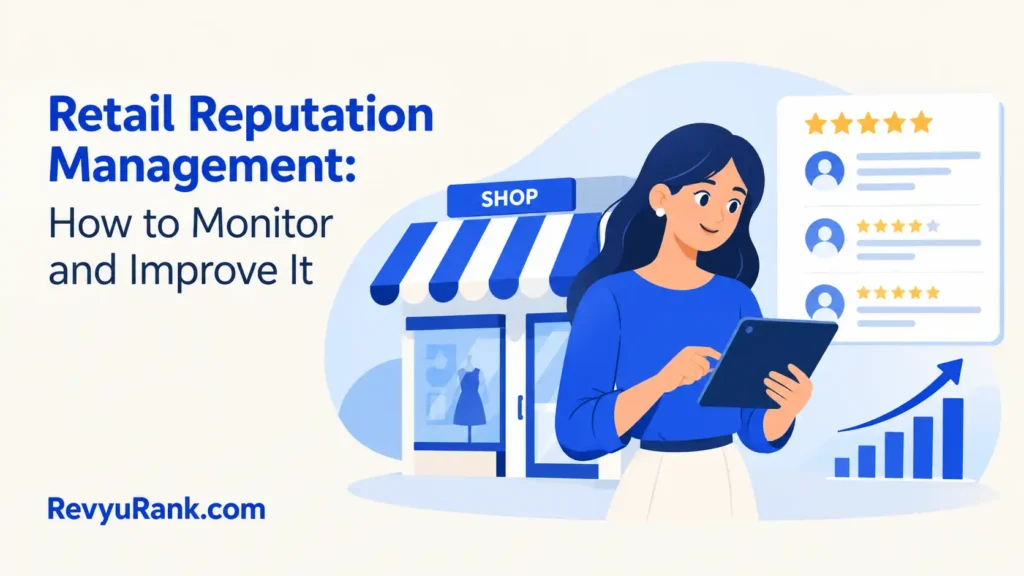
Retail reputation management works best when you monitor customer feedback, answer it quickly, and fix the store problem behind repeated complaints. Start by claiming each business profile, checking new reviews every day, and recording common issues. The most common cause of a damaged retail reputation is inconsistent service across locations, shifts, or customer channels.
Why retail reputations suffer

Retail reputations usually decline for three practical reasons. Customers may receive different service from different employees, stores, or delivery channels. A slow refund, missing order update, or unclear return rule can feel worse when nobody explains what happened.
A second cause is silence. A negative review can attract more attention when the business never replies, especially if the customer asks a fair question. A short, calm answer shows that someone is listening, but it won’t repair a repeated service failure by itself.
The third cause is disconnected feedback. Reviews may sit on Google, product pages, social accounts, and support tickets without one person comparing them. That hides patterns, such as damaged packaging or a problem with one store’s stock process.
Your first task is to separate a one-off complaint from a repeated fault. If several customers describe the same issue, fix the process before spending time on polished replies.
Claim and organize business profiles
This fix is for a retailer whose listings are missing, outdated, duplicated, or controlled by former staff. Claim the official profile on Google Business Profile and any other major platform customers use. Add the correct store name, address, phone number, hours, website, and return information.
Use one shared record for every location. Include the profile link, the person responsible, the date of the latest check, and open complaints that need follow-up. Give each store a clear owner for replies, but keep approval with a manager when a customer mentions injury, discrimination, fraud, or a legal dispute.
Check new reviews at least once each business day during normal trading weeks. Reply to simple praise with thanks, and move account-specific details to a private channel. If the profile is suspended, ownership is disputed, or a review appears defamatory, don’t try risky technical workarounds; contact the platform’s support team or a qualified reputation specialist.
You’ll know this worked when a customer can find the right location, current hours, and a working contact route without seeing duplicate or conflicting listings.
Build a consistent review response process

This fix changes how you respond, not the profile itself. Create three short response patterns: one for praise, one for a service complaint, and one for a complaint that needs investigation. Each reply should thank the customer, name the concern without arguing, explain the next step, and invite private contact for order details.
Keep public replies brief and specific. “We’re sorry the pickup was delayed. Don’t hesitate to get in touch with the store manager at the number on your receipt so we can check the order” is more useful than “Sorry you feel that way.” Don’t promise a refund or replacement until the team confirms the policy and the facts.
Ask staff to record the case in your normal support system. Mark whether the issue was resolved, still open, or outside company control. If a customer posts personal data, threats, or allegations of criminal conduct, don’t investigate in public; preserve the record and send it to your manager, legal adviser, or platform moderator.
The trade-off is speed versus detail. A quick, careful reply protects trust, while a detailed public argument can expose private information and make the complaint larger.
Audit the service problem behind reviews
Use this harder fix when the same complaint appears across several stores, products, or channels. Group reviews by issue, such as checkout delays, returns, stock accuracy, delivery damage, or staff behavior. Then compare those themes with support tickets and store reports.
Choose one recurring issue and trace the customer journey from purchase to resolution. Check the written policy, receipt wording, staff instructions, and handoff between store and support team. Change one process at a time, and tell staff exactly what the new step is.
This work takes more time because it may involve training, software changes, or a revised return process. It’s worth doing when the complaint is repeated or affects many customers. It isn’t worth building a large dashboard for a single unusual review with no related evidence.
Don’t alter security systems, customer accounts, or payment records without an authorized employee or qualified vendor. When a complaint involves privacy, discrimination, payment disputes, or consumer law, send it to your legal or compliance team.
What hurts retail reputation
The following advice is common, but it can make the situation worse:
- Delete every negative review. You may remove useful feedback, and deleting a fair complaint can make customers suspect the business is hiding problems.
- Offer a reward only for a positive review. The Federal Trade Commission says businesses shouldn’t buy fake reviews or condition incentives on positive sentiment. Its online review guidance explains the risks for marketers.
- Argue with the customer in public. A long defense gives private details more visibility and can turn one complaint into a public dispute.
- Use the same reply for every complaint. Copy-and-paste wording can look careless, especially when the customer has described a specific order or visit.
- Ask staff to flood the profile with praise. Reviews from people who weren’t genuine customers can damage credibility and may breach platform rules.
A mistake here costs more than one unhappy customer: it can waste staff time, expose private information, and hide the process problem that caused the complaint.
Prevent retail reputation problems

A simple routine works better than a large campaign started only after a crisis. Match each customer touchpoint with one clear owner and one record of what happened.
| If you’re doing this | Do this instead | Why |
|---|---|---|
| Changing store hours in one listing | Update every location profile, website page, and holiday notice together | Customers won’t arrive to conflicting information |
| Sending a review request after every order | Invite genuine customers through the same normal follow-up process | The feedback is easier to compare and less likely to look selective |
| Letting each store invent its own reply | Give teams approved response patterns and escalation rules | Customers receive a steadier answer |
| Tracking only star ratings | Record the complaint topic, location, channel, and outcome | A rating alone doesn’t show what needs fixing |
| Waiting for a viral complaint | Review new feedback on a fixed schedule | Small problems are easier to handle before they spread |
| Promising a result in public | Confirm the case privately before offering a remedy | Staff avoid inaccurate promises and privacy mistakes |
The limit is clear: review volume and sentiment vary by product, location, season, and customer mix, so find your exact figure from the issue trends and resolution records, not from one rating alone.
Frequently asked questions
Retail feedback needs both public care and private case handling. These questions cover timing, safety, platform rules, and situations that don’t fit a normal response.
Can a retailer remove a bad review?
Sometimes, but only when it breaks the platform’s rules, such as containing spam, threats, private information, or content unrelated to a real customer experience. A review shouldn’t be removed just because it’s negative or embarrassing. Report the specific rule violation through the platform, then answer the service issue calmly if the review remains visible.
Why do some retail reviews disappear?
Reviews can disappear when a platform detects spam, a duplicate post, a closed profile, or activity that breaks its content rules. A customer may also edit or delete their own review. Don’t assume the retailer caused the removal; check the platform’s notice and keep your own record of reported content.
How long should a retail review response be?
About 50 to 100 words is usually enough for a simple public reply. Use fewer words for praise and more only when you need to explain a clear next step. Never include an order number, phone number, address, or other private customer detail unless the customer has chosen a safe public channel for it.
Is it safe to give a refund for a bad review?
No, not when the refund is offered in exchange for changing or removing an honest review. Handle the refund under the same written policy used for comparable customers. If the purchase involves a payment dispute, suspected fraud, or a safety complaint, send the case to the payments or compliance team before promising an outcome.
What happens if a competitor posts fake reviews?
Report the posts to the platform and save screenshots, dates, profile names, and the exact content. Don’t accuse the competitor publicly without strong evidence. If the posts cause measurable business harm or include false claims, a lawyer can explain the available options under the relevant state and federal rules.
How often should a store check its reviews?
Once each business day is a practical starting point for an active store profile. A retailer with very high review volume may need a morning and afternoon check, while a low-volume store can use a scheduled daily check. The deciding factor is whether a customer can receive a timely reply before the complaint becomes an unresolved support case.
Conclusion
Make customer trust part of your next store planning meeting. Share the clearest feedback with managers, choose a service improvement to test, and set a date to review the result. Small, visible changes can strengthen loyalty over time, and your team won’t have to guess what shoppers value most.

Robert Miller works as a Reputation Management Consultant. He has been helping U.S. businesses for over ten years. His work involves helping people protect and enhance their online image.Robert has worked with a wide range of companies. He has helped new businesses, local places that give a service, and big companies. He helps turn customer reviews into something that helps people trust their company and drives business growth.