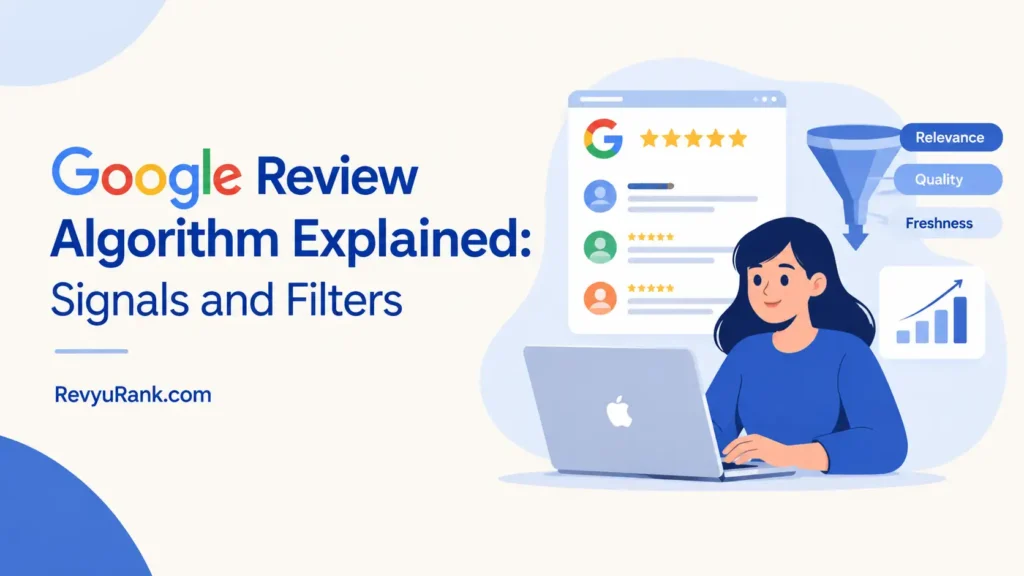
The way a Google review algorithm explained by the company works is that it filters feedback using automated checks for spam, fake accounts, and policy violations before anything goes live. It weighs recency, volume, and reviewer history to decide what shows up first. This guide covers the signals, the limits, and what you can actually control.
How the Google review algorithm filters feedback, explained
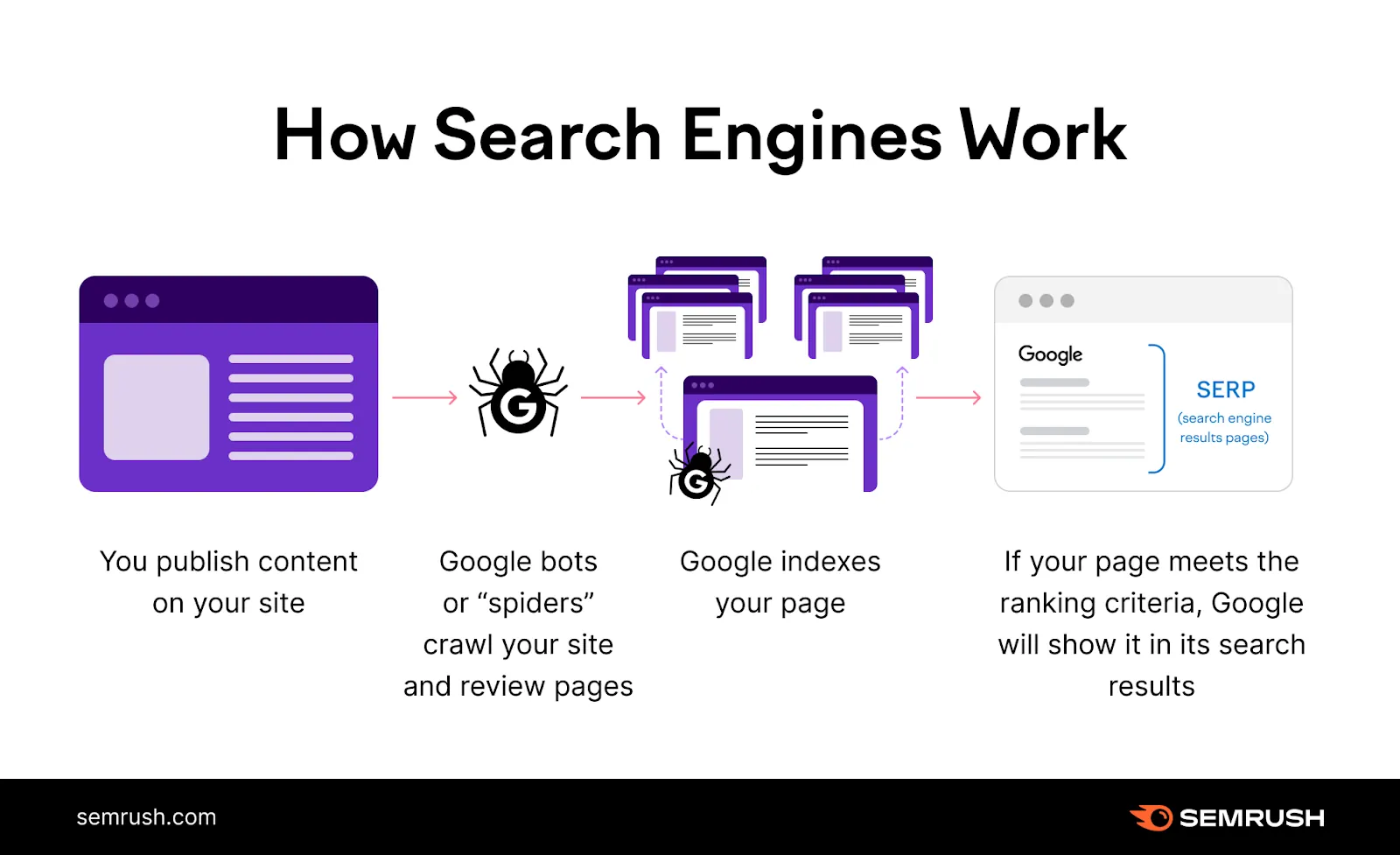
This system is an automated filter that decides which customer feedback appears on your Business Profile.
People often think a human reads each review first. The software looks at the reviewer’s past behavior, their location data, and how fast they typed the text. If your profile gets a sudden burst of five-star ratings from brand-new accounts, the filter will likely hide them.
How reviews get processed
When someone submits feedback, the system runs automated checks before it reaches your profile. Here is the path a typical review follows.
- A customer taps the star rating and types their text on their phone or computer.
- The system instantly checks the account’s age, location history, and past posting behavior.
- Automated tools scan the text for banned words, links, or promotional offers.
- If the account is old and the text looks normal, the review goes live within minutes.
- If the system flags something odd, the review gets held back for deeper analysis.
- Reviews tied to a known conflict of interest, like an employee reviewing their boss, are removed.
- Genuine feedback stays visible unless the business owner successfully appeals it later.
The single judgment call here is whether to ask customers for feedback right after a purchase or wait a few days. If you sell a quick service, ask immediately; if your product takes time to use, wait three days so the feedback reflects real experience.
Review signals and settings
These are the main factors the system weighs when deciding if feedback stays up and where it ranks.
| Situation | What to use | How long | What to watch for |
|---|---|---|---|
| New business profile | Steady organic feedback | 2-4 weeks to build trust | Sudden spikes trigger filters |
| Established local shop | Regular customer prompts | Shows up within hours | Old accounts with no history look fake |
| Online-only store | Verified buyer programs | Varies by platform | Unverified text gets lower weight |
| After a bad rating | Polite public replies | Reply within 48 hours | Arguing hurts your standing |
| Multiple locations | Separate profiles per address | Ongoing | Mixing locations confuses the system |
If you run one physical shop, focus on steady local traffic.
Getting better results consistently
The timing of your request determines the specificity of the text you receive.
Responding to feedback matters just as much. Change the wording to match what the customer actually wrote.
If a review seems fake, don’t argue in the reply box. Flag it through the dashboard instead. Fighting publicly only draws attention to the negative claim. Check your profile weekly so you catch problems before they sit unanswered for days.
Fixing missing or stuck feedback
Sometimes genuine feedback never reaches your profile. Here is how to match the symptom to the fix.
| What you notice | What it usually means | What to do first |
|---|---|---|
| Review vanished overnight | Filter caught a policy violation | Ask the customer to edit out links |
| Stars show but no text | System hid the body for spam triggers | Check for banned promotional words |
| Only old posts display | Recent ones are stuck in moderation | Wait 3-5 days before flagging |
| Competitor left a bad rating | Conflict of interest detected late | Report it via the dashboard tool |
| Rating dropped suddenly | Several hidden posts dragged the average down | Review your recent flagged items |
Don’t panic if a post disappears for a day.
Rules you must follow
You can’t offer incentives in exchange for five stars. Paying for positive ratings violates FTC endorsement guidelines.
You also can’t set up a review station inside your store. The system tracks IP addresses and device IDs, so ten reviews coming from one Wi-Fi network look like spam.
If you need to remove illegal content or a serious privacy breach, you’ll have to submit a legal removal request rather than just clicking the flag button.
Keeping your profile healthy
Once your profile has a solid base of honest feedback, your job shifts to maintenance.
The system re-evaluates your overall score on no fixed schedule. Watch your average rating weekly.
When this method falls short

This automated filtering approach doesn’t work for every situation. If you run a highly regulated medical practice, patient privacy laws limit what customers can safely write. Rely on private patient satisfaction surveys instead of public profiles.
If your business operates entirely through wholesale contracts, public consumer feedback won’t reflect your actual reputation. Industry references carry far more weight there.
And if you’re facing a coordinated attack from dozens of fake accounts at once, the standard flag button isn’t enough. You’ll need to contact support directly with evidence of the pattern, because the automated tools weren’t built to handle organized abuse quickly.
Frequently asked questions
How long does a new review take to appear?
It usually takes between a few minutes and 3 days, assuming the reviewer’s account has a normal history. If the system flags the account for unusual activity, it can stay hidden longer.
Why did my five-star review disappear?
The automated filter found a policy violation or a suspicious account pattern. The reviewer likely included a web link, used promotional language, or posted from a flagged IP address.
Can I delete a bad review myself?
No, business owners can’t delete feedback directly. You can only flag it for removal if it breaks published policies.
Is it safe to ask customers for feedback?
Yes, asking is perfectly fine as long as you don’t dictate what they should write. Never offer a discount in exchange for a specific star rating, or you’ll violate trade rules.
What happens if I buy fake reviews?
Your profile risks being suspended entirely. The filtering system detects bulk purchases by matching IP addresses, account creation dates, and typing patterns across multiple submissions.
How many reviews do I need for a good rating?
There’s no magic number, because the average depends entirely on the star values you receive. Ten detailed five-star posts will outweigh fifty brief mixed ratings in the eyes of potential customers.
Conclusion
The system behind your public rating isn’t something you can hack or trick. It rewards steady, genuine interactions and punishes shortcuts. Focus on delivering work worth talking about, ask for honest feedback at the right moment, and let the automated tools handle the rest.

Robert Miller works as a Reputation Management Consultant. He has been helping U.S. businesses for over ten years. His work involves helping people protect and enhance their online image.Robert has worked with a wide range of companies. He has helped new businesses, local places that give a service, and big companies. He helps turn customer reviews into something that helps people trust their company and drives business growth.