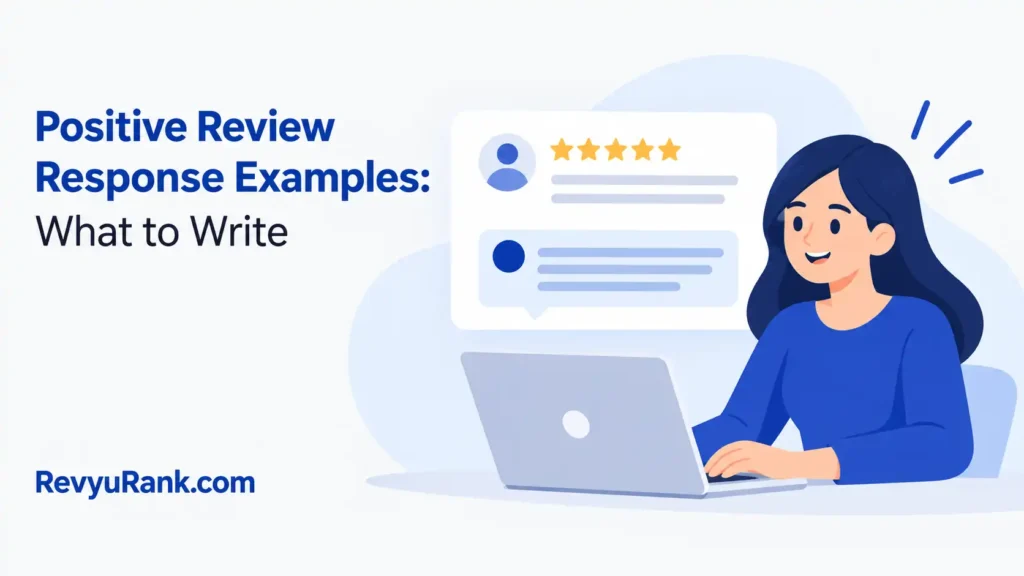
Positive review response examples should usually thank the customer, mention one specific detail, and invite them back without sounding copied. A short reply works for most reviews, while a longer reply fits detailed feedback. The right words change with the review’s tone, the customer’s concern, and your business type.
Your response should also protect customer privacy and avoid promises you can’t keep. The examples below cover short reviews, detailed praise, repeat customers, service problems, public replies, and replies that encourage future visits.
Who needs review response examples?

A small business owner may have good reviews but no clear reply style. They need quick wording that sounds human, fits the business, and doesn’t take ten minutes for every customer. Examples can show how to thank someone, acknowledge a concern, and invite offline follow-up without sounding copied or defensive.
A manager may already use a response template. Their problem is repetition. They need ways to personalize replies without changing the brand voice or making claims that staff can’t support. A useful response can refer to the customer’s specific compliment or concern, while leaving out details the business can’t verify.
A marketing worker may be answering reviews across several locations. They need a system for handling different situations, such as a five-star rating with no comment, detailed praise, or feedback that mentions a specific employee. They also need to know when a location manager should review the reply before it’s posted.
This page serves businesses that reply publicly to customer reviews on platforms such as Google, Yelp, TripAdvisor, or an industry review site. It assumes you can see the customer’s public name and review, but you won’t share private order, health, payment, or contact details. If a review names an employee, thank the person without confirming unnecessary employment or customer information.
It’s not the best fit for someone handling a serious complaint, a legal threat, or suspected fraud. Those cases need your platform’s reporting tools, your manager, or legal advice rather than a cheerful public template. If the facts are disputed or the customer may face harm, pause before posting and follow the business’s escalation process.
What changes the best reply?
The review’s detail matters most. A customer who writes “Great service from Maya, and the room was spotless” deserves more than “Thanks for the five stars.” Mention Maya and the clean room, but don’t repeat the whole review word for word. Check the exact wording before you reply.
The customer’s purpose changes the reply’s shape. Simple praise needs appreciation, while detailed praise gives you a chance to reinforce a real strength. If the customer mentions a future visit, answer that point; if they only leave stars, keep the response brief.
Your business type also changes the safe level of detail. A restaurant can mention a dish the customer named. A clinic should avoid confirming that a person received treatment, and a hotel shouldn’t reveal private booking details. Read the review as a public message, not as permission to share everything you know.
The platform’s tone and audience matter next. A formal service, such as legal or financial work, usually needs calm and precise wording. A café, salon, or fitness studio may sound warmer, but the reply should still avoid exaggerated claims.
The detail people get wrong most often is personalization. Adding a customer’s name isn’t enough if the rest of the message could fit every review. Use one true detail from the review, then stop before the response becomes a sales pitch.
How to write a positive review reply
-
Read the full review before typing. Note the rating, the service or product named, and any employee or feature mentioned. Don’t reply until you know whether the customer included a request or concern.
-
Choose the response length. Use 1-2 sentences for a short review with no comment. Use 3-4 sentences when the customer gives specific praise or describes several parts of the experience.
-
Start with direct thanks. Write “Thank you for sharing this” or “Thanks for the kind words.” Avoid opening with a slogan, a discount, or a request for another review.
-
Use one real detail. Mention the named dish, room, appointment, delivery, employee, or service. Keep private details out, even when you know the customer’s full history.
-
Match the customer’s tone. Use friendly language for casual praise and a more measured tone for professional services. If the customer sounds reserved, don’t answer with excessive exclamation points.
-
Recognize the team carefully. If the review names an employee, thank the customer for noticing that person’s work. Check the name first so you don’t credit the wrong employee.
-
Add a future-facing line. Say you’d be happy to welcome them back, help again, or see them on their next visit. Don’t promise a result your business can’t control.
-
Remove the sales pitch. Delete discount codes, product pushes, and unrelated announcements unless the customer specifically asks for them. A review reply should respond to the review first.
-
Check privacy and accuracy. Remove order numbers, dates, medical details, room numbers, or contact information. Make sure every claim matches your records and the review itself.
-
Proofread before posting. Check the customer’s name, employee names, punctuation, and platform rules. The reply is ready when it sounds specific without exposing information the customer didn’t publish.
The main judgment call is how much detail to include. If the review gives one safe, public detail, use it; if it reveals sensitive information, thank the customer without confirming the underlying transaction.
Reply styles at a glance
The best format depends on what the customer wrote and what you can safely repeat.
Use only details that appear in the review or that are already appropriate to share publicly. If the review raises a concern, answer that concern directly rather than hiding it behind general thanks.
A short reply is enough for a simple rating, while a detailed review deserves a response that shows you read it. Keep the tone warm, specific, and proportionate to the customer’s message.
| Review situation | What to do | What it takes | What to watch for |
|---|---|---|---|
| Five stars, no comment | Thank them briefly and invite them back | One sentence | Don’t invent details about their experience or claim to know what they enjoyed |
| Short praise | Repeat one detail from the review and thank them | Two sentences | Avoid sounding copied; change the wording when several reviews say similar things |
| Detailed service praise | Name the specific strength they praised, then explain that you appreciate the feedback | Three sentences | Keep private facts out, including order details, appointment information, or personal circumstances |
| Employee mentioned | Thank the customer, acknowledge the employee by name, and pass along the compliment | Two or three sentences | Spell names correctly and don’t disclose staff schedules or other workplace details |
| First-time customer | Welcome future visits and mention what they can expect only if it’s generally true | Two sentences | Don’t overpromise a particular outcome, employee, wait time, or special treatment |
| Repeat customer | Recognize their continued support without describing past visits | Two sentences | Don’t reveal visit history, purchase details, or how often they have returned |
| Mixed positive feedback | Thank the customer, address the concern specifically, and state the next useful step when one is available | Three or four sentences | Don’t ignore the criticism or argue with the customer in public; move account-specific details to a private channel |
Details that make replies sound real

Prepare before you respond
A strong reply begins with the customer’s actual words, not a saved template. Copy one useful detail into your draft, then write around it in your normal brand voice. For example, a bakery could answer praise for a lemon tart by saying, “We’re glad the lemon tart was a highlight of your visit.”
The order matters. Thank the customer first, mention the detail second, and add a future-facing line last. Starting with “Please visit us again” makes the reply sound like an advertisement rather than a response.
Use the customer’s name only when the platform displays it clearly and the name fits the context. If the account uses a nickname, don’t guess at a formal name. A wrong name costs more trust than leaving the name out.
Check what you leave out
Good replies don’t confirm private facts. A clinic can say, “Thank you for your kind words about our team,” but shouldn’t confirm that the reviewer was a patient or describe treatment. A hotel can thank someone for praising the room without repeating the room number or booking dates.
Don’t copy a five-star template into every reply. Customers notice repeated phrases, especially when the same sentence appears under several reviews. Keep the structure if it saves time, but change the detail, tone, and closing line.
A trade-off exists between speed and warmth. A one-sentence reply is easier to manage across hundreds of reviews, while a two- or three-sentence reply feels more personal. If the review contains no useful detail, short is usually better; if it names a person or service, give it a tailored answer.
Positive review reply problems
A reply can look polite and still miss the customer’s point. Use the visible problem as your cue, then change the wording before posting.
| What you notice | What it usually means | What to do first | How to stop it happening again |
|---|---|---|---|
| Reply sounds identical | Template lacks detail | Add one review detail | Keep several templates |
| Customer’s name is wrong | Name was assumed | Remove the name | Copy displayed spelling |
| Reply ignores employee praise | Review wasn’t read closely | Thank the employee mention | Highlight named details |
| Reply reveals private facts | Internal data was included | Delete sensitive wording | Use public details only |
| Reply makes huge promises | Marketing language took over | Replace with a modest promise | Ban unsupported claims |
| Customer gets a sales pitch | Reply serves promotion | Remove unrelated offer | Keep replies customer-focused |
| Tone feels too casual | Voice mismatches business | Rewrite more plainly | Set a tone guide |
Rules for public review replies
Public replies must follow the platform’s rules and the laws that apply to advertising and endorsements. The Federal Trade Commission says businesses shouldn’t use deceptive endorsements or hide material connections, so don’t offer a reward for a positive review or imply that a customer said something they didn’t say. See the FTC’s Endorsement Guides questions for its published guidance.
Rules can also differ by industry. Healthcare, financial services, education, housing, and legal services may have privacy or professional conduct requirements beyond a review platform’s rules. Check the regulator for your country and state, plus the platform’s current review policy.
Never disclose a customer’s private information in a public answer. If a review includes an order number, phone number, medical detail, payment issue, or personal dispute, move the conversation to a private channel and remove or report the exposed information when the platform allows it.
If a review appears fake, threatening, or connected to extortion, don’t accuse the reviewer in public. Save screenshots, use the platform’s reporting process, and ask a manager or lawyer for help when the issue could affect your legal rights.
What review replies really cost
The direct cost of a reply is usually staff time. The real amount depends on your review volume, the number of locations, the number of platforms, and whether one person or a team approves each message.
A single short review may need only a quick check. A detailed review takes longer because you must read it closely, remove private information, and confirm employee or service details. Reviews that mention a complaint need even more care, even when the overall rating is positive.
The cost rises when every reply is written from scratch. A small set of approved templates can reduce drafting time, but a template shouldn’t become a repeated sentence. Keep separate patterns for short praise, named employees, detailed feedback, and mixed reviews.
The cost of a public mistake can be higher than the time saved. A wrong name, false promise, or private detail may lead to another complaint and force staff to explain the original reply. If a response involves legal, health, payment, or safety information, send it to the person responsible before posting.
For current platform costs or management-tool prices, compare the official pricing pages for the services you use. Those prices change by country, plan, users, and locations, so a general figure wouldn’t be reliable.
Keeping review replies consistent
Store approved reply patterns in one shared document. Include the business tone, words to avoid, privacy reminders, and examples for short praise, detailed praise, employee mentions, and mixed feedback. Name an owner and add a review date so staff know which version governs. Archive superseded versions instead of leaving them beside the current copy.
Review the document when your services, staff, locations, or platform rules change. A reply that names a former employee or an unavailable service can make an old template look careless.
A reply needs attention again when it contains a detail you can’t verify. Pause, check the review and your business record, then edit the sentence or remove it. You don’t need to start over if the basic thanks and public detail are still accurate. If the uncertainty concerns a promise, refund, or resolution, don’t confirm it publicly until the responsible person checks it.
Keep a record of unusual cases, such as suspected fake reviews or requests for compensation. Record the date, platform, review link, action taken, and person who approved the response, but don’t store unnecessary customer information. Restrict access to the log when it contains contact, health, or payment details.
If several employees reply, use one approval path for sensitive topics. Ordinary praise can follow the approved style, while health, legal, payment, safety, or threat-related content should go to the responsible manager before publication. If approval is required, record it in the case log.
When positive review replies aren’t enough

A public reply is the wrong approach when a customer mentions a medical issue, injury, payment dispute, or personal information. Don’t repeat the detail, confirm that it belongs to the customer, or ask for identifying information in the comments. Thank them for raising the concern, then move the conversation to a private channel handled by the appropriate manager or professional. State only how they can reach that channel, and avoid promising a remedy before the facts are reviewed.
It’s also the wrong approach when the review appears fraudulent or demands money for removal. Don’t negotiate in the comments or accuse the reviewer. Save screenshots, the review URL, messages, and relevant transaction records before anything changes. Use the platform’s reporting process and follow its evidence requirements. Get legal advice if the post makes serious false claims, names an individual, or threatens your business.
A cheerful template doesn’t fit a review that’s mostly negative with one positive detail. Answer the main concern directly instead of leading with the compliment. Apologize when your business caused the problem, and offer a private contact route with a clear next step. If you can’t verify what happened, acknowledge the concern without admitting facts you don’t know. If the issue needs legal, medical, financial, or technical judgment, stop writing instructions and send it to the qualified person.
This method also isn’t for replying to private survey feedback. Use the company’s support process instead, because a public response may expose information the customer only intended to share privately. Keep the survey record within the approved system, and contact the customer directly only under that process.
Related guides
- How To Write A Local School Review Examples: Top Tips & Templates
- How To Write An Effective Review Request Email: Boost Responses Fast
- Negative Review Examples For Business With Response Template: Effective Solutions
Frequently asked questions
How long should a positive review response be?
A positive review response should usually be 1-4 sentences, depending on the review’s detail. Use 1-2 sentences for a rating with little text, and 3-4 sentences when the customer names a service, employee, or specific strength. Longer replies can look promotional unless every sentence answers something in the review.
Can I use the same reply for every good review?
You can reuse a structure, but don’t post the same wording for every review. Change at least one true detail from the customer’s message and adjust the closing when needed. If the review has no comment, a brief standard thank-you is more natural than forcing a detail that the customer never mentioned.
Why should I mention a detail from the review?
Mentioning one detail shows that you read the customer’s message rather than sending an automatic answer. It also keeps the reply focused. Choose a public detail, such as a named dish or service, and leave out order numbers, health information, contact details, and other private facts.
How do I reply when a customer praises an employee?
Thank the customer for naming the employee, then recognize the employee without making a claim you can’t verify. For example, you might write, “Thanks for recognizing Jordan’s helpful service. We’ll share your kind words with the team.” Check the employee’s name before posting.
Is it safe to mention a customer’s order?
Only mention an order detail when the customer has already made that detail public and it creates no privacy risk. Don’t repeat order numbers, delivery addresses, payment information, medical details, or booking information. When in doubt, thank the customer for the feedback without confirming the transaction.
What happens if my reply sounds like an advertisement?
The reply may feel insincere and can shift attention away from the customer’s experience. Remove discounts, product pitches, and unrelated announcements unless the customer asked for them. Keep the response centered on thanks, one relevant detail, and a realistic invitation to return.
Does it matter if I reply to every positive review?
Yes, consistency can help customers see that the business pays attention, but the reply doesn’t need to be long. Respond to each review when your team can check the wording and privacy concerns. If volume is high, use approved patterns and reserve longer replies for detailed or especially useful feedback.
How to use positive review replies
Start by matching the reply to the review’s detail, then mention one specific point the customer made. If they praise a staff member, thank them for naming that person. If they describe a feature or part of the experience, acknowledge that detail instead of offering a generic “thank you.” This makes the response sound personal without pretending to know more than the review says.
Keep the reply accurate, warm, and brief enough for public reading. Don’t repeat private information, confirm details the customer didn’t share publicly, or add promotional language. Don’t add discount offers or claims about results you can’t verify. Address the reviewer by name only when the name is clearly public and appropriate. A short invitation to return is fine, but it shouldn’t turn the reply into an advertisement.
Before posting, check that the wording doesn’t reveal anything about another customer or employee. Stop and get help from a manager or qualified professional if the review involves health, legal, payment, safety, threats, or suspected fraud. If the issue could require a factual correction, verify it first rather than guessing or arguing in public.

Robert Miller works as a Reputation Management Consultant. He has been helping U.S. businesses for over ten years. His work involves helping people protect and enhance their online image.Robert has worked with a wide range of companies. He has helped new businesses, local places that give a service, and big companies. He helps turn customer reviews into something that helps people trust their company and drives business growth.