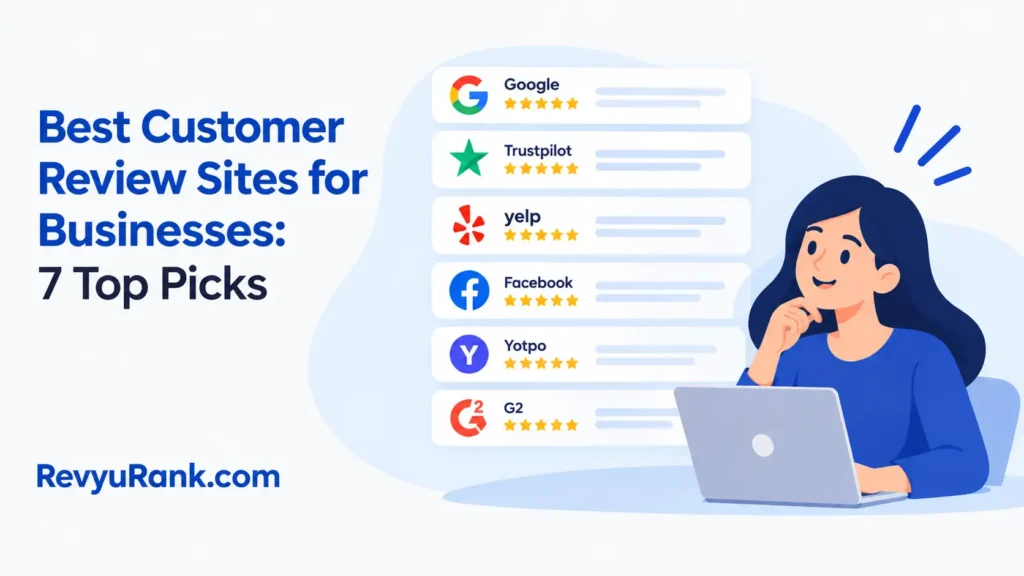
The best customer review sites for businesses are Google Business Profile, Yelp, Trustpilot, Better Business Bureau, Tripadvisor, G2, and Capterra, matched to your industry and customers. Google reaches local searchers, G2 and Capterra focus on business software, and Tripadvisor on travel; Yelp supports local services, Trustpilot spans industries, and the BBB combines reviews with profiles and complaint information. Choose based on where customers search and whether the platform suits your business.
Best customer review sites
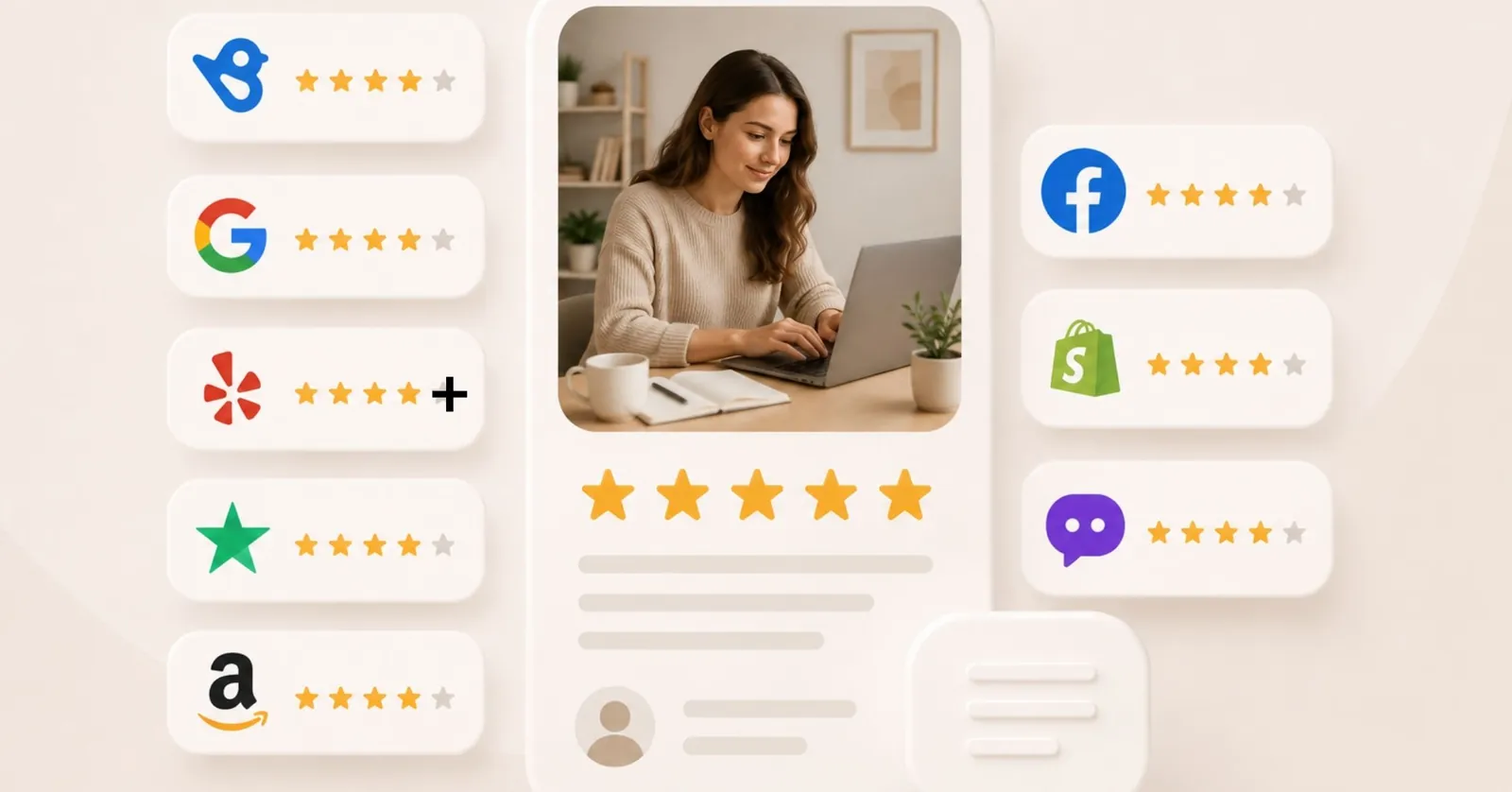
These seven platforms cover the main places where customers look for business reviews, from local search to software research.
Choose based on the buyer’s question, not on the platform’s reputation alone. Google Business Profile and Yelp matter when someone is choosing a nearby provider. Trustpilot and BBB can shape confidence in a broader company, while Tripadvisor is relevant to travel decisions. G2 and Capterra are more useful when buyers need to compare software features, categories, and alternatives.
| Review site | Best for | Recognizable example |
|---|---|---|
| Google Business Profile | Local search visibility | Google Maps listing |
| Yelp | Local service businesses | Restaurant review page |
| Trustpilot | Online and broad-market brands | Verified purchase review |
| Better Business Bureau | Trust and complaints | BBB business profile |
| Tripadvisor | Travel and hospitality | Hotel traveler review |
| G2 | Business software | CRM product comparison |
| Capterra | Software buying research | Accounting software listing |
Google Business Profile
Google Business Profile is a free business listing that shows reviews beside your business in Google Search and Google Maps. It suits local companies that want customers to find their location, hours, phone number, website, and recent feedback in the same place.
Google reviews are especially useful when a customer searches for a service near them. A person searching for “plumber near me” or “coffee shop downtown” may see local listings before visiting a company website. That makes the profile useful for businesses that depend on nearby customers.
It can help you:
- Appear in local searches: Your listing can show when people search for your business name, service, or location.
- Answer customer questions publicly: Responses can clarify hours, parking, service areas, or booking rules.
- Show recent customer experiences: New reviews give readers a current view of service quality.
- Collect practical feedback: Comments may reveal repeated issues with wait times, communication, or availability.
Google Business Profile suits restaurants, salons, repair companies, medical offices, retailers, and other businesses with a public service area. It’s less useful as the only review platform for a company that sells nationwide and has no local customer contact.
The trade-off is reach versus control. Google can put reviews in front of people at the exact moment they’re searching, but businesses have limited control over how the listing appears or which review customers read first. A single low review can also be highly visible beside your address and phone number.
A frequent mistake is asking every customer for a review with the same wording or offering a reward for positive feedback. That can produce unnatural reviews and may break platform rules. It also costs credibility when readers see several comments that sound copied.
If a review includes private information, threats, hate speech, or content unrelated to a real customer experience, report it through Google’s review tools. Don’t ask the customer to delete an honest negative review; respond with the facts and offer a private way to resolve the issue.
For example, a local HVAC company could use its profile to show “same-day repair,” a service-area map, weekday hours, and a recent customer comment about a furnace repair.
Yelp
Yelp is a customer review platform built around local businesses, including restaurants, home services, beauty services, automotive companies, and professional services. It suits businesses whose customers compare nearby providers before making a call, reservation, or visit.
Yelp does something Google Business Profile doesn’t do in the same way: it gives local reviews their own browsing environment. People can search by business type, neighborhood, price level, and service details. That makes Yelp useful when customers are still comparing several providers rather than looking for one known company.
It can help you:
- Reach local comparison shoppers: Customers can browse several providers in one category.
- Show service details: Reviews often mention cleanliness, staff behavior, appointment times, and specific work.
- Spot repeated service problems: Similar complaints can point to an operational issue.
- Build category relevance: A profile with detailed reviews can explain what your business actually does.
Yelp is a good fit for a restaurant, dentist, auto shop, contractor, or salon in a market where people already use the platform. It may not be the best first choice for a business that serves customers only through a national website or sells mainly through another marketplace.
The main trade-off is focused local discovery versus a more limited audience than general search. Yelp can matter greatly in some cities and industries, but its value depends on whether your customers use it. Check your referral traffic, calls, and booking records before spending staff time on regular activity there.
A mistake that hurts businesses is treating Yelp as a place to argue with reviewers. A defensive reply can turn one complaint into a second negative impression for every future reader. Keep the public response short, correct clear errors without attacking the customer, and move account-specific details to a private channel.
Yelp also isn’t a good platform for asking employees, friends, or suppliers to post reviews. Reviews should come from real customer experiences. If your business receives a review that breaks the platform’s rules, use Yelp’s reporting process rather than trying to pressure the reviewer.
For example, a neighborhood auto repair shop could use Yelp to help customers compare brake service, inspection work, hours, and comments about appointment communication.
Trustpilot
Trustpilot is a review platform for companies that sell online or serve customers across a wide area. It suits e-commerce brands, subscription services, financial products, travel companies, and other businesses that need feedback tied to a website or digital customer journey.
Trustpilot differs from local listing sites because it can support a company without a storefront. A customer may review an online order, delivery experience, subscription cancellation, or customer-service conversation. That makes the platform useful for brands whose reputation follows them across regions.
It can help you:
- Show feedback beside an online brand: Prospective buyers can review experiences before placing an order.
- Separate service issues from product issues: Reviews may reveal whether problems involve delivery, support, billing, or the product itself.
- Identify customer-service patterns: Repeated comments about replies or refunds can guide process changes.
- Give a national brand a public review home: Customers don’t need to search for a local branch first.
Trustpilot suits a business with enough online customer contact to gather meaningful feedback. It’s not a strong fit for a company that has only occasional transactions or no clear way to identify the customer journey being reviewed.
The platform’s trade-off is broad visibility versus ongoing reputation management. A larger review profile can reassure new buyers, but it also creates a public record of service failures. You’ll need a person who can read reviews, check account details safely, and reply without exposing private information.
A serious mistake is paying for or requesting only positive reviews. It can make the profile look less credible, and misleading review practices can create legal and platform problems. The Federal Trade Commission publishes its Consumer Reviews and Testimonials Rule, which businesses should read before using incentives, endorsements, or review campaigns.
If a customer reports fraud, a billing dispute, or a safety concern, don’t try to solve the whole matter in a public reply. Move sensitive details to a secure support channel, keep the public message factual, and involve your legal or compliance team when the issue could affect customer rights.
For example, an online clothing store could invite feedback after delivery and use reviews to monitor sizing complaints, shipping delays, and the speed of refund support.
Better Business Bureau

The Better Business Bureau, commonly called the BBB, provides business profiles that can include customer reviews, complaints, ratings, and accreditation information. It suits companies that serve customers who want additional trust signals before signing a contract or making a costly purchase.
The BBB isn’t simply a star-rating website. Its profile can give readers more context about complaints and how a business responds. That can matter for home improvement, moving, financial, repair, and other services where customers may worry about payment, contracts, or follow-up support.
It can help you:
- Give cautious buyers more business information: A profile can show company details and public feedback.
- Track complaint themes: Repeated issues may reveal unclear promises or weak support.
- Demonstrate a response process: Timely, factual replies show that concerns are being handled.
- Support high-consideration purchases: Customers can research before agreeing to a larger service.
The BBB is a better fit for established companies that can maintain accurate business information and respond to complaints carefully. It’s not for a business that wants to remove every negative comment or treat a profile as paid advertising.
The trade-off is trust context versus administrative effort. Responding to complaints may require checking contracts, invoices, timelines, and customer records. A rushed answer can expose private information or create a statement that conflicts with your actual agreement.
A common mistake is confusing BBB accreditation with a guarantee that every customer will be satisfied. Accreditation, ratings, reviews, and complaints are separate parts of a profile. Explain your service terms clearly, and don’t use BBB language in marketing unless your business meets the organization’s current requirements.
If a complaint involves a legal demand, alleged injury, discrimination, or a regulatory issue, stop writing detailed public replies and ask your attorney or compliance contact to review the response. A public profile isn’t the place to test a legal position.
For example, a roofing company could use its BBB profile to provide business details and respond to a complaint about a warranty visit without posting the customer’s address or contract number.
Tripadvisor reviews
Tripadvisor is a travel review platform for hotels, restaurants, attractions, tours, and other hospitality businesses. It suits companies that depend on visitors comparing places before a trip or choosing where to eat, stay, or spend time.
- Hotels and vacation rentals: Travelers can compare rooms, locations, amenities, and guest experiences.
- Restaurants: Visitors can check food, service, atmosphere, and location before booking.
- Tours and attractions: Operators can show feedback about guides, schedules, and the activity itself.
- Destination businesses: Companies in tourist areas can reach people planning from outside the local market.
The platform matters most when a first-time visitor is comparing several similar choices. Accurate details reduce avoidable disappointment: check the address, hours, amenities, booking instructions, and policies whenever they change. Businesses should respond to useful criticism calmly and correct recurring problems rather than treating every review as a marketing exercise.
Tripadvisor is less useful for a company that doesn’t serve travelers or has a hospitality connection. If most customers are local regulars, other local channels may deserve attention first. A hotel should keep its listing accurate, while a tour operator should make the meeting point, duration, and cancellation terms easy to understand.
G2 and Capterra reviews
G2 is built for software buyers comparing business tools such as CRM, project management, analytics, and customer service products. It suits software companies with a clear product category and enough users to describe setup, support, integrations, and day-to-day use. Ask whether your customers can discuss the product in those practical terms; reviews that only praise the brand give buyers less help. A company with a narrow or unusual use case may need to explain its category carefully so the right users find the listing.
Capterra also helps buyers compare business software, but its listings often support category research and product discovery. It’s useful for companies that want prospects to compare features, use cases, and customer feedback before requesting a demo or starting a trial. This makes it a better fit when discovery matters as much as review depth.
How to choose customer review sites
Choose the platform where your customers already make decisions, not the platform with the most impressive general name. Your industry, customer location, sales cycle, and ability to respond will narrow the choice quickly.
If customers search for a nearby provider, start with Google Business Profile and consider Yelp. Google is usually the stronger first step when maps, directions, hours, and local search matter. Yelp deserves more attention when customers in your city use it to compare restaurants, home services, or other local providers.
If customers buy online from different states or countries, compare Trustpilot with your own website feedback system. Trustpilot can give a broad brand a public review location, while your website gives you more control over presentation. If you use both, keep the requests honest and don’t copy reviews between platforms in a misleading way.
If your business sells software, choose G2 or Capterra according to where your buyers research your category. Review the categories, product pages, and competitor listings first. If the platform doesn’t have a useful category for your product, it may send little qualified traffic even if the site is well known.
If customers make a high-cost or high-risk service decision, add Better Business Bureau when its profile and complaint process are relevant to your market. It can provide useful context, but it requires careful record-keeping and measured replies.
Time also matters. If you can review feedback only once a month, start with one platform rather than opening seven profiles. If you can respond within your normal support process, you can test a second site and compare qualified calls, form submissions, bookings, or sales.
These sites can be combined, but they shouldn’t all receive the same message. Use Google Business Profile for local discovery, Tripadvisor for travel decisions, and G2 or Capterra for software research. The right mix depends on where your customers read before they contact you.
Frequently asked questions
Can a small business use more than one review site?
Yes, a small business can use two or three review sites when each reaches a different customer group. Keep the business name, phone number, address, and service details consistent, and start with the site already sending calls, visits, bookings, or sales. Add another only when someone can monitor and answer reviews.
Why are Google reviews important for local businesses?
Google reviews matter because they appear with local business information in Google Search and Google Maps, where customers can see your rating, comments, hours, phone number, and directions together. Their value depends on your market and search behavior, so track calls, direction requests, website visits, and bookings from your profile rather than relying on the star rating alone.
How long does it take to build a useful review profile?
A useful review profile usually needs several months of real customer activity, not a universal number of reviews. Readers look for recent, detailed experiences, and businesses differ in sales cycles and customer volume. Ask for feedback after a real service event, such as delivery, completion, or support resolution, and avoid purchased, copied, or incentivized positive reviews.
Is it safe to offer a reward for a customer review?
Offering a reward only for a positive review can create risk and may violate platform rules or advertising law. If you request feedback, allow honest positive, neutral, or negative comments, and never offer a reward for removing a complaint or changing its wording. Check the specific site’s current rules and disclose incentives when required.
What happens if a customer posts a false review?
Report a false review through the platform’s official process, providing specific evidence that it violates the site’s rules. Don’t accuse the reviewer publicly or reveal private account details. If the complaint describes a real transaction but contains an incorrect detail, reply briefly with accurate information; platforms may remove policy-breaking content but can leave honest negative opinions online.
Does it matter which industry uses the review site?
Yes, industry can change the value of a review site because customers research different purchases in different places. Hotels and attractions can consider Tripadvisor; software companies, G2 and Capterra; local firms, Google Business Profile; online brands, Trustpilot; and larger commitments, the BBB. Check customer recommendations and relevant activity before maintaining another profile.
First steps for customer review sites
Start by searching your business name and your main service in Google, Yelp, Tripadvisor, G2, or Capterra. Record which profiles customers already use, which listing details are outdated, and which questions appear repeatedly. Choose the platform tied to your main buying moment: Tripadvisor for travel, or G2 and Capterra for software.
Ask real customers for honest feedback after a completed order or service. Use a neutral request, not a five-star prompt. Never offer a reward or suggest a rating, because that can violate platform rules and weaken credibility. Give customers context to describe delivery, setup, support, or the finished result.
Expect better visibility into customer concerns first; a useful sign is repeated, specific feedback about the same service detail, not just a higher star rating. Track those themes and respond to ordinary criticism with the action taken, without revealing private customer information. If a review alleges fraud, injury, discrimination, or a legal violation, stop the public reply and get help from your attorney or compliance contact.

Robert Miller works as a Reputation Management Consultant. He has been helping U.S. businesses for over ten years. His work involves helping people protect and enhance their online image.Robert has worked with a wide range of companies. He has helped new businesses, local places that give a service, and big companies. He helps turn customer reviews into something that helps people trust their company and drives business growth.