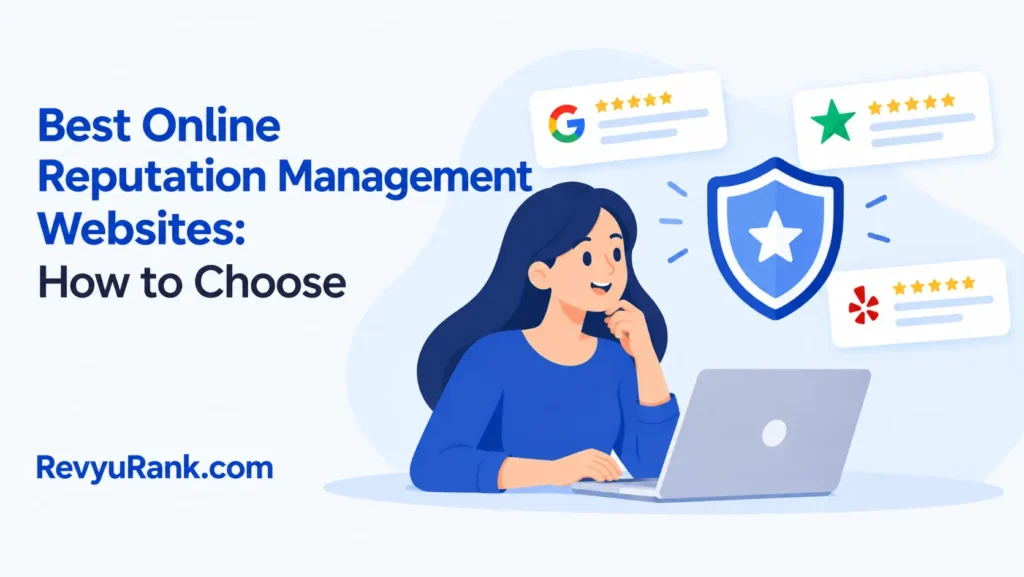
The best online reputation management websites for most people are managed services with clear reporting, real removal limits, and a named support contact. They save you time by monitoring search results, improving useful content, and responding to harmful pages. A self-service tool wins when you only need alerts and can write your own profiles. The right choice depends on the problem’s size, your budget, and how quickly the damage must be handled. No reputable provider can promise that every negative result will disappear. Google, Bing, review sites, news publishers, and courts control their own content.
Reputation management options compared
The main choices range from doing the work yourself to hiring an agency that handles strategy, content, and outreach. Before choosing, search your name, company, and important variations in a private browser window. Note which results concern you, who controls them, and whether the problem is missing information, unfavorable content, or inaccurate content.
| Method | How long | Effort | Cost | Best for |
|---|---|---|---|---|
| DIY search and profile work | Ongoing | High | low | One person with a small issue |
| Reputation monitoring software | Minutes each week | Medium | low | Alerts and simple tracking |
| Personal-brand platform | Several weeks to months | Medium | medium | Job seekers and public professionals |
| Managed reputation agency | Several months or longer | Low for you | high | Serious, repeated, or business-wide problems |
DIY work gives you control, but you’ll need to find mentions, create useful pages, and keep them updated. It’s often enough when the problem is a thin search profile rather than a damaging article or review. Make a list of the searches that matter, then build complete profiles on relevant professional or industry sites. Don’t create several nearly identical pages; weak, duplicated content rarely gives search engines a useful reason to rank it.
Monitoring software doesn’t repair your search results by itself. It can show new mentions, review changes, and search movement, so you can act before a small issue grows. Check the tool’s coverage first. Some tools watch news and social sites, while others focus on reviews or search rankings. Choose monitoring when you can respond to problems yourself; it’s less useful if nobody will review alerts and take action.
A personal-brand platform usually combines profile building, privacy tools, and guidance. BrandYourself is a real example in this category. It can suit a job seeker who wants stronger professional results, but it still requires accurate information and regular activity. Check what you’ll own if you stop paying, including profile content, domains, and access to accounts. A platform is a poor fit if you need a response to one urgent, damaging result.
A managed agency takes more work off your plate. ReputationDefender, NetReputation, and Status Labs are established names in this field, though their services and pricing differ. Ask for a written scope before you sign. “Remove everything negative” isn’t a useful scope because publishers and platforms make the final decision. The proposal should identify the searches involved, the work to be delivered, the reporting schedule, and what happens when a publisher refuses a request.
The trade-off is simple: lower-cost methods give you more control but require more time. Higher-cost services can coordinate content and outreach, but you must judge their promises carefully. If a provider guarantees a clean first page or asks you to post fake reviews, leave. If the issue involves false allegations, impersonation, or private information, preserve screenshots and dates before contacting the publisher or seeking qualified legal advice.
Do it yourself with search results
DIY reputation management starts with a clear record of what people can find. It works best when the issue is limited, the information is truthful, and you can keep working for several weeks or months.
-
Search your full name, business name, old usernames, and common spelling mistakes in a private browser window. Search with and without your location, since local results can differ. Record the page title, URL, date seen, and whether the result is yours, a review, news story, directory entry, or impersonation. Don’t publish private details in your tracking sheet.
-
Claim or update the profiles that represent you. Use the same accurate name, job title, location, website, and contact details across LinkedIn, your company website, professional directories, and relevant social accounts. Use two-factor authentication where the platform offers it. Remove duplicate profiles you control, or mark them clearly as inactive, so outdated information doesn’t compete with the current version.
-
Create one useful home for important information. This might be a staff page, portfolio, author page, or company profile. Add real work, contact details, credentials you can prove, and links to your legitimate profiles. Publish only information you’re prepared to keep accurate, and link to this page from profiles you already control.
-
Review the negative page’s rules before contacting anyone. If a review breaks a platform policy, report it through the platform’s process. Google says prohibited content can be reported for review, but a review isn’t removed just because it’s unfavorable; Google’s prohibited content policy explains the difference. If the criticism is allowed but incomplete, consider one brief, factual response and avoid discussing confidential customer or employee information.
-
Recheck the same searches every 7 days for the first month, then at least monthly. Save changes, new results, and replies. Note which pages appear on the first page and whether your updates changed what searchers see. If a result is false and legally serious, preserve screenshots and speak with a qualified attorney instead of threatening the publisher yourself.
This method is good at fixing incomplete profiles, weak search results, and poor information you control. It also lets you learn which pages matter before you pay an outside company.
Its weakness is time and reach. You can’t force a publisher to remove a lawful article, and a home-made page may take time to rank. A common costly mistake is arguing publicly with a reviewer; the argument can become a new searchable result. If the case involves threats, extortion, doxxing, or a legal demand, stop DIY work and contact law enforcement, the platform, or an attorney as appropriate.
Use online reputation management websites and tools

Software and personal-brand platforms sit between DIY work and a full agency. They organize alerts, profiles, privacy checks, or content tasks, but you still make many decisions and supply accurate information.
- List the names and terms you want watched. Include your full name, company name, product names, domain, executive names, and important usernames. Exclude common words that create too many unrelated alerts.
- Connect only the accounts and email addresses the tool actually needs. Read its permissions and cancellation terms before linking anything. Don’t give a service access to an account when a manual report or public search will do.
- Set an alert for new mentions, reviews, or pages. Read each alert before acting because a name match can belong to another person. Keep a simple log with the URL, date, issue type, and action taken.
- Build or improve your key profiles in the order the tool suggests. Fill in every truthful field, use one professional photo where suitable, and link to your main website. Don’t copy the same low-value paragraph onto many pages.
- Review the dashboard once each week. Remove wrong alerts, check whether your pages are still accurate, and cancel features you’re not using. A tool that only reports a problem hasn’t solved it.
These tools are useful for job seekers, freelancers, and small businesses that can do their own writing. They can also reveal a new complaint early, before it becomes a larger customer-service issue.
The weakness is that software can make the work look more automatic than it is. Alerts don’t create trust, answer a complaint, or persuade a publisher to change a page. If you’re not comfortable checking permissions, writing accurate responses, or protecting account access, choose a managed provider instead. Never use automated tools to create fake reviews or fake identities; the short-term appearance can damage credibility and create platform or legal problems.
BrandYourself is an example of a consumer-facing personal-brand service, while review-monitoring products often target businesses. Compare the exact features, supported sites, export options, and cancellation terms. A low subscription price may still cost more than expected if it leaves you doing all the content and response work.
Hire a managed reputation agency
A managed agency is the strongest option when the issue affects a company, executive, public professional, or several search terms. The agency should begin with an audit, then explain which work is possible and which outcomes remain outside its control.
- Ask for a written audit of the first page and the important pages beyond it. The report should list URLs, page types, search terms, ownership, and the proposed action. Don’t accept a vague promise to “clean up your internet.”
- Confirm the service scope before paying. It might include monitoring, website content, profile creation, review responses, publisher outreach, suppression work, or crisis advice. Ask who writes the material and who approves it.
- Give the agency verified facts, approved photos, brand rules, and a list of claims it must not make. False credentials, copied text, and undisclosed conflicts can create a second reputation problem.
- Set a reporting schedule and useful measures. Reports should show completed work, live URLs, new mentions, search changes, and blocked items. Rankings alone don’t show whether customers or employers see more accurate information.
- Decide how work ends. Get ownership or access to websites, profiles, analytics, content, and monitoring data. If you cancel, you shouldn’t lose every asset the agency created for you.
Managed work is good at coordinating many tasks and keeping a response consistent. It can also help when you’re too close to the issue to reply calmly or when several people need one approved message.
The weakness is cost and dependence on the provider. Results can be slow because search engines and publishers control their systems. A company that promises guaranteed removal, guaranteed rankings, or fake positive reviews is a poor choice. Ask for references you can verify, the legal business name, the cancellation terms, and examples of work similar to yours.
Serious threats, identity theft, extortion, or claims that could affect a lawsuit need more than marketing support. Ask an attorney or the relevant platform for help. An agency can manage communications, but it shouldn’t pretend to replace legal advice, law enforcement, or a security professional.
Which reputation method should you use?
The best method changes with the job in front of you. A person repairing one weak search profile needs a different level of help from a company facing a false article, a review surge, or impersonation. First, separate a visibility problem from a safety or legal problem; the latter shouldn’t be handled as ordinary search cleanup.
When you’re in a hurry
Choose a managed reputation agency when a damaging result is already being seen by customers, employers, investors, or reporters. The reason is coordination: an agency can audit the results, prepare accurate pages, organize responses, and identify platform or publisher processes. Ask whether the plan addresses the source, rather than only pushing the result lower.
Speed still has limits. No agency controls Google’s index, a news site’s editorial decision, or a review platform’s final ruling. Ask what can happen in the first week, what needs longer work, and which actions require your approval. Request deliverables in writing, including monitoring frequency, account ownership, and the point at which the agency recommends escalation.
When you’re doing this for the first time
Choose DIY work or a monitoring tool when the problem is small, and you can spend time learning the results. Start by recording what appears, claiming accurate profiles, and correcting information you control. Check the same searches consistently; reacting to one alarming result can cause overcorrection.
This approach has a lower financial commitment, but the trade-off is your time. Set a stopping point: if you can’t verify a claim or respond without exposing more information, get help. If you find threats, private information, impersonation, or a claim that could affect legal rights, don’t experiment with public replies. Contact the platform, law enforcement, or an attorney that handles the issue.
When you want the best possible result
Choose a managed agency with content, monitoring, and outreach experience when the issue is broad or important enough to justify expert coordination. You’ll give up some control and pay more, but the work can be consistent across search, profiles, reviews, and public responses. Ask who approves content, who contacts publishers, and how corrections are documented.
The provider still can’t guarantee a spotless result. The best possible outcome usually means that accurate, useful information becomes easier to find and that harmful violations are reported through the right channel. Read your value from the work delivered and the results that matter to you, not from a promise that nobody can control.
Rules for every reputation method
Every method starts with truthful information and a written record. Keep the original URL, screenshots, date, exact wording, and account or publisher name. Note whether the page was public or restricted when you checked it. This helps you spot changes and gives a platform, attorney, or agency something clear to review.
Use the rules published by the site hosting the content. Google, review platforms, social networks, and news sites don’t use the same standards. A negative opinion may stay online, while content involving impersonation, private information, spam, or another policy violation may qualify for a report.
Read the relevant reporting category before filing, because a vague complaint may be closed without action. If the material is lawful criticism, focus on a factual response or correction request instead of claiming a policy violation.
Prepare your own facts before you respond. Confirm names, dates, orders, job details, licenses, and contact information. A calm reply should move the conversation to a private support channel when possible; don’t expose customer data or argue about confidential details in public. If you can’t verify a claim, omit it rather than fill the gap with a guess. Have one person approve the wording when several staff members can access the account.
Check partway through, not only at the end. Search the exact name and business terms from a private window, open the pages yourself, and see whether the new content is accurate. Check logged-in and logged-out views when a platform personalizes results. If the problem is a review spike, look for the underlying service issue too. A new page won’t repair a broken customer experience.
Finish by securing accounts and saving the assets you paid for. Change shared passwords, turn on two-factor authentication, confirm profile ownership, and keep copies of approved content and reports. Give each file a clear name with its date and source, and store a backup outside the account being managed. If the work involves threats, extortion, doxxing, hacking, or legal claims, use the platform’s safety team, law enforcement, an attorney, or a security professional rather than taking risky technical steps yourself.
The limit is that results vary with the site, the search term, the content’s age, and whether the publisher or platform will act. You can read your own position from the URLs in your audit and from which party controls each page.
Frequently asked questions
The answers below cover questions people often ask before they pay for reputation help. They also show where a service can help and where its powers stop.
Can online reputation management remove negative reviews?
No, not simply because they’re negative. A review may be reported when it breaks the platform’s rules, including spam, conflict of interest, impersonation, or prohibited personal information. The platform decides whether the report succeeds, so reporting alone doesn’t guarantee removal.
Why do negative search results keep appearing?
Negative results can remain when the original page is still live, other sites link to it, or the search engine still considers it relevant. A new positive page doesn’t automatically remove an older result, so improving surrounding results may require ongoing work.
How long does online reputation repair take?
Timing varies: a small profile improvement may take several weeks to become visible, while a broader repair campaign often takes several months. This estimate assumes the content is truthful, the accounts are accessible, and search engines can crawl the pages.
Is it safe to hire an online reputation company?
Yes, it can be safe when the company is transparent about its legal identity, methods, fees, access requests, and limits. It becomes risky if it asks for fake reviews, promises total removal, hides ownership, or demands account control without a clear reason.
What happens if an agency promises guaranteed results?
You should treat that promise as a warning, not a guarantee from the agency itself. Search engines, publishers, review sites, and social platforms control their own content and ranking decisions, so an agency can’t guarantee every result it doesn’t own.
Conclusion
You can also ask how the agency handles false claims, copied content, and fake reviews. If the answer involves deception, automated spam, or impersonation, don’t proceed. Short-term visibility isn’t worth creating a larger and harder-to-remove problem.

Robert Miller works as a Reputation Management Consultant. He has been helping U.S. businesses for over ten years. His work involves helping people protect and enhance their online image.Robert has worked with a wide range of companies. He has helped new businesses, local places that give a service, and big companies. He helps turn customer reviews into something that helps people trust their company and drives business growth.